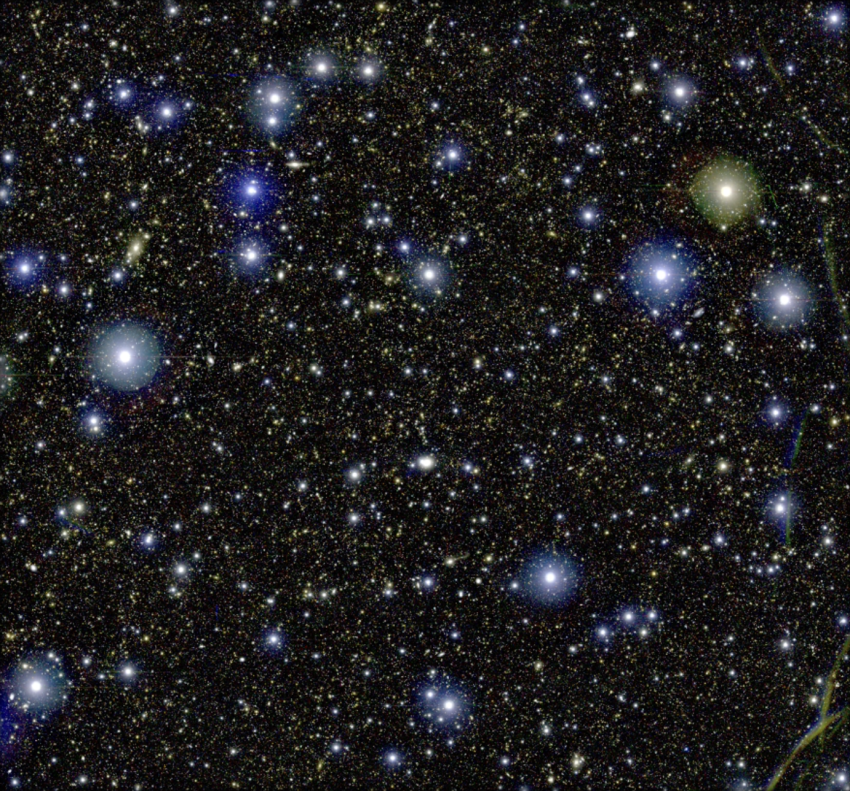
A recent study from the Deep Extragalactic Visible Legacy Survey (DEVILS) highlights how the growth of galaxies is influenced by their surrounding environments. This comprehensive research, conducted by the International Centre for Radio Astronomy Research (ICRAR) and the University of Western Australia, has released its initial set of data, which includes catalogues of morphological, redshift, photometric, and spectroscopic information for thousands of galaxies.
The findings, published in the Monthly Notices of the Royal Astronomical Society, detail how galaxies that existed up to five billion years ago can provide insights into their evolution compared to modern galaxies. The lead author, Luke Davies, an Associate Professor at the University of Western Australia node of ICRAR, noted that this data release follows a decade of dedicated observations and analysis.
Insights into Galaxy Evolution
The DEVILS data offers a unique perspective on galaxy evolution by focusing on smaller, detailed environments rather than broader cosmic structures. Davies explained that while other surveys have explored galaxy properties over time, they often lacked the ability to discern finer details of the cosmic landscape. “In the DEVILS survey, we have been able to zoom in and focus on mapping out the small-scale environment of galaxies,” he stated.
One significant finding from the data is that galaxies located in crowded regions tend to grow at a slower rate than their isolated counterparts. The researchers classified galaxies into two main categories: blue, gas-rich, star-forming systems, and red, gas-poor, quiescent systems with minimal or no ongoing star formation. As the universe ages, the proportion of quiescent systems increases, particularly in dense environments such as galaxy clusters and groups.
The research underscores that in these crowded settings, the supply of cold gas necessary for star formation can be disrupted or removed due to various physical mechanisms. These include processes like ram-pressure stripping and tidal interactions, which influence the movement of star-forming gas between galaxies, fostering star formation in some while inhibiting it in others.
Comparisons and Future Research
Davies drew a parallel between galaxies and human beings, suggesting that just as a person’s environment influences their development, the surroundings of galaxies shape their structures. “Our upbringing and environment influence who we are,” he remarked, emphasizing that galaxies experience similar influences based on their cosmic neighborhoods.
The data from DEVILS will not only contribute to the work of other researchers but will also serve as a foundation for future studies. Davies and his team plan to expand their research with the upcoming WAVES (Wide Area VISTA Extragalactic Survey), which aims to significantly increase the number of galaxies and environments studied. “DEVILS has given us a detailed picture of galaxy evolution,” he added, “and next year, we will start collecting data for WAVES.”
As researchers continue to explore the complexities of galaxy formation and growth, the insights gained from the DEVILS project provide a clearer understanding of how the universe has evolved over billions of years.