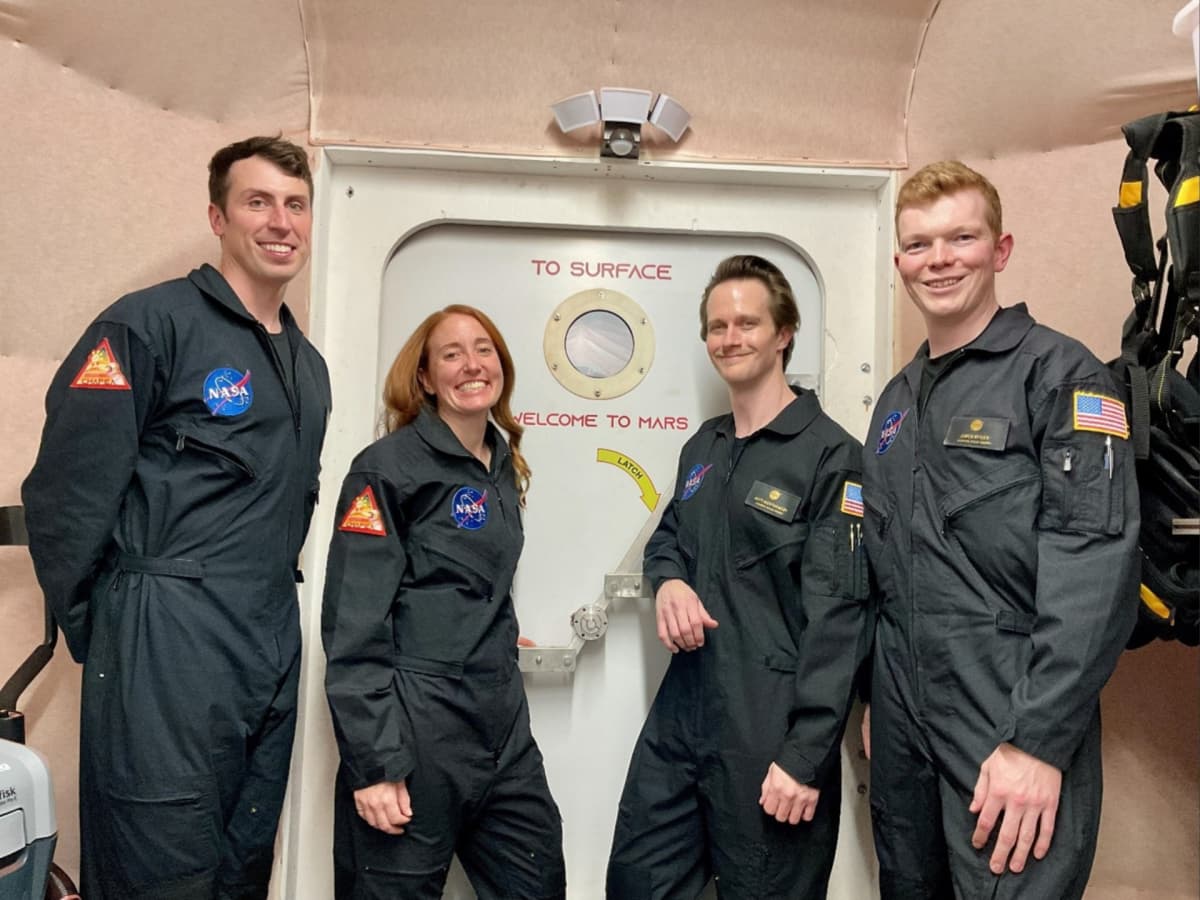
BREAKING: Scientists are exploring the potential of a fungus found at Chernobyl to protect astronauts on Mars from harmful cosmic rays. As space missions to Mars become increasingly feasible, the black fungus, known as Cladosporium sphaerospermum, has garnered attention for its unique ability to thrive on ionizing radiation.
In the late 1990s, researchers discovered this resilient fungus growing inside reactor No. 4 of Chernobyl, the site of the worst nuclear disaster in history. Unlike humans, which suffer deadly effects from radiation, this fungus appears to utilize it as an energy source. Dr. Joshua Nosanchuk, a professor at the Albert Einstein College of Medicine, stated, “Fungi have developed interesting protective and advantageous abilities,” highlighting the fungus’s remarkable adaptation known as radiosynthesis.
The key to the fungus’s survival lies in melanin, the same pigment that protects human skin from UV rays. While melanin shields against sunlight, the fungal version not only blocks ionizing radiation but actively feeds on it. Ekaterina Dadachova, a leading researcher in the study of this fungus, explained that “ionizing radiation was playing a role of an energy source,” allowing the fungus to thrive without traditional nutrients.
Recent experiments aboard the International Space Station revealed that samples of C. sphaerospermum grown for 30 days reduced radiation exposure by approximately 2 percent. Researchers estimate that a 21-centimeter layer of this fungus could significantly mitigate radiation exposure on Mars, making it a potential biological shield for future missions.
This groundbreaking discovery has sparked intense interest in the scientific community, although doubts remain about the fungus’s ability to truly “feed” on radiation. Nils Averesch, an engineer from Stanford University, noted in a scientific journal, “Actual radiosynthesis, however, remains to be shown.” More research is needed to confirm whether the fungus’s melanin acts solely as protection or if it can indeed convert radiation into usable energy.
As space agencies prepare for potential missions to Mars, the implications of this research are profound. The ability to harness a self-generating biological shield could revolutionize astronaut safety. The exploration of distant planets has never felt closer, and the role of Chernobyl’s fungus may play a vital part in humanity’s next giant leap into space.
Stay tuned for further updates as research develops on this promising avenue for protecting astronauts from cosmic radiation. The potential for a safe journey to Mars is unfolding before our eyes, driven by the extraordinary capabilities of this resilient fungus.