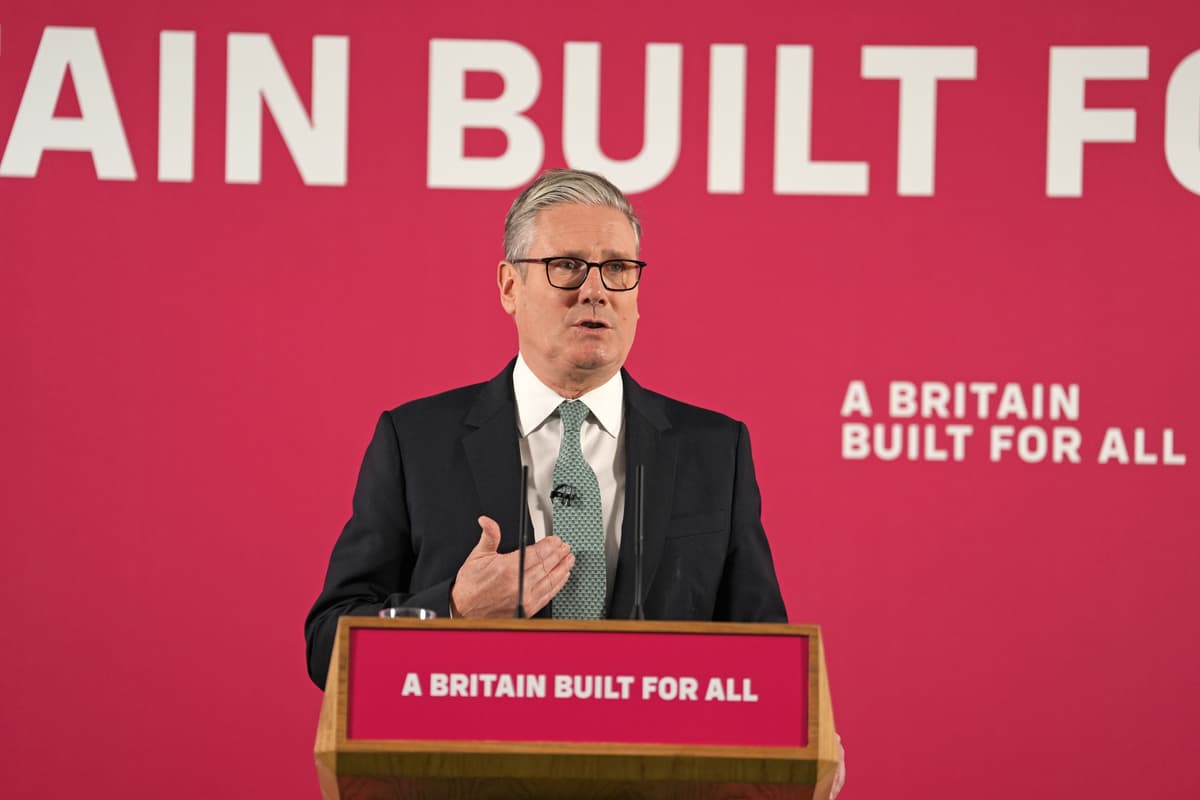
URGENT UPDATE: British Prime Minister Sir Keir Starmer has ignited controversy by calling for closer relations with the European Union, openly criticizing the ramifications of Brexit during a speech at the Guildhall in London on Monday. His remarks, reported by the Financial Times, suggest that reversing some of the negative impacts of Brexit “will require trade-offs,” a statement that has sparked fierce debate across the political spectrum.
Starmer, in a bold admission, indicated that the Labor Party is contemplating a manifesto-busting increase to income tax rates ahead of the upcoming Budget. This shocking revelation comes as polls show Labor’s support plummeting to 18 percent, trailing closely behind the Conservative Party at 17 percent and the Reform Party leading with 29 percent.
Why This Matters NOW: Starmer’s call for a shift in Brexit policy comes at a critical time when public sentiment appears to be shifting against traditional political parties. His comments suggest a significant pivot for Labor, as he highlights “wild promises” made during the 2016 Brexit referendum that remain unfulfilled. “How it was sold and delivered was simply wrong,” he stated, emphasizing the ongoing consequences the UK faces from its decision to leave the EU.
In targeting figures like Kemi Badenoch and Nigel Farage, Starmer’s speech underscored a stark divide within British politics over independence and its future direction. He labeled it “utterly reckless” to use Brexit as a model for future foreign policy, pointing to the need for a recalibrated approach that aligns more closely with European partners.
Starmer’s comments have met with backlash from both sides of the political aisle. Critics argue that his stance indicates a lack of understanding of the electorate’s desire for sovereignty and independence, as evidenced by the decisive votes in favor of Brexit in both the 2016 referendum and the subsequent elections.
As the political landscape continues to shift, the implications of Starmer’s remarks could be significant for Labor’s prospects in the next general election. With a dwindling support base, the party must navigate the challenges posed by a resurgent Reform Party and the ongoing Brexit debate.
What’s Next: With the next election looming, all eyes will be on how Starmer and the Labor Party respond to this growing discontent. Will they stick to their proposed tax increases and EU alignment, or will they pivot to embrace a more populist approach to regain voter trust? The coming weeks will be crucial as political strategies unfold and public sentiment evolves.
Stay tuned for more updates as this story develops. The stakes are high, and the future of Britain’s relationship with Europe hangs in the balance.