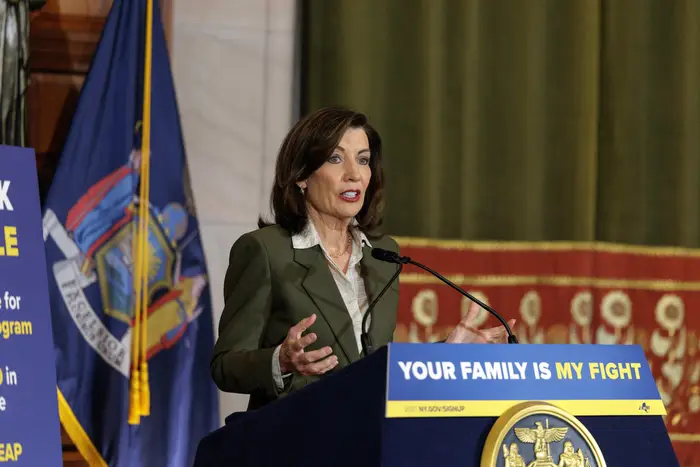
UPDATE: New York Governor Kathy Hochul has just proposed crucial amendments to the Medical Aid in Dying Act, adding requirements that could reshape the landscape of physician-assisted death in the state. This significant move comes as Hochul navigates intense discussions surrounding the controversial legislation, which is currently awaiting her signature.
The proposed amendments include a requirement for terminally ill patients to videotape their requests for life-ending medication, a measure that has raised eyebrows among advocates and opponents alike. Hochul’s recommendations also call for a seven-day waiting period before patients can receive prescribed life-ending drugs, alongside mandatory mental health evaluations by psychiatrists for anyone requesting assistance in ending their life.
“This is a very weighty decision for me,” Hochul stated, acknowledging the strong emotions surrounding the issue. “I hear from a lot of people on that issue.” Her comments highlight the deeply personal stories shared by lawmakers, reflecting on themes of individual liberty and the struggle of caring for dying loved ones.
As of now, Hochul’s amendments, which must gain approval from the state legislature, may impact the timeline for the law’s implementation. Instead of becoming effective immediately, she has suggested delaying its activation by a year. The Medical Aid in Dying Act is one of over 200 bills requiring action from Hochul before the end of the year, creating a pressing timeline for deliberation.
Advocates of the bill, including Compassion & Choices, have voiced concerns that the videotaping requirement is excessive and unprecedented, noting that no other states impose such a condition. They emphasize that the bill already encompasses numerous safeguards, including requiring certifications from two physicians that the patient has a terminal illness with a prognosis of six months or less to live.
The debate is not without significant opposition. The New York State Catholic Conference, representing the state’s Roman Catholic bishops, has vocally condemned the legislation. Spokesperson Bob Bellafiore remarked, “These chapter amendments are basically deck chairs on the Titanic,” arguing they do not alleviate the moral concerns regarding the bill.
The emotional weight of this debate is underscored by personal testimonies from advocates who have witnessed loved ones suffer through terminal illnesses. Rallies supporting the bill have occurred at the State Capitol and in New York City, showcasing the divide within the community.
In light of the ongoing discussions, Assemblymember Amy Paulin and state Senator Brad Hoylman-Sigal, the bill’s sponsors, have remained tight-lipped about the proposed changes, stating they are unable to comment on the bill’s current status. Hochul’s spokesperson, Kara Cumoletti, confirmed that the governor is still reviewing the legislation, adding to the uncertainty surrounding its future.
With the deadline for Hochul’s decision fast approaching, the eyes of New Yorkers and proponents of physician-assisted death are on Albany. The outcome of these amendments could have significant implications, not just for the state, but also for the ongoing national dialogue surrounding end-of-life choices.
Stay tuned for further updates as this story develops.