More than 160 House Democrats voted against two bills aimed at curbing foreign influence in U.S. schools on Thursday. Despite achieving bipartisan support, the proposals faced significant opposition from Democratic leadership, reflecting deep divisions on education policy.
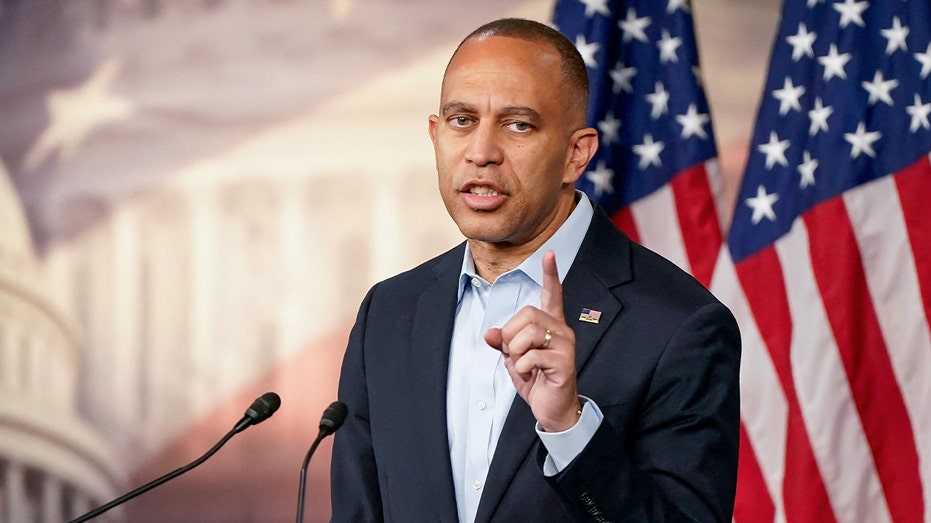
House Minority Leader Hakeem Jeffries, representing New York, voiced strong opposition to the measures. “We just want to educate our children, focus on reading, writing and arithmetic, developing a holistic child, giving them the ability to think critically,” Jeffries stated in an interview with Fox News Digital. He criticized Republicans, claiming they are dismantling the Department of Education, with “literally 90% of the Department of Education as it existed last year now gone.”
One of the bills, spearheaded by Kevin Hern, the House GOP Policy Committee Chairman from Oklahoma, seeks to prohibit federal funding for elementary and secondary schools that engage in programs or cultural exchanges receiving support from the Chinese government. This legislation passed with a vote of 247 to 166, with 33 Democrats breaking ranks to support it, while 166 Democrats opposed it.
The second bill, introduced by Aaron Bean, a Republican from Florida, mandates that all public elementary and secondary schools inform parents of their right to inquire about any foreign influence in their children’s education. This measure passed with a vote of 247 to 164, also with 33 Democrats voting in favor and 164 against.
During the debate, Democrats raised concerns about the vagueness of the bills. Representative Bobby Scott of Virginia questioned the criteria for determining what constitutes direct or indirect foreign influence. “The bill gives no guidance on what acting directly or indirectly on behalf of means, or how you are supposed to know,” Scott remarked. He further challenged whether scrutiny would apply to all parents or specifically target contributions from Chinese American families.
Republicans defended the legislation as necessary steps to protect U.S. schools from malign foreign influence. They argue that the bills are commonsense measures designed to ensure educational integrity. Despite the bipartisan passage, the Democratic opposition reflects broader tensions surrounding education funding, foreign relations, and public policy.
As the political landscape evolves, the implications of these votes may resonate in future legislative sessions, particularly in the context of U.S.-China relations. The ongoing dialogue around educational policy continues to highlight the complexities of governance and the differing priorities among lawmakers.