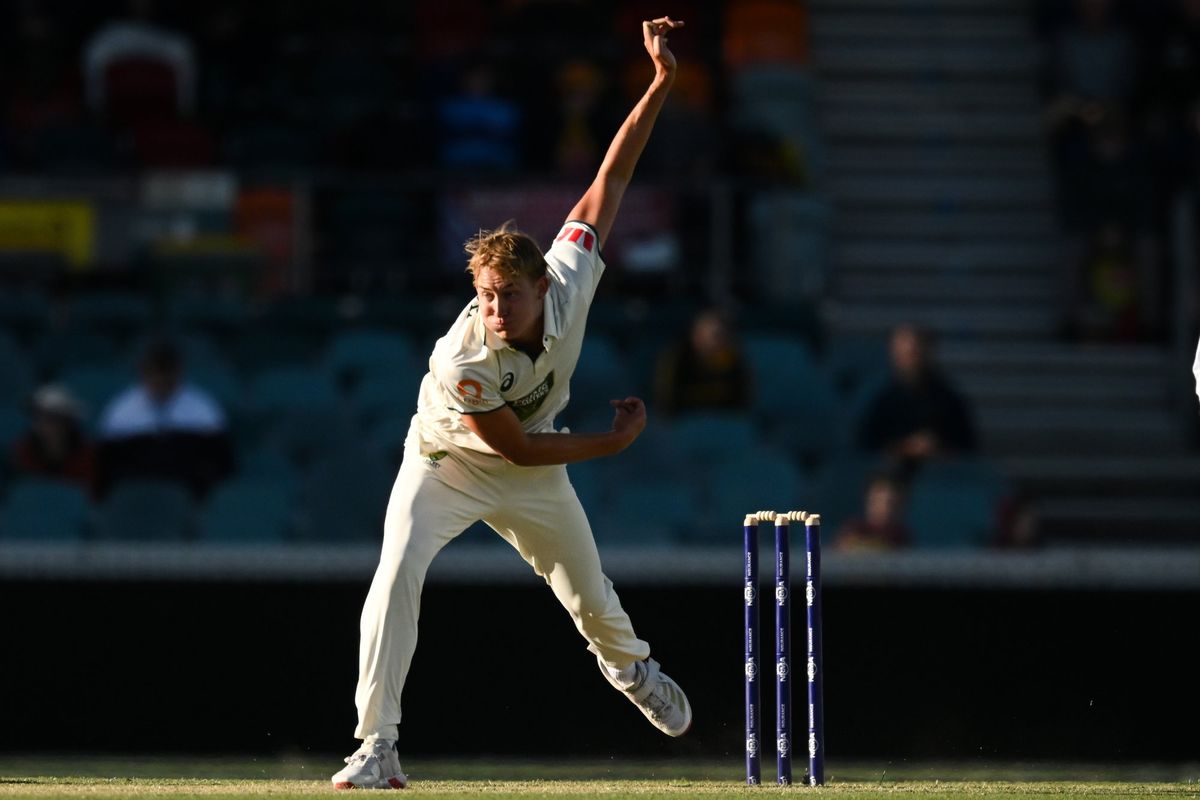
Charlie Anderson, a talented paceman from the Kamiloroi nation, etched his name in cricket history by representing the Prime Minister’s XI in Canberra this past weekend. This match marked a significant milestone, as Anderson became one of only six Indigenous players to don the Prime Minister’s XI jersey since its inception during the tenure of former Prime Minister Sir Robert Menzies in the 1950s. Notably, he is the first Aboriginal cricketer to be included in the squad in consecutive years, joining an elite group that includes the likes of Matthew Bradley, who achieved this feat in 2002 and 2004.
Reflecting on his achievement, the 20-year-old expressed his gratitude, stating, “That’s really good – it’s pretty special. I feel I’m very lucky.” Anderson follows in the footsteps of previous Aboriginal representatives, including Scott Boland, D’Arcy Short, and Dan Christian. His selection is a testament to the ongoing representation of Indigenous athletes in Australian sports.
Anderson’s performance in the match against the England XI was commendable, finishing with figures of 1-51 from 13 overs. The match, a pink-ball, day-night fixture held at Manuka Oval, concluded with the Prime Minister’s XI suffering an eight-wicket loss. Despite the defeat, Anderson’s contributions remain significant, particularly following his impressive performance last season, where he took 2-30 against a touring Indian side.
Facing the Challenge of the England Lions
In this latest encounter, only three senior players from the English Test squad participated, with the remainder of the lineup comprising the England Lions, a reserve side currently touring Australia. This follows a trend where some Test stars opted for net practice over participating in traditional tour fixtures, leading to discussions about the significance of such matches. Anderson, however, saw the quality of the England Lions as a worthy challenge. He stated, “I think that the England Lions squad has some extremely talented players. It was still a very talented team to come against and they’re definitely a good challenge for us.”
The match provided valuable experience for Anderson, who has faced the England Lions multiple times over the past month. He noted the variety of challenges posed by different playing conditions across venues in Brisbane and Perth, which ultimately contributed to his development as a bowler.
Overcoming Injury and Looking Ahead
After a successful stint in the Under-19 World Cup nearly two years ago, Anderson faced a setback due to a stress fracture in his back. He has since transformed this challenge into an opportunity for growth. “I have been building up my bowling loads for the start of this season and hopefully I can push my case for the New South Wales team,” he said. His commitment to improvement is evident, as he aims to enhance his performance in the upcoming matches.
Anderson has also modified his bowling action, which has positively impacted his speed and accuracy. He has noted an increase in his ball speed, now reaching into the 130s, which he attributes to focusing on different aspects of his game during his recovery. “It’s a chance that a lot of other bowlers don’t get, so to take advantage of it is a huge positive,” he explained.
As he looks to the future, Anderson draws inspiration from fellow Aboriginal cricketer Brendan Doggett, who has successfully secured a spot in Australia’s Test XI. “It gives guys like me inspiration to work hard and do as well as I can,” he remarked. Anderson’s journey reflects the potential of young Indigenous athletes in Australian cricket, as he aims to continue his ascent in the sport.