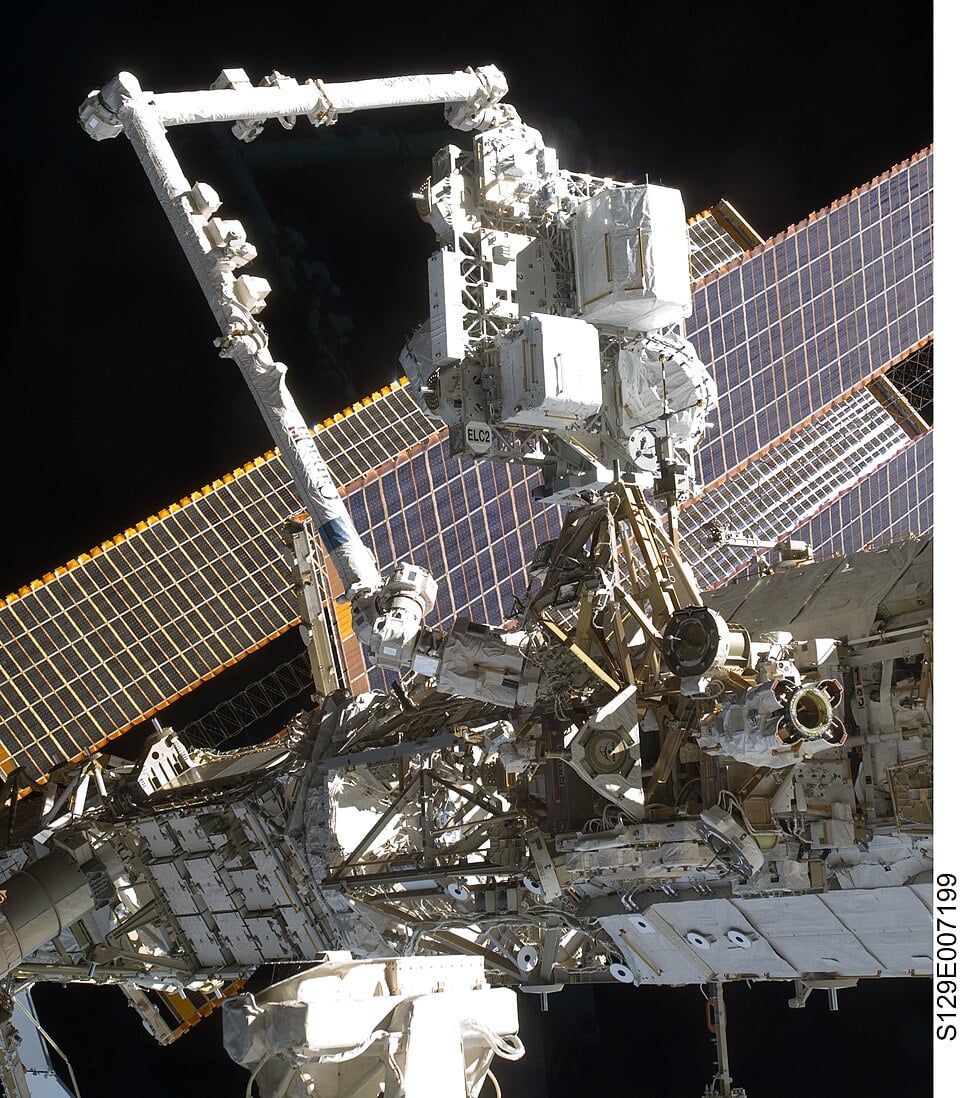
A new research initiative is underway aboard the International Space Station (ISS) aimed at understanding the behavior of soft matter, including everyday substances like mayonnaise and creams. This project, known as COLIS, represents a significant advancement in materials science and is the result of over 25 years of collaboration between physicists from Italy and France.
Soft matter refers to materials such as gels, foams, and colloids, which exhibit unique properties due to their internal structures. These materials undergo gradual changes over time, influenced by factors such as gravity. On Earth, gravity affects how particles cluster and rearrange within these substances, making it challenging for scientists to study their behavior comprehensively.
Luca Cipelletti, a physicist at the Laboratoire Charles Coulomb, and Roberto Piazza, head of the Soft Matter laboratory at Politecnico di Milano, have spearheaded this research to explore soft matter in a microgravity environment. COLIS, the experimental facility they developed, utilizes advanced optical techniques to observe materials without disrupting them.
Understanding Soft Matter in Microgravity
One of the innovative methods employed by COLIS is dynamic light scattering. This technique analyzes the way laser beams interact with samples, producing speckle patterns that reveal minute changes in the structure of gels and other soft materials over time. The facility is also capable of precisely heating samples to trigger aging processes, allowing researchers to observe molecular-level changes in a controlled manner.
Initial findings from the COLIS project have yielded unexpected insights. The research team discovered that gravity significantly influences the structure of soft matter, affecting material properties over extended periods. This revelation has implications across various industries, including pharmaceuticals, cosmetics, and food production.
Pharmaceutical companies require medications that maintain stability for years, while cosmetics manufacturers aim for creams that remain homogenous. Food producers need emulsions that retain their consistency throughout distribution and storage. The ability to understand how these materials behave in a microgravity environment could lead to groundbreaking advancements in formulation design.
Collaborative Efforts and Future Implications
The COLIS project operates under the auspices of the European Space Agency (ESA) and receives support from both the Italian Space Agency and the French Space Agency. Currently, the facility is analyzing samples of colloidal nanoparticles, which are particularly suited for investigating the internal reorganization and aging of soft materials.
As researchers continue their work aboard the ISS, the potential for new discoveries in materials science grows. Understanding the behavior of soft matter without the interference of gravity may not only enhance product stability across various sectors but also revolutionize the way these materials are formulated and manufactured in the future.
In conclusion, the COLIS initiative exemplifies how space research can provide valuable insights into everyday materials, potentially leading to innovative solutions that benefit multiple industries. The ongoing studies promise to deepen our understanding of soft matter and its applications, marking a significant step forward in materials science.