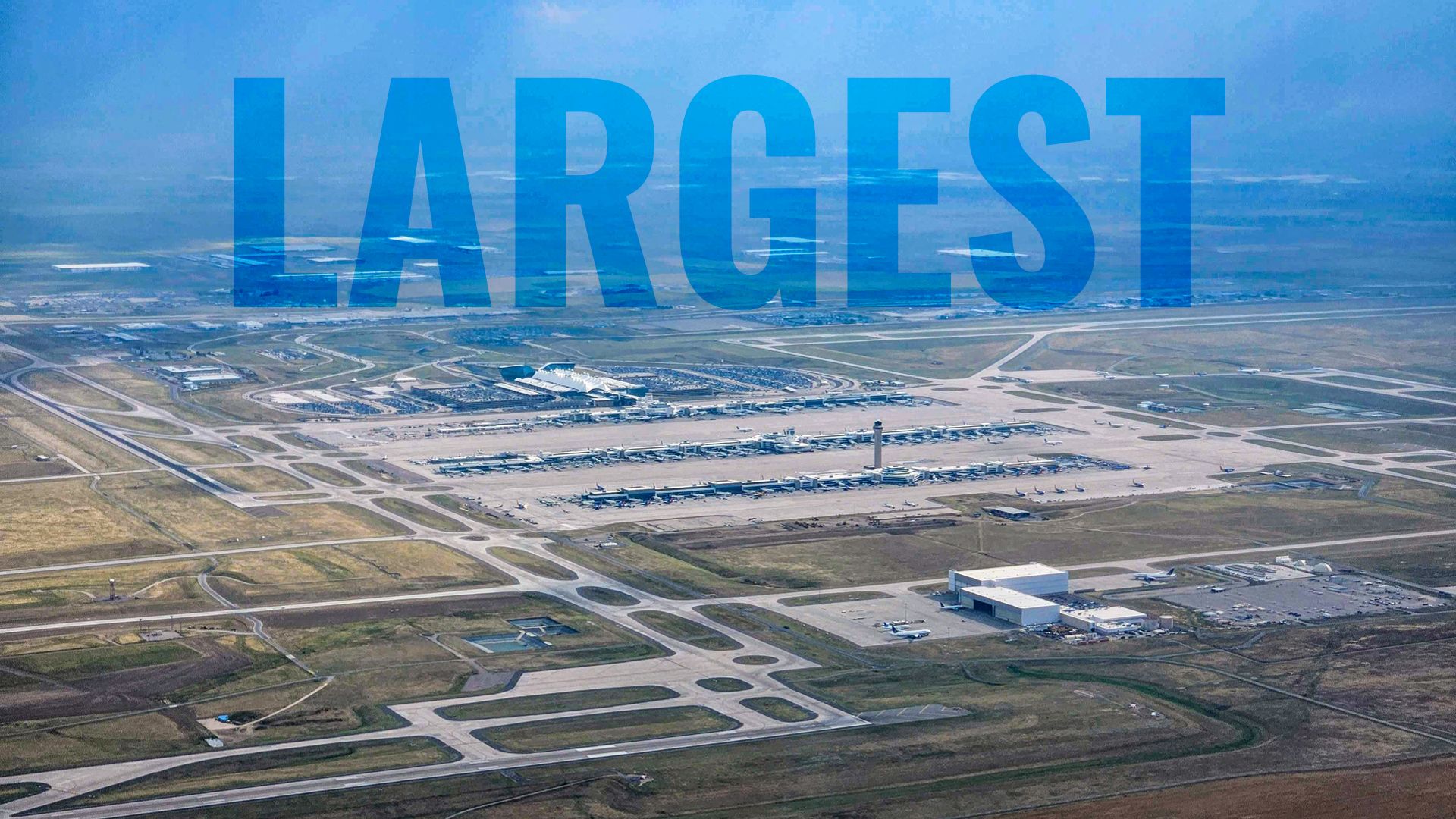
The United States is home to an impressive array of airports, showcasing both size and capacity. Among these, the ten largest airports by land area stand out, providing significant infrastructure to accommodate air traffic. While these airports are also among the busiest in terms of operations, their rankings by passenger numbers differ. This article examines the ten largest airports currently in operation across the country.
10. Detroit Metropolitan Wayne County Airport (DTW)
Covering an area of 7.3 square miles (19 square kilometers), Detroit Metropolitan Wayne County Airport is the largest airport in Michigan and ranks tenth in the nation. Serving the city of Detroit, it operates as a hub for Delta Air Lines and Spirit Airlines. The airport features six runways, including the notable 12,003-foot (3,659-meter) Runway 4L/22R.
The airport houses two passenger terminals, with the Edward H. McNamara Terminal being the larger of the two, containing three concourses and 121 gates. The Warren Cleage Evans Terminal adds another 29 gates to the airport’s total.
9. John F. Kennedy International Airport (JFK)
Located in New York, JFK spans 8 square miles (21 square kilometers) and stands as the busiest airport in the city. It is known for its extensive international traffic, making it a primary gateway to the United States. JFK features four runways, including the impressive 14,511-foot (4,423-meter) Runway 13R/31L, which was once used as a backup for the Space Shuttle program.
The airport comprises five terminals with a combined total of 130 gates. Key airline hubs operating at JFK include American Airlines, Delta Air Lines, and JetBlue.
8. San Francisco International Airport (SFO)
San Francisco International Airport, covering 8.1 square miles (21.07 square kilometers), is the largest airport in California. It serves as a major hub for United Airlines and a smaller hub for Alaska Airlines. SFO operates four intersecting runways and is known for its unique simultaneous parallel approaches.
With a total of 121 gates across four terminals, SFO is also home to United Airlines’ primary maintenance facility, catering to both United and over 40 other customers.
7. Chicago O’Hare International Airport (ORD)
As one of the busiest airports globally, Chicago O’Hare spans 11.9 square miles (30.9 square kilometers) and serves as a major hub for both American Airlines and United Airlines. This airport boasts eight runways, more than any other airport worldwide, facilitating extensive flight operations.
O’Hare features four terminals with a remarkable total of 216 gates, making it the airport with the highest gate count globally.
6. Salt Lake City International Airport (SLC)
SLC covers an area of 11.96 square miles (31 square kilometers) and is the largest airport in Utah. It primarily serves as a hub for Delta Air Lines and features four runways, with three frequently used for commercial flights.
The airport includes a single terminal with two concourses and a total of 83 gates. An expansion is planned, adding more operational capacity to accommodate future growth.
5. George Bush Intercontinental Airport (IAH)
Located in Houston, George Bush Intercontinental Airport spans 15.4 square miles (40 square kilometers) and serves as a major hub for United Airlines. The airport has five runways and features five terminals, providing a total of 121 gates.
IAH plays a significant role in connecting North America to Latin America, enhancing its importance in the aviation landscape.
4. Washington Dulles International Airport (IAD)
Dulles Airport, covering 20 square miles (52 square kilometers), serves as the secondary transatlantic hub for United Airlines. It features four runways, with plans for a fifth. The airport’s main terminal houses four gates, supplemented by two midfield concourses with a total of 135 gates.
Despite its size, Dulles often competes with the smaller Ronald Reagan National Airport for passenger preference due to its proximity to downtown Washington, D.C.
3. Orlando International Airport (MCO)
Orlando International Airport, the busiest in Florida, spans 20.8 square miles (54 square kilometers). It operates multiple airlines, including budget carriers, but lacks a major hub for the largest U.S. airlines. MCO includes four parallel runways and multiple terminals, accommodating a total of 116 gates.
This airport is a key entry point for tourists visiting the region, underscoring its significance in the aviation market.
2. Dallas/Fort Worth International Airport (DFW)
DFW, the largest and busiest airport in Texas, covers an area of 26.6 square miles (69 square kilometers) and serves as a primary hub for American Airlines. This airport boasts seven runways and six terminals, containing a total of 224 gates when a new terminal under construction is completed.
Recognized as the second-busiest airport globally by passenger numbers, DFW functions as a significant hub for international flights.
1. Denver International Airport (DEN)
At the top of the list, Denver International Airport spans an impressive 52 square miles (135 square kilometers). It serves as a major hub for United Airlines and features a unique pinwheel runway layout that enhances operational efficiency. DEN includes a single terminal with three concourses and a total of 169 gates.
Denver’s robust infrastructure supports a growing volume of air traffic, establishing it as a key player in the U.S. aviation sector.
These ten airports exemplify the scale and capacity of air travel facilities in the United States, each contributing to the nation’s connectivity and economic growth.