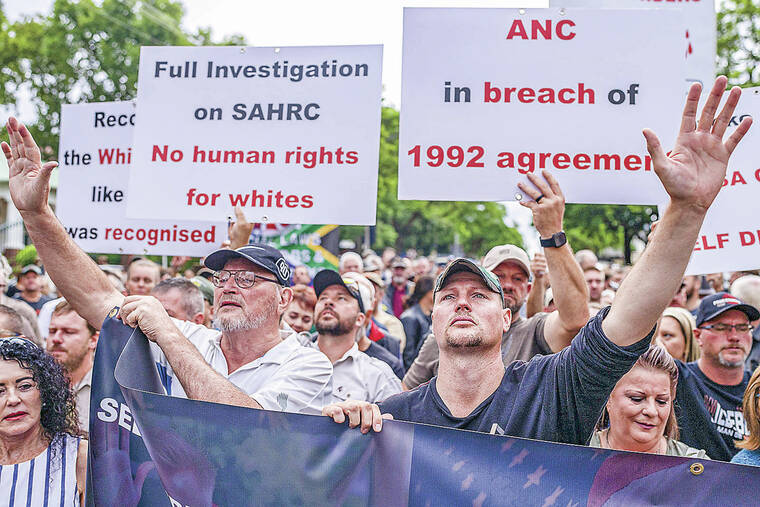
URGENT UPDATE: Afrikaner leaders have reported an extraordinary shift in their engagement with U.S. officials, marking a pivotal moment for the community in South Africa. During a recent visit to Washington, Theo de Jager, a prominent figure in the Afrikaner rights movement, experienced unexpected warmth from Vice President JD Vance’s office, confirming a significant change in diplomatic relations.
In a dramatic policy shift since Donald Trump assumed office, the U.S. has imposed 30% tariffs on South African imports and halted aid to the nation. Trump has publicly cited the alleged persecution of Afrikaners as justification for these actions, claiming they face genocide, which has sparked intense discussions in both Washington and Pretoria.
De Jager stated, “Now, they seem to be all ears,” reflecting on the newfound attention Afrikaner leaders are receiving from U.S. diplomats. The U.S. Embassy in South Africa is now actively involving Afrikaners in discussions about important policy issues, including farm violence and trade tariffs. The embassy has even begun posting in Afrikaans, highlighting a direct engagement with this community.
The Solidarity Movement’s Jaco Kleynhans noted, “The extent of our access and engagement has increased tremendously in the past 10 months.” Weekly discussions with U.S. officials are now the norm, offering Afrikaners a platform to voice their concerns and influence U.S. policy towards South Africa.
Former U.S. Ambassador Patrick Gaspard remarked on the shift, noting that Afrikaner organizations previously lacked significant influence. “It’s astonishing for me to see just how much oxygen they’re getting right now with Trump world,” he said. The changing dynamics have led to a larger-than-usual presence of Afrikaners at the annual July 4 celebration at the U.S. Embassy, where they were welcomed with traditional American treats like Krispy Kreme doughnuts and Budweiser.
However, this newfound attention has sparked controversy within South Africa. Some lawmakers are calling for investigations into Afrikaner organizations, alleging they spread misinformation detrimental to U.S. relations. Kallie Kriel, CEO of AfriForum, expressed that the current U.S. administration’s interest in Afrikaners contrasts sharply with the South African government’s engagement with U.S. adversaries.
De Jager’s interactions with U.S. officials have become increasingly personal. At a recent event, a U.S. diplomat recognized him from an open letter he wrote to Trump advocating for Afrikaner refugee status. “It’s good to see that at least somebody in the embassy read it,” de Jager quipped, highlighting the significant shift in attention towards Afrikaners.
As this situation continues to evolve, observers are urged to watch for further developments in U.S.-South Africa relations and the ongoing impact on the Afrikaner community. This unprecedented engagement marks a crucial moment in the diplomatic landscape, raising questions about the future of both U.S. foreign policy and Afrikaner rights.
Stay tuned for updates as this story develops.