UPDATE: The Larimer County bison herd is making waves in conservation, helping to shepherd 200 purebred bison across the United States. This initiative marks a significant step in restoring the majestic creatures to their natural habitats, with implications for ecosystems and cultural revitalization.
The bison population, which once thrived in the millions across the Great Plains, faced near extinction by the end of the 19th century due to widespread hunting. This decline was not only a loss of wildlife but a devastating blow to Native American tribes reliant on bison for sustenance. Today, thanks to collaborative efforts between Colorado State University, local conservationists, and the U.S. Department of Agriculture, a new chapter is unfolding for America’s bison.
The project began a decade ago when researchers and conservationists established a purebred bison herd free from brucellosis, a bacterial disease that has plagued Yellowstone’s bison. Jennifer Barfield, a professor at CSU, led the way using advanced reproductive techniques to ensure healthy bison calves. “We started applying these techniques to bison, and we had some success,” she stated, highlighting the urgency of the initiative.
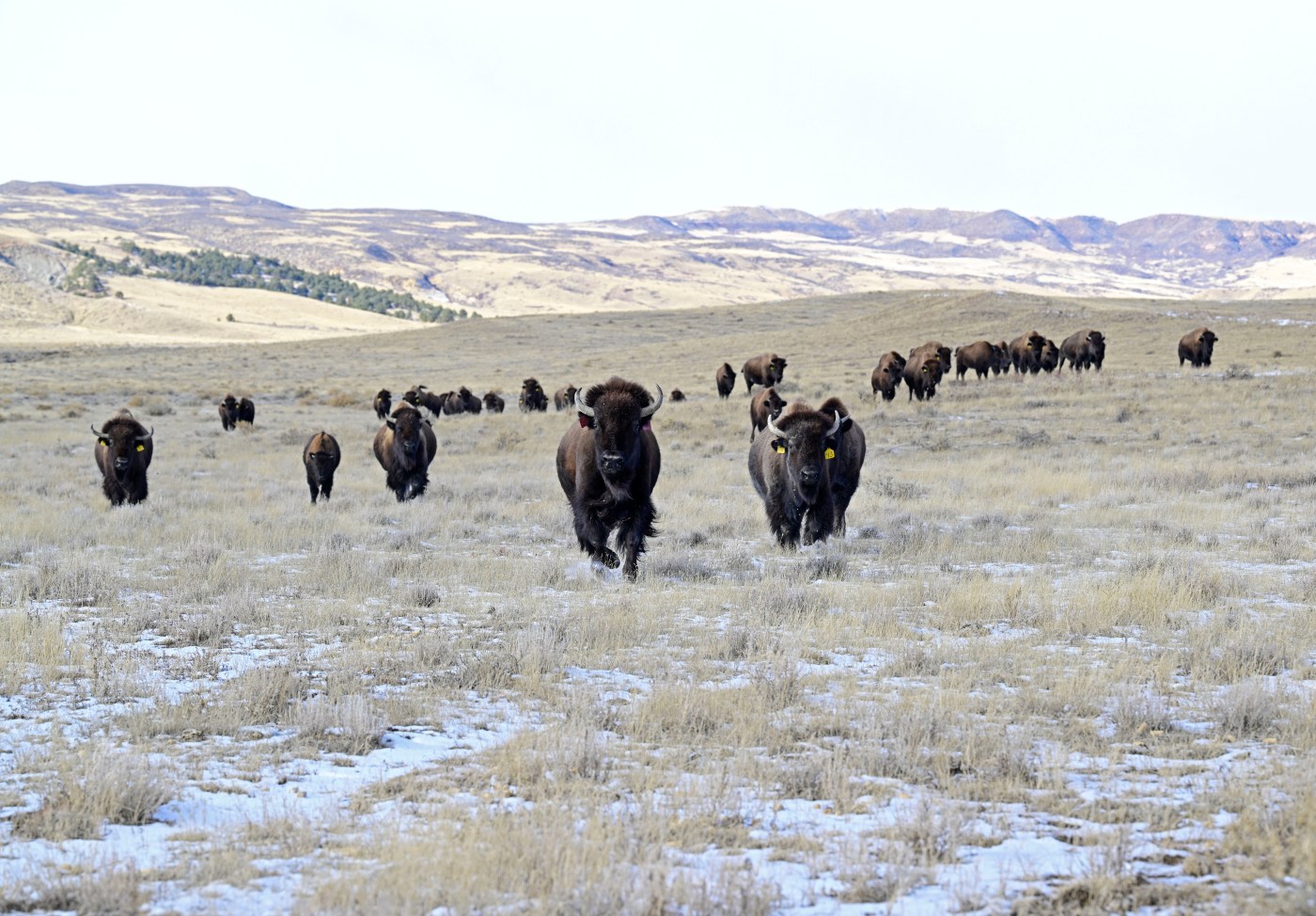
On November 1, 2015, the bison were released into a specially designated area of 2,700 acres within the Soapstone Prairie Natural Area. Since then, the herd has grown, with current numbers at 59 bison—comprised of 29 adults and 30 calves. The goal is clear: propagate purebred genetics and help restore bison populations nationwide.
The impact of this initiative extends beyond wildlife conservation. For many Indigenous communities, the return of bison symbolizes a cultural renaissance. “For many communities, it can be cultural revitalization for tribes, connecting youth back to their traditional ways,” Barfield emphasized. The bison’s role as a keystone species also highlights their ecological importance, reinforcing the interconnectedness of nature and humanity.
Each week, Matt McCollum, the bison manager for CSU, travels to the prairie to care for the herd, ensuring they receive adequate nutrition and monitoring their health. His commitment to these animals is evident as he engages with them, treating them with the same affection one might reserve for pets. “Hi, Fifty,” he greets one familiar bison, underscoring the close bond formed between humans and these majestic creatures.
As the Larimer County herd continues to thrive, plans are underway to distribute healthy bison to various conservation herds across the country. Over the past decade, they have successfully sent around 200 bison to other states, helping to restore their presence in areas where they once roamed freely.
The ongoing work in Larimer County not only revitalizes the landscape but also fosters a deeper connection to the natural world for many. “When you go out and see bison on that landscape, it feels very similar to how it was 150 years ago,” said Meegan Flenniken, Land Conservation Manager for Larimer County. This initiative is not just about conservation; it’s about healing, culture, and the future of biodiversity.
As this inspiring project continues to unfold, the Larimer County bison herd stands as a beacon of hope for conservation efforts nationwide. The legacy of bison is being restored, and with it, the rich tapestry of American history and ecology.