The recent eruptions of the Fagradalsfjall volcano in Iceland have provided a unique opportunity to study the establishment of microbial communities in newly formed lava environments. Over the past three years, researchers have tracked how microbial life colonizes these harsh terrains, revealing a dynamic yet predictable process of ecological succession.
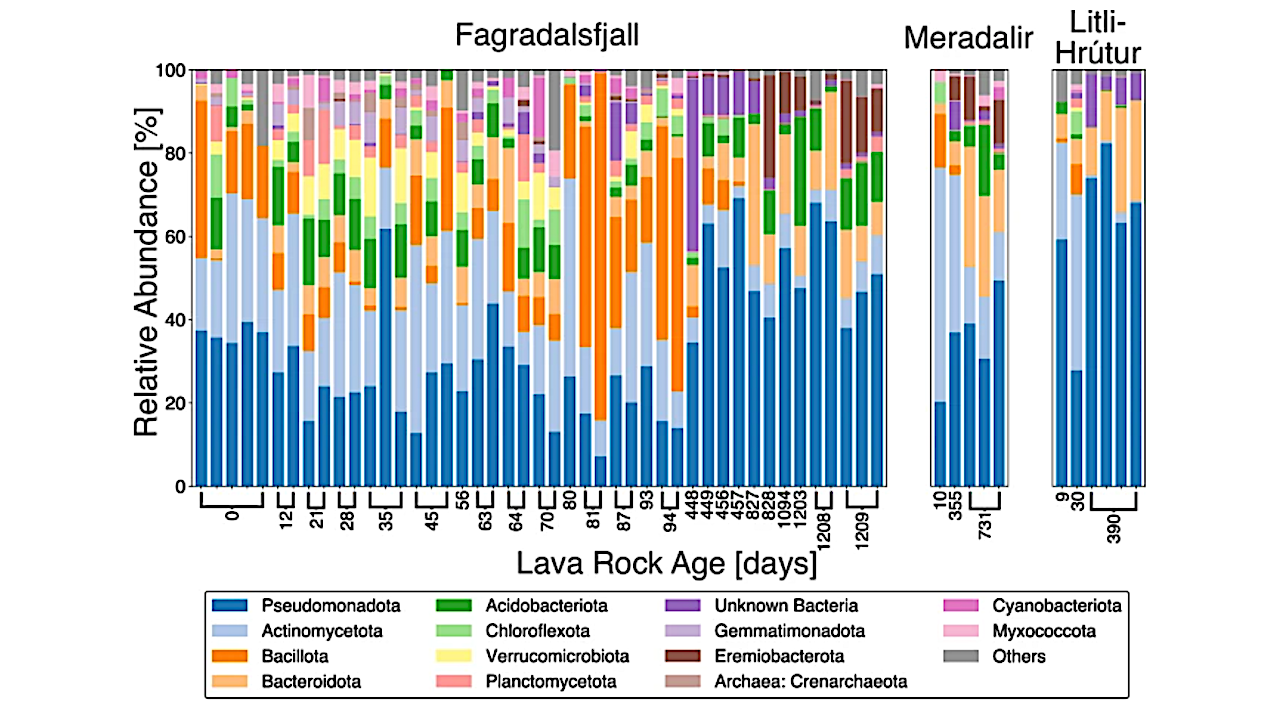
Between 2021 and 2023, scientists conducted a natural experiment, collecting samples from the newly solidified lava of the Fagradalsfjall eruptions. These samples were gathered biweekly during the initial eruption phase in 2021 and at various intervals over the following two years, creating a comprehensive dataset that captures the intricacies of primary succession. This research offers insights into how ecosystems recover after volcanic events.
Understanding Microbial Colonization
The study utilized a variety of methodologies to analyze the microbial communities, including alpha and beta diversity metrics, phylogenetic null modeling, and Bayesian source tracking. The findings indicate a two-stage process in microbial colonization. Initially, there is a rapid establishment of a diverse microbial assemblage, which is followed by a stabilization phase that typically occurs with the onset of winter.
The research team developed a random forest regression model based on the microbial community data from the 2021 eruption. This model successfully predicted the successional stages observed in the eruptions of 2022 and 2023, underscoring the repeatable nature of these ecological processes.
The Significance of the Findings
This study highlights the resilience and adaptability of microbial life in extreme environments. The data suggests that microbial colonization is not only dynamic but also governed by predictable patterns, which can enhance our understanding of ecological recovery following environmental disturbances.
The research was published in *Communications Biology*, emphasizing its relevance to both ecological science and astrobiology. As scientists explore the potential for life in extraterrestrial environments, understanding how life establishes itself on Earth can provide valuable insights into similar processes elsewhere in the universe.
The Fagradalsfjall eruptions, which began in 2021, have created a natural laboratory for studying these phenomena. With a total of 18 sampling sites established across the Fagradalsfjall region and additional sites in the Meradalir and Litli-Hrútur areas, researchers are poised to continue their investigation into the spatial variability of microbial communities.
As this research progresses, it will not only contribute to ecological science but may also inform conservation strategies for restoring ecosystems impacted by volcanic activity. The findings from Iceland’s Fagradalsfjall serve as a reminder of the intricate relationships between life and the environment, even in the most seemingly inhospitable settings.