The United States Air Force (USAF) stands as the third-largest military branch in terms of troop count, with a personnel strength of over 300,000 active duty service members. The USAF is surpassed only by the US Navy, which has approximately 350,000 personnel, and the US Army, the largest branch, with more than 450,000 troops. As a critical component of the Department of Defense, the Air Force maintains a significant presence on several large military installations across the nation. This article highlights the seven largest Air Force bases in the United States by population, detailing their unique roles and contributions to national defense.
1. Joint Base San Antonio: A Military Hub
Joint Base San Antonio (JBSA) is the largest military installation in the United States by population, with approximately 67,000 troops stationed there. This extensive base integrates three major facilities in the San Antonio area: Fort Sam Houston, Lackland Air Force Base, and Randolph Air Force Base. Under the command of the USAF 502nd Air Base Wing, JBSA supports a diverse community consisting of active-duty military personnel, civilians, contractors, and National Guard members.
JBSA-Lackland serves as the exclusive site for Air Force enlisted Basic Military Training, with the 37th Training Wing training over 80,000 students annually. JBSA-Randolph is home to the headquarters of Air Education and Training Command, responsible for several key aviation training programs, including training for Air Force instructor pilots and remotely piloted aircraft pilots.
2. Joint Base Elmendorf-Richardson: Strategic Operations in Alaska
Located in Anchorage, Alaska, Joint Base Elmendorf-Richardson (JBER) serves as a vital strategic power projection platform with a total population of around 40,000 personnel. Established from the merger of Elmendorf Air Force Base and Fort Richardson in 2010, JBER supports multiple military branches and includes a significant number of civilians and contractors.
The base is home to the headquarters of the Alaskan Command and the Alaskan NORAD Region, with F-22 Raptors frequently conducting intercept missions in Alaskan airspace. The 3rd Wing at JBER provides combat-ready airpower for the Indo-Pacific region and operates key aircraft, including the Lockheed Martin F-22 Raptor and the Boeing C-17 Globemaster III.
3. Wright-Patterson Air Force Base: A Research Powerhouse
Wright-Patterson Air Force Base, situated near Dayton, Ohio, is one of the most significant Air Force installations, hosting around 38,000 troops. The base functions as a major hub for research, development, and logistics, employing a substantial civilian workforce and contractors crucial to its operations.
Wright-Patterson serves as the headquarters for the Air Force Materiel Command, overseeing the lifecycle management of Air Force weapon systems. The base is also home to the Air Force Research Laboratory, the National Air and Space Intelligence Center, and the 445th Airlift Wing, which operates C-17 Globemaster III aircraft.
4. Hill Air Force Base: Logistics and Sustainment
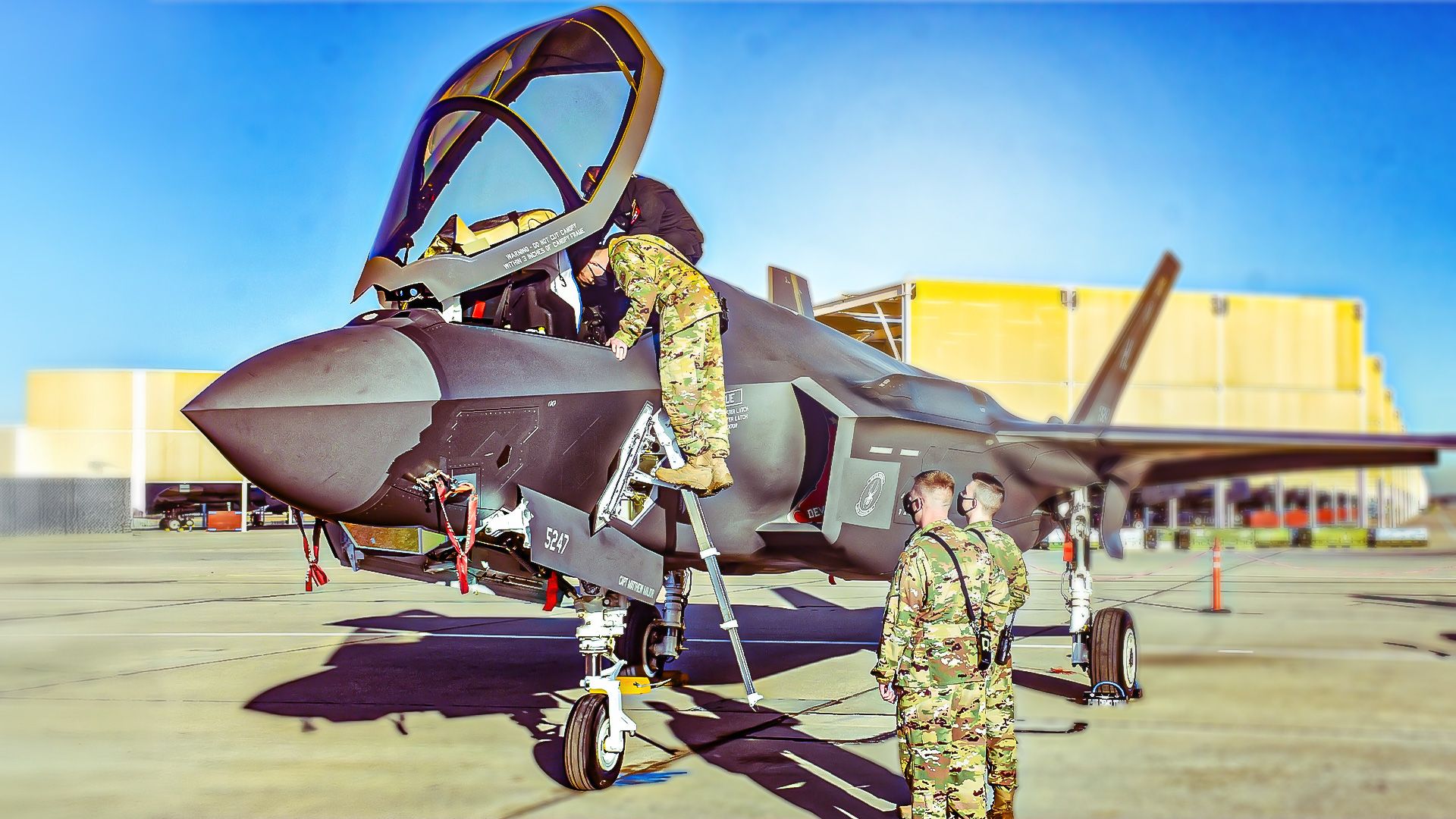
Hill Air Force Base in Northern Utah is a significant military installation with a population of approximately 27,000 personnel. It serves as a vital logistics and sustainment hub, particularly for F-35 operations.
The base employs a diverse workforce, including around 5,600 active-duty military members and 14,000 civilians. The Ogden Air Logistics Complex is the largest organization at Hill AFB, providing worldwide logistics support for various aircraft and weapon systems. The base also plays a key role in the Ground-Based Strategic Deterrent program, which focuses on the next-generation intercontinental ballistic missile system.
5. Eglin Air Force Base: Testing and Development
Eglin Air Force Base, located in the Florida Panhandle, is the largest USAF installation by land area and boasts a workforce of over 20,000 personnel. The base is essential for testing and developing conventional air-delivered weapons, and it supports a large community of military, civilian, and contractor personnel.
The 96th Test Wing at Eglin is responsible for testing all Air Force air-delivered weapons, while the 33rd Fighter Wing provides joint training for pilots and maintainers of the F-35 Lightning II. Eglin also collaborates with nearby special operations forces and hosts non-Air Force units, enriching its operational capabilities.
6. Nellis Air Force Base: Combat Aviation Training
Nellis Air Force Base, situated just outside Las Vegas, Nevada, is a key center for advanced combat aviation training, with a workforce of approximately 14,000 personnel. Known as the “Home of the Fighter Pilot,” Nellis plays a pivotal role in conducting large-scale combat training exercises.
The base manages the expansive Nevada Test and Training Range, providing an ideal environment for military training. Nellis is also the official home of the USAF Air Demonstration Squadron, the “Thunderbirds,” and supports extensive flight operations critical for national defense.
7. Travis Air Force Base: Gateway to the Pacific
Travis Air Force Base, located in Northern California, is often referred to as the “Gateway to the Pacific.” It is the busiest air terminal in the US military and the largest wing in the Air Mobility Command, with a total population of over 13,000 personnel.
The 60th Air Mobility Wing operates a diverse fleet of aircraft, including the C-5 Galaxy and C-17 Globemaster III, to ensure rapid global mobility through strategic airlift and refueling operations. The base also hosts the 621st Contingency Response Wing, which is uniquely prepared to deploy within 12 hours for global operations or humanitarian missions.
Each of these seven bases plays a crucial role in the United States Air Force’s mission to maintain national security and readiness. As the USAF continues to evolve, these installations will remain central to its strategy and operational capabilities.