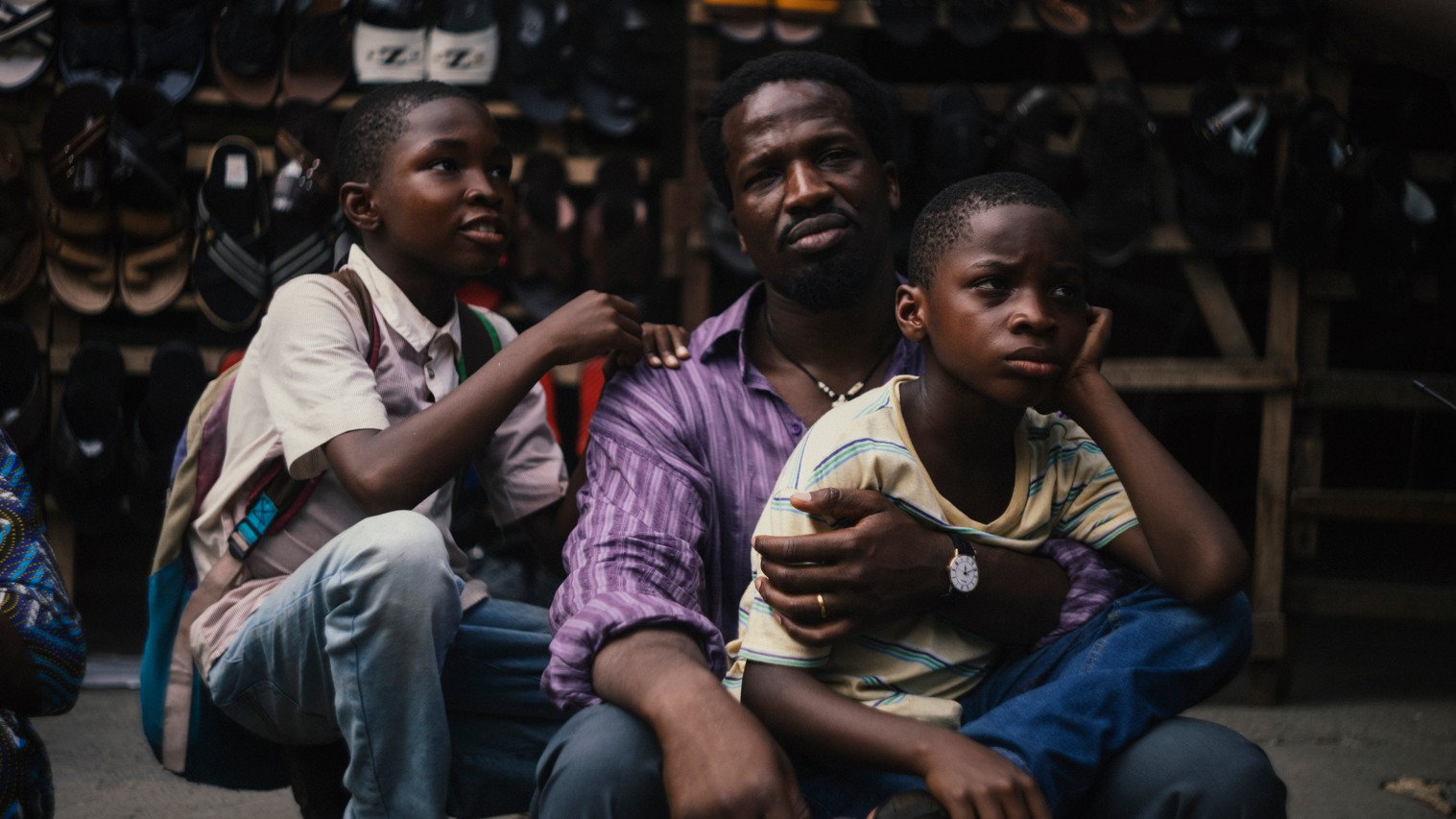
British-Nigerian filmmaker Akinola Davies Jr. has made a significant mark in the film industry with his feature directorial debut, My Father’s Shadow. This semi-autobiographical film set in Lagos has garnered critical acclaim, including a prestigious special mention for the Camera d’Or at the Cannes Film Festival. It has also been selected as the official U.K. entry for the Best International Feature Film at the upcoming Academy Awards.
The film’s success continued into November and December, where it received numerous accolades. Davies was awarded Best Director at the British Independent Film Awards and won two awards at the Gotham Film Awards for Best Breakthrough Director and Best Lead Performance. Recently, he was featured in the 2025 BAFTA Breakthrough Brits list, which highlights promising U.K. talent supported by Netflix.
Exploring Family and Identity
Set against the backdrop of Nigeria’s political turmoil during the 1993 election crisis, My Father’s Shadow follows a father, played by Ṣọpẹ Dìrísù, and his two sons navigating the city amidst unrest. The siblings are portrayed by real-life brothers, Godwin and Chibuike Marvellous Egbo, marking their debut in film. The story weaves together elements of Davies’ family history, as he collaborated on the screenplay with his brother, Wale.
Davies describes the film as a “semi-autobiographical supernatural drama,” highlighting the blend of real experiences and fictional narrative. He reflects on the emotional impact of family stories intertwined with fictional elements, noting, “It’s really hard to separate what’s real and what’s not.”
The film’s exploration of complex familial relationships serves as a cathartic process for the brothers, particularly as they navigate the legacy of their father, who passed away when Akinola was an infant. He shares, “Creating a character that’s flawed holds that character accountable to us, to the women in our lives, the people in our lives.”
Authenticity in Representation
A key aspect of My Father’s Shadow is its commitment to portraying Africa authentically. Davies emphasizes the need to counter stereotypical depictions often seen in media. “We wanted to document something that felt close to our existence in Africa,” he explains. Growing up both in the U.K. and Nigeria has given the brothers a unique perspective, which they sought to capture in their film.
The film presents a vibrant representation of Nigerian life, shedding light on the everyday experiences of its people. “There are people thriving, there are people falling in love,” says Davies, reinforcing that Nigerians share the same aspirations and cultural references as those in the West.
The authenticity extends to the film’s details, with Davies stressing the importance of specificity in storytelling. He notes that incorporating elements from 1993 was essential for creating a realistic atmosphere. “If in our writing we mentioned something that was not of that time, we quickly had to do a search,” he adds.
Casting choices also reflect this authenticity. The chemistry between the Egbo brothers contributed to the film’s emotional depth, which was a fortunate discovery during the casting process. “I didn’t even know they were brothers the first day I met them,” Davies recalls.
Ṣọpẹ Dìrísù, known for his stage work and recent performances, was chosen for the role of the father due to his compelling presence. Davies recounts their initial meeting, noting Dìrísù’s ability to not only bring charisma to the role but also serve as a mentor to the younger actors. “He was a perfect fit and a real blessing to the project,” Davies states.
As Davies continues to reflect on the film’s journey, he expresses gratitude for the collaborative effort involved in its creation. “I think I’m really just a reflection of my crew,” he emphasizes, highlighting the significance of the team behind the project.
Looking ahead, Davies and his brother have several projects in mind, aiming to continue their work in Nigeria. “We know we want to shoot in Nigeria,” he affirms, expressing excitement about future opportunities for collaboration.
Through My Father’s Shadow, Akinola Davies Jr. not only confronts his family’s legacy but also paves the way for a more nuanced representation of Nigerian life in cinema. The film’s accolades and recognition signal a promising future for Davies and his commitment to authentic storytelling.