UPDATE: In a pivotal ruling today, Santa Clara County Superior Court Judge Hanley Chew denied a motion to exclude the term “genocide” from the ongoing felony vandalism trial involving five pro-Palestinian demonstrators at Stanford University. This decision is expected to significantly shape the trial’s narrative as jury selection approaches in January 2026.
The ruling allows the defense to reference the term “genocide” while arguing the motivations behind the defendants’ actions during a demonstration in June 2024. The five accused—German Gonzalez, Maya Burke, Taylor McCann, Hunter Taylor Black, and Amy Zhai—face up to three years in prison if convicted of vandalizing Stanford’s executive offices. Out of the original thirteen arrested, these five are the last remaining defendants, as others accepted plea deals or entered diversion programs.
Judge Chew emphasized the necessity for caution regarding the use of the term, acknowledging its powerful and politically charged nature. “I will deny the prosecution’s motion. However, I would ask defense counsel to be very judicious with the use of the word ‘genocide,’” Chew stated, highlighting the sensitivity surrounding the term. He warned that should it be exploited, he would sustain objections and restrict its further use.
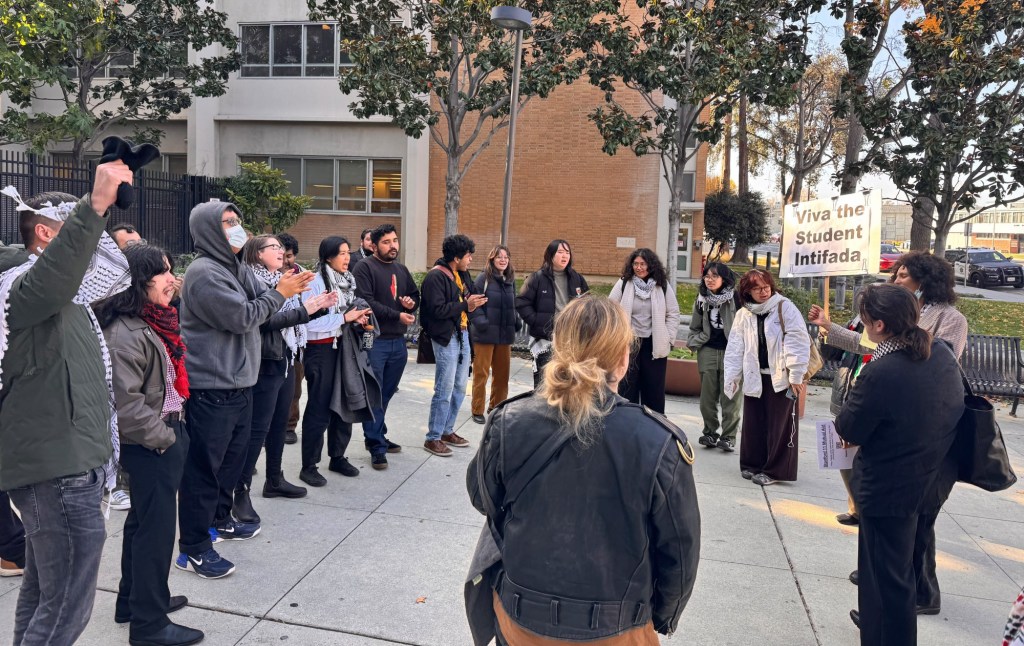
Courtroom supporters, many wearing kaffiyehs in solidarity with the protesters and Palestinians in Gaza, filled the gallery, creating a charged atmosphere. Chew had to admonish some audience members for disruptions as emotions ran high. Outside the courthouse, supporters gathered peacefully to chant in support of Palestinians, marking three years since intensified military operations in Gaza resulted in tens of thousands of casualties.
During the hearing, Deputy District Attorney Rob Baker argued that references to genocide could lead to hearsay and speculation. “I’m asking the court to exclude testimony and argument that characterizes Israel’s actions as genocide,” Baker asserted, stressing the importance of focusing on the specific vandalism charges rather than broader political motivations.
In response, defense attorney Leah Gillis contended that the term is essential to understanding the defendants’ perspective and actions. “Using the word ‘genocide’ is describing what our clients believed and acted on,” she argued, insisting that their motivations are central to determining intent, a key factor in the vandalism charges.
Judge Chew acknowledged the importance of discussing motivations but maintained that testimony must remain relevant and avoid hearsay. “Defendants do have a right to speak about motivations and actions,” Chew affirmed, while reiterating that any testimony would be “severely limited.”
The discussions around the trial continue to highlight the tensions surrounding free speech and political expression. Following the hearing, defense attorney Tony Brass criticized the prosecution’s desire for a narrow focus on vandalism. “By their actions and words, what they want is a clean vandalism trial,” he remarked, arguing that the human story behind the actions should not be overlooked.
As the trial unfolds, the implications of today’s ruling could resonate far beyond the courtroom, touching on broader issues of activism and expression in sensitive political contexts. With jury selection set to begin in January 2026, all eyes will be on how the narrative develops as both sides prepare for the next phase of this high-stakes trial.
Stay tuned for more updates as this story develops.