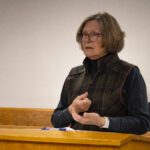
Ionia County’s Board of Commissioners approved significant revisions to the Road Department’s budgeting policies on Tuesday, aimed at streamlining the construction processes for primary and local roads and bridges. The updates, proposed by Managing Director Linda Pigue, are designed to simplify the funding and regulatory requirements associated with these crucial infrastructure projects.
The revisions include a resolution that would allow for the “grandfathering” of local bridge funding applications submitted before January 1, 2026. This change addresses concerns regarding the financial burden placed on townships, particularly in light of rising construction costs. Pigue emphasized that the existing policies required local townships to cover substantial costs associated with bridge projects, which has become increasingly challenging for some municipalities.
Under the revised “Policy 03,” titled “Construction on Primary Roads and Bridges,” the Ionia County Road Department will fully fund upgrades to all bridges and roads within the primary road system. This shift addresses the financial barriers previously imposed on townships, which were required to contribute 50% of the costs for preliminary engineering, construction engineering, and the local match for funding.
The new policy states: “This applies to all bridge preservation, rehabilitation, and replacement projects, including those constructed with state and federal funds.” The intention is to alleviate financial pressure on local governments, which often struggle to meet their share of project costs.
Conversely, the revised “Policy 04” maintains that local townships will still be responsible for all expenses related to improvements or preventative maintenance on local roads and bridges. This includes engineering, permitting, and right-of-way expenses associated with projects funded through the local bridge program.
During the meeting, Ionia County Commissioner Jack Shattuck expressed reservations about the need for these policy changes. He argued that the previous policies had operated effectively for many years and questioned whether a revision was warranted based on a single instance of financial difficulty. “The policy we had in place worked fine for a lot of years, it just didn’t work OK for this one instance,” he stated.
In response, Pigue highlighted the escalating costs of bridge repairs and replacements. She noted that replacing all 33 primary road bridges would incur a total cost of approximately $3,722,920, while replacing all 34 local road bridges would amount to around $14,731,250. The high costs associated with these projects necessitate the revisions to ensure that local governments can effectively participate in funding.
She specifically mentioned a situation involving a bridge replacement project with an estimated cost of $1,452,000, which required a 5% local match. According to the previous policy, the township would have been responsible for half of this local match, amounting to $72,600, which was to be split with Ronald Township. However, when presented with the costs, the township expressed financial constraints, indicating that many local governments face similar challenges.
Commissioner Larry Tiejema voiced support for increasing the county’s road millage as a means to fund improvements to both primary and local roads and bridges, although no concrete actions were taken during the meeting regarding this suggestion.
The Board ultimately voted 5-2 in favor of the policy revisions and the resolution to grandfather existing applications, with Shattuck and Tiejema opposing the measures. Following the vote, the commissioners discussed various other matters, including the scheduling of their annual organizational meeting and contracts related to road maintenance.
As Ionia County continues to address its infrastructure needs, the updated policies reflect a proactive approach to ensuring that local governments can effectively manage their financial responsibilities in road and bridge construction.