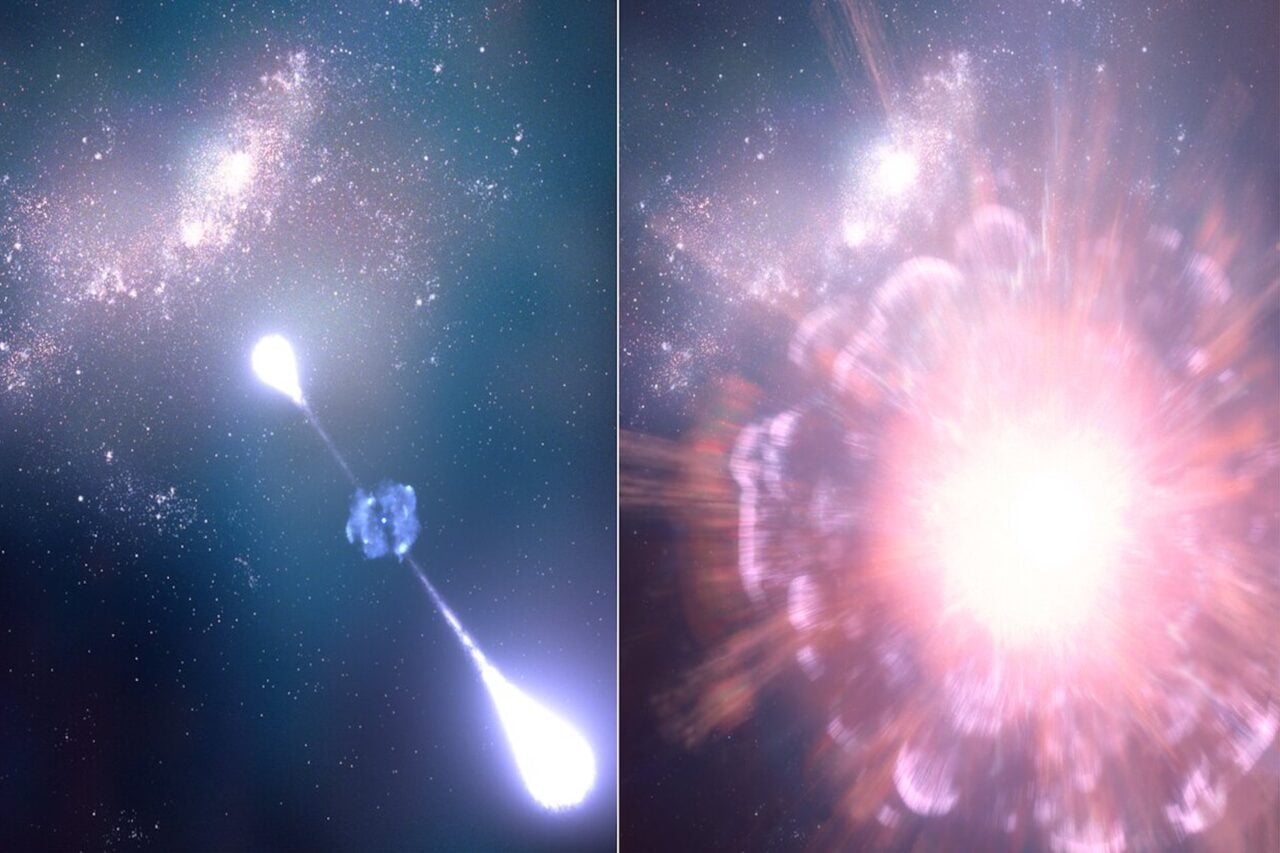
A powerful gamma-ray burst detected earlier this year has been traced back to the **oldest supernova** ever observed, taking place when the universe was just **730 million years old**. The **James Webb Space Telescope** played a crucial role in identifying the aftermath of this ancient stellar explosion, setting a new record for the earliest known event of its kind. This discovery eclipses the previous record held by a supernova that occurred **1.8 billion years** after the **Big Bang**.
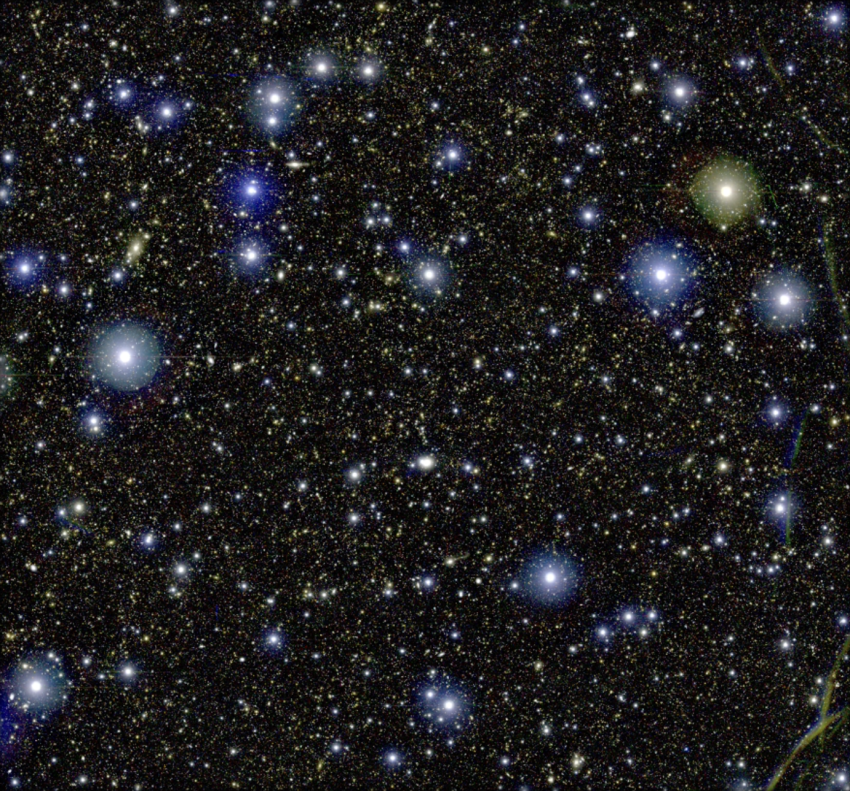
The initial detection of the gamma-ray burst occurred on **March 14, 2023**, through the **SVOM mission**, which stands for Space-based multi-band astronomical Variable Objects Monitor. Following its detection, three additional telescopes quickly pinpointed the burst’s location in the night sky and estimated its timing in cosmic history.
Astronomers have noted that gamma-ray bursts are rare events, with only a few detected within the first billion years of the universe’s existence. According to **Andrew Levan**, an astrophysics professor at **Radboud University** and lead author of a study published in *Astronomy and Astrophysics Letters*, the significance of this particular event cannot be overstated. “This particular event is very rare and very exciting,” he stated.
Understanding the Supernova’s Significance
Gamma-ray bursts typically last only a few seconds, often resulting from dramatic cosmic events such as the collision of two neutron stars or a neutron star merging with a black hole. In this instance, the observed burst lasted for **10 seconds**, indicating it likely resulted from the explosive death of a massive star. The **Webb telescope** observed the supernova on **July 1, 2023**, approximately three months after the initial gamma-ray burst was recorded. This interval allowed the supernova’s brightness to increase, making it easier for the telescope to capture the event.
Supernovae generally brighten rapidly over the course of weeks. However, because this explosion occurred so early in the universe’s history, its light was significantly stretched due to the expansion of the universe. This stretching means that events take longer to unfold as light travels across vast distances over time.
Upon focusing on this ancient supernova, astronomers compared its characteristics with more contemporary supernovae. To their surprise, they found remarkable similarities. Stars in the early universe contained fewer heavy elements than modern stars, were often more massive, and had shorter lifespans. Given these factors, astronomers anticipated that the oldest known supernova would exhibit distinctly different traits.
“We went in with open minds,” said **Nial Tanvir**, a professor at the **University of Leicester** and co-author of the study. “And lo and behold, Webb showed that this supernova looks exactly like modern supernovae.”
Future Observations and Implications
The team of astronomers involved in this groundbreaking study plans to utilize the Webb telescope further to observe the afterglow of distant gamma-ray bursts. Such investigations may provide deeper insights into the evolution of galaxies over time. “That glow will help Webb see more and give us a ‘fingerprint’ of the galaxy,” noted Levan.
The discoveries made by the Webb telescope not only enhance our understanding of the early universe but also open new avenues for exploration into the formation and characteristics of stars throughout cosmic history. Through these observations, scientists continue to unravel the complex narrative of our universe’s origins and evolution.