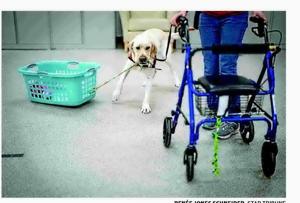
The role of service dogs is evolving, as demonstrated by Teddy, a vibrant 3-year-old yellow Labrador. Recently, Teddy showcased his impressive skills by using his nose to press a wall button, opening a kitchen cabinet by pulling a rope, and dragging a walker across the floor. These actions highlight how trained service dogs are increasingly becoming vital companions for individuals with various disabilities.
The American Kennel Club notes that service dogs are not only trained to assist people with physical disabilities but also play critical roles in helping those with mental health issues. This expanding function allows service dogs to provide support in everyday situations, improving the quality of life for their human partners.
Training and Impact of Service Dogs
Service dogs undergo rigorous training to perform specific tasks that assist their handlers. For example, Teddy’s ability to operate household items significantly aids individuals with mobility challenges. Such tasks may include retrieving dropped items or alerting others in emergencies.
According to the United States Department of Justice, service animals are defined as dogs that are individually trained to do work or perform tasks for people with disabilities. This definition has been crucial in ensuring that service dogs can accompany their handlers in various public spaces. The law allows for these dogs to be present in places where pets are typically not permitted, underscoring their essential role in facilitating independence.
Additionally, the benefits of having a service dog extend beyond physical assistance. Many handlers report improved mental health outcomes, including reduced anxiety and enhanced emotional well-being. This is particularly important for individuals suffering from conditions such as post-traumatic stress disorder (PTSD) or severe depression.
Growing Acceptance and Demand
As awareness of the multi-faceted roles of service dogs grows, so does the demand for these animals. The American Kennel Club reports an increase in inquiries about service dog training and certification. Families and individuals are more informed than ever about the potential benefits that these animals can provide.
Moreover, the rise of therapy animals in various settings—such as schools, hospitals, and nursing homes—has garnered attention. These animals help reduce stress and improve emotional resilience among patients and students alike. While therapy dogs differ from service dogs in terms of training and legal definitions, both play significant roles in enhancing quality of life.
Teddy’s story is just one example of how service animals are adapting to meet the needs of their handlers, proving that their contributions are invaluable. As society continues to recognize the impact of these animals, the future for service dogs appears bright, with more opportunities for training and partnership emerging across the globe.
In conclusion, the expanding roles of service dogs like Teddy are reshaping perceptions of assistance animals. Their ability to perform essential tasks not only fosters independence but also promotes mental health, making them indispensable companions for countless individuals.