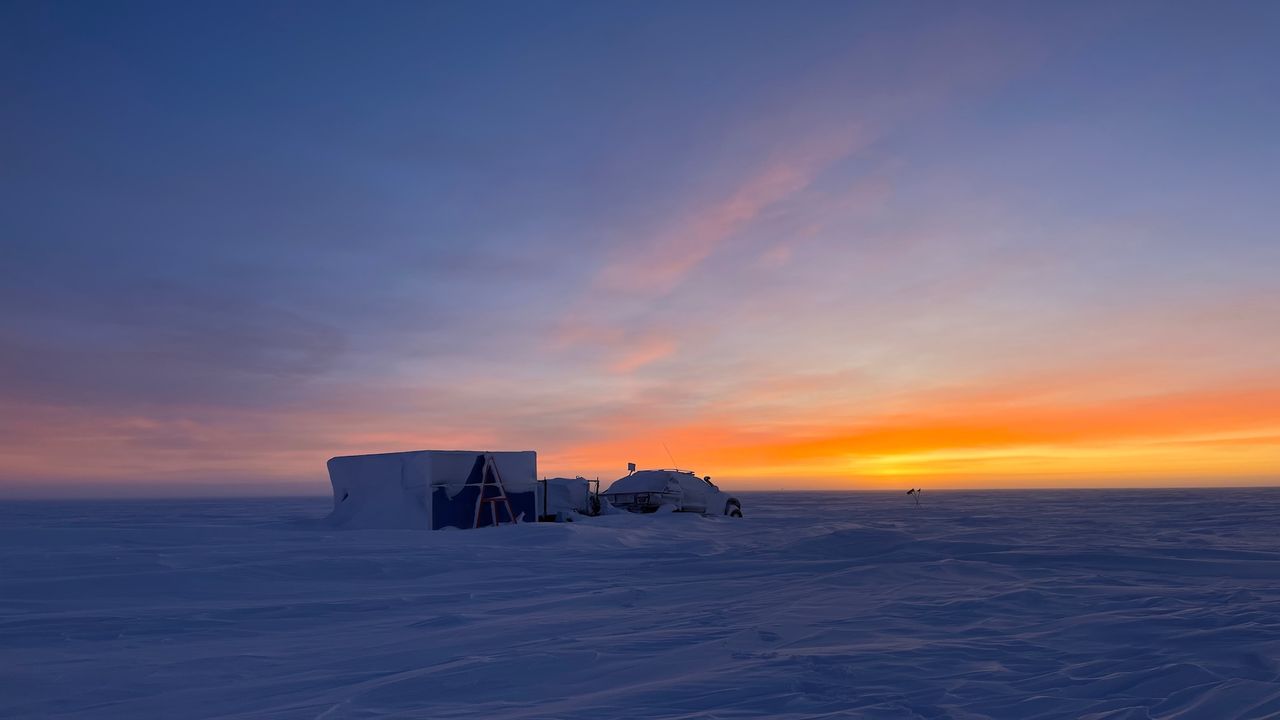
UPDATE: On December 14, 1911, Norwegian explorer Roald Amundsen and his crew made history by becoming the first humans to reach the geographic South Pole. This monumental achievement marked a pivotal moment in exploration, overshadowed by the tragic fate of British rival Robert Falcon Scott, who perished shortly thereafter.
As the world watches, this dramatic race to the South Pole unfolded against the backdrop of fierce competition. Amundsen’s team, which set out from their base Framheim on the Ross Ice Shelf, successfully arrived at the pole at 3 p.m. local time, planting the Norwegian flag and claiming victory. Just 35 days later, Scott and his crew would discover Amundsen’s tent but face dire consequences on their return journey, succumbing to starvation, dehydration, and extreme cold.
Both explorers aimed to conquer the last unexplored continent on Earth. Amundsen, who had originally planned to reach the North Pole, shifted his focus to the South after learning of Peary’s accomplishment in 1909. His secretive approach and thorough preparation would play crucial roles in his success.
Scott, who previously attempted the journey in 1902 and turned back due to health issues, established his base in McMurdo Sound earlier in 1911. With a team comprised largely of members from Ernest Shackleton’s failed expedition, Scott’s crew faced insurmountable challenges on their way back, just 11 miles (17 km) from a vital supply cache.
“I do not think we can hope for any better things now… it seems a pity, but I do not think I can write more,” Scott wrote in his final journal entry on March 29, 1912, highlighting the desperate circumstances faced by his team.
Amundsen’s strategy starkly contrasted with Scott’s. His team, dressed in traditional Inuit garb, took a shorter route over the Axel Glacier and organized their supplies for quick access. Additionally, Amundsen made the controversial decision to consume sled dogs and raw penguin meat to boost their food supplies, enabling them to stave off scurvy and ensuring they reached the South Pole first.
While early narratives characterized Scott’s expedition as a failure due to ineptitude, recent analyses suggest he faced exceptionally severe weather and potential sabotage from within his ranks. A 2017 study indicated crew member Edward Evans may have exacerbated food shortages, contributing to the tragedy.
The ramifications of this exploration were profound. Today, the South Pole hosts the Amundsen-Scott South Pole Station, along with the IceCube Neutrino Observatory and the South Pole Telescope, standing as a testament to human endurance and ambition.
This historical race not only reshaped our understanding of Antarctica but also serves as a poignant reminder of the sacrifices made in the name of discovery. As we remember this pivotal moment on its anniversary, the legacy of both Amundsen and Scott continues to inspire explorers and adventurers worldwide.
As news of this historic milestone circulates, it offers a moment for reflection on the challenges of exploration and the human spirit’s relentless pursuit of the unknown.