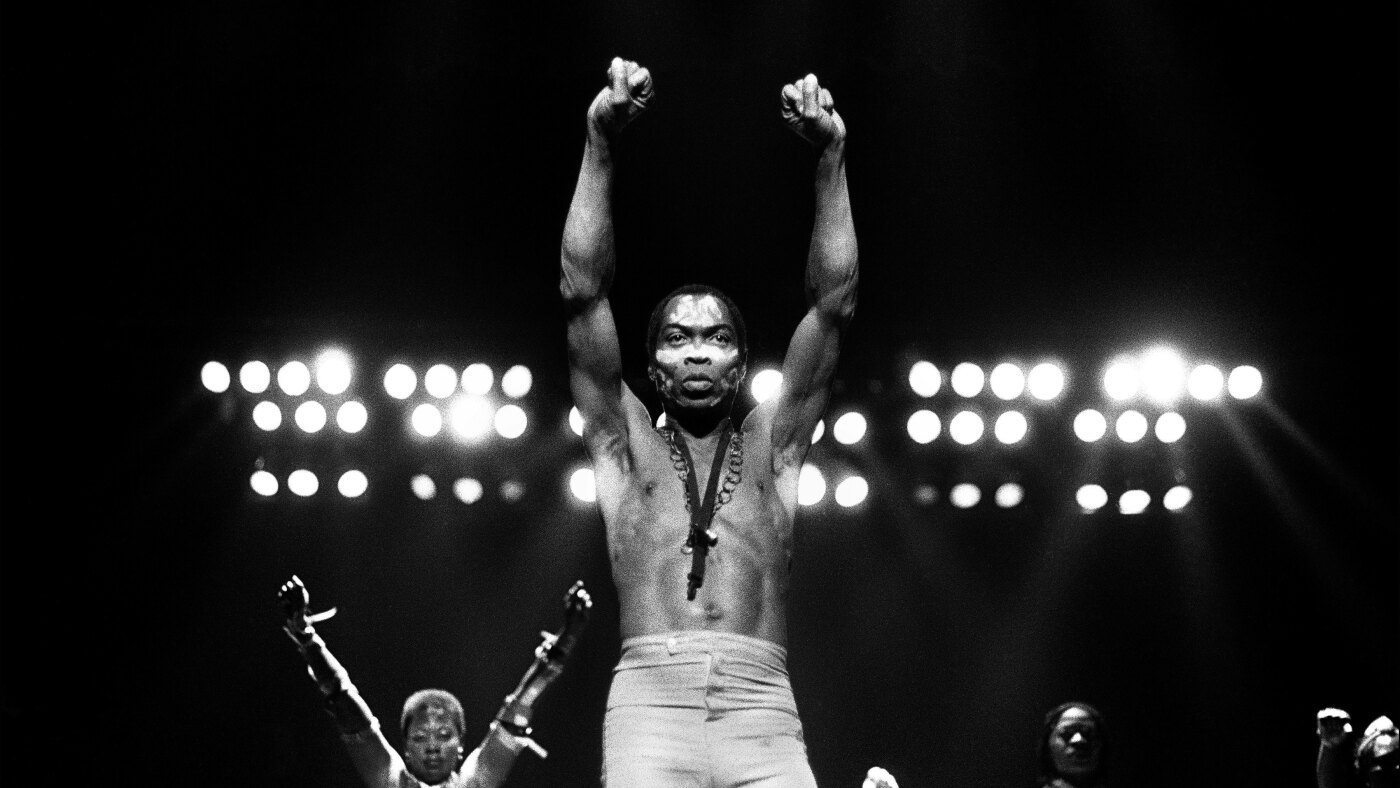
On December 19, the Recording Academy announced that Fela Kuti, the revolutionary Afrobeat musician and activist, has become the first African artist to receive the prestigious Grammy Lifetime Achievement Award. This accolade recognizes Kuti’s significant contributions to the music industry, placing him in the company of other legends such as The Beatles, Aretha Franklin, and Bob Marley. Kuti’s work has inspired countless musicians across Africa and beyond, making this recognition a milestone for African music.
Youssou N’ Dour, a celebrated Senegalese singer, praised Kuti’s legacy, stating, “Fela Kuti’s music was a fearless voice of Africa — its rhythms carried truth, resistance and freedom.” Known as the “Black President” for his political and cultural influence, Kuti’s innovative Afrobeat sound combined intricate rhythms, powerful horns, and singing that often addressed social and political issues. Despite his immense talent, he never received a Grammy nomination during his lifetime, although his sons, Femi and Seun, and grandson Made, accumulated a total of eight nominations.
Kuti’s musical journey began with a large and dynamic ensemble, often consisting of more than 30 musicians, featuring dual bass guitars and baritone saxophones. His emphasis on complex polyrhythms and traditional African instruments like the talking drum was groundbreaking, as he sought to create a distinct post-colonial African identity through his music. By performing primarily in Nigerian Pidgin English, Kuti aimed to reach a broader Pan-African audience. He defied the norms of the music industry, releasing up to seven albums in a single year and crafting songs that could extend for 45 minutes or more.
One of Kuti’s notable works, the album Confusion, consists of a single track divided into two sides, with the first half being entirely instrumental. The contemporary South African band BCUC reflected on Kuti’s influence, stating, “Fela is our spiritual muse… we wouldn’t have had the guts to be ourselves without fear or favor.”
Kuti’s music evolved to reflect his political awakening after spending time in Los Angeles in 1969, where he formed connections with members of the Black Panther Party. His later works openly criticized Nigeria’s military dictatorship and South African apartheid. Following the release of his 1976 album Zombie, which critiqued the Nigerian government, Kuti faced severe repercussions. In a violent act of retaliation, over 1,000 Nigerian soldiers destroyed his Lagos home, resulting in Kuti’s physical assault and the tragic death of his mother, Funmilayo Ransome-Kuti.
The album Zombie was subsequently inducted into the Grammy Hall of Fame in 2022, marking a significant achievement for an African artist. Kuti also ventured into politics, running for president of Nigeria in 1979, though he was met with imprisonment and persecution from the military regime. Amnesty International designated him a “prisoner of conscience” during these turbulent times, and he was only released after the regime was overthrown in August 1985.
Kuti passed away in 1997 due to complications from AIDS, a fact publicly acknowledged by his brother, Olikoye Ransome-Kuti, who was a health minister and AIDS activist in Nigeria. His death catalyzed a shift in awareness regarding the AIDS epidemic in Africa, leading to a significant increase in condom sales in the country.
Following his passing, Kuti’s influence continued to resonate. The tribute album Red Hot + Riot: The Music and Spirit of Fela Kuti, released in 2002, featured artists such as Sade and D’Angelo, with proceeds directed toward AIDS awareness organizations. In 2009, a Broadway musical titled Fela!, produced by Jay-Z and Will Smith, celebrated Kuti’s life and earned 11 Tony Award nominations.
Today, Kuti’s legacy endures, with numerous contemporary artists drawing inspiration from his work. Tunde Adebimpe, the lead singer of the band TV on the Radio, described Kuti as “the originator who showed us music as a power move calling out corruption.” Malian singer Salif Keita echoed this sentiment, highlighting Kuti’s bravery and lasting influence. As a pioneer of Afrobeat and a fearless advocate for social change, Fela Kuti’s music and message continue to inspire generations worldwide.