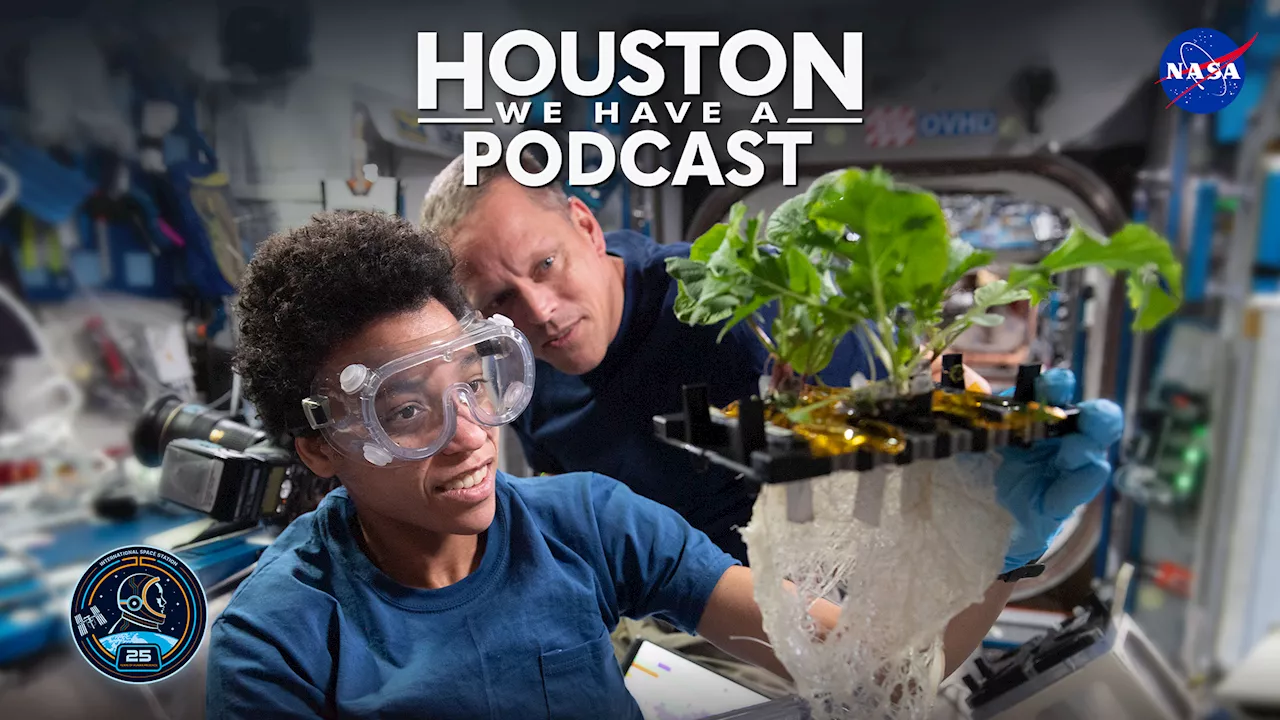
In a recent episode of NASA’s official podcast, leaders from the International Space Station (ISS) reflected on nearly 25 years of groundbreaking research and technological advancements aboard the orbiting laboratory. Laura Shaw, deputy manager of the ISS vehicle office, and Jennifer Buchli, chief scientist for the ISS Program, shared insights into the scientific discoveries that have emerged since the first Expedition 1 crew began their mission on November 2, 2000.
The ISS has evolved significantly since its inception, transforming into a vital hub for global scientific collaboration. Both Shaw and Buchli emphasized that the ISS has become instrumental in a variety of scientific fields, from biological research to materials science. The podcast highlighted the importance of the ISS in facilitating experiments that would be impossible on Earth due to gravity’s constraints.
Key Milestones in Space Research
Shaw noted that the ISS was designated as a national laboratory by Congress in 2005, which opened its doors to non-NASA users, including academic institutions and private companies. This designation allows for 50% of NASA’s allocated research time on the ISS to be available for public use, fostering innovation and collaboration.
Early experiments aboard the ISS primarily focused on protein crystal growth, which has led to significant advancements in pharmaceuticals. One notable example is the development of Keytruda, a cancer treatment that has benefited from the unique microgravity environment. The ISS has also played a crucial role in research related to Duchenne muscular dystrophy, advancing clinical trials and treatment methodologies.
The Power of Microgravity
Both leaders discussed how microgravity offers unique advantages for scientific inquiry. For instance, biological organisms respond differently in space, revealing stress responses that can lead to breakthroughs in understanding gene activation. The ISS provides an unparalleled platform for fluid physics studies, enabling researchers to observe phenomena such as combustion behavior in the absence of gravity.
Buchli emphasized that ongoing research on the ISS directly supports future missions to the Moon and Mars. The knowledge gained from long-duration spaceflight, including the effects of microgravity on human physiology, is essential for preparing astronauts for extended missions beyond Earth. The ISS has served as a testing ground for life support systems that will be critical for the sustainability of future exploration.
As the ISS approaches its 25-year anniversary, both Shaw and Buchli expressed excitement about the future of space research. They highlighted the importance of ongoing partnerships with international agencies, including the European Space Agency and the Japanese Space Agency, which contribute to the collaborative nature of the ISS.
With plans to maintain operations through 2030, the ISS will continue to serve as a cornerstone of human spaceflight, paving the way for advancements in science and technology that benefit life on Earth and beyond.