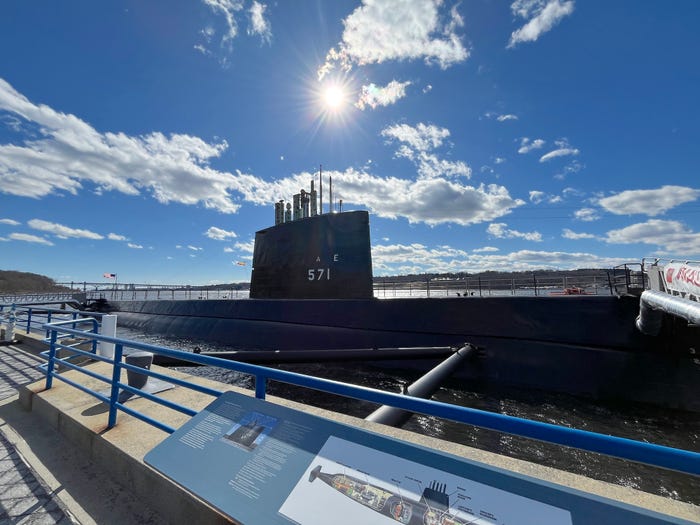
UPDATE: The historic USS Nautilus, the world’s first nuclear-powered submarine, is now open for public tours at the Submarine Force Museum in Groton, Connecticut. This incredible vessel, commissioned in 1954, made waves by being the first ship to navigate under the polar ice cap and played a significant role during the Cuban Missile Crisis.
Visitors can step aboard this groundbreaking submarine and experience how its crew lived and operated while submerged up to 700 feet below the surface. The Nautilus was the first submarine capable of remaining underwater for up to two weeks and traveling at speeds exceeding 20 knots (approximately 23 miles per hour), a remarkable feat compared to earlier diesel-electric submarines that could only stay submerged for 12 to 48 hours.
The submarine’s rich history includes hosting the first underwater legislative meeting with 13 members of Congress in 1955 and its pioneering journey to the North Pole in 1958 during Operation Sunshine. After a distinguished service spanning 26 years, the Nautilus was decommissioned in 1980 and became a National Historic Landmark in 1982.
The Nautilus underwent extensive preservation work costing $36 million and reopened to the public in 2022. The museum is open Wednesday through Monday and offers free admission to explore this iconic submarine.
During a recent visit, I was struck by the Nautilus’s size—it measures 319 feet long and weighs 3,400 tons, surpassing the length of a football field. The tour began at the forward torpedo room, where mannequins depict crew members loading torpedoes, showcasing the submarine’s operational capabilities.
As I navigated through the narrow hatches and compartments, the living quarters revealed the cramped conditions sailors endured. The crew’s mess served as their social hub, while the wardroom functioned as the officers’ living and working space, providing insight into life aboard this monumental vessel.
The attack center demonstrated the sophisticated technology used to spot and engage enemy ships, featuring periscopes and firing controls. The sonar room highlighted the submarine’s advanced detection systems, reinforcing the Nautilus’s role as a leader in maritime technology.
In a striking display of human connection, the museum showcases an 1892 edition of “Twenty Thousand Leagues Under the Sea,” gifted to Commander William R. Anderson by the French Navy—a reminder of the bond between historical literature and naval innovation.
The USS Nautilus symbolizes a pivotal moment in naval history, illustrating how rapidly maritime technology has evolved since its inception. As all current US Navy submarines are now nuclear-powered, the Nautilus stands as a testament to the enduring legacy of innovation and exploration.
Don’t miss the chance to tour this historic submarine and witness firsthand the marvels of naval engineering. The USS Nautilus is more than a museum piece; it’s a journey into the depths of history that continues to inspire generations today.