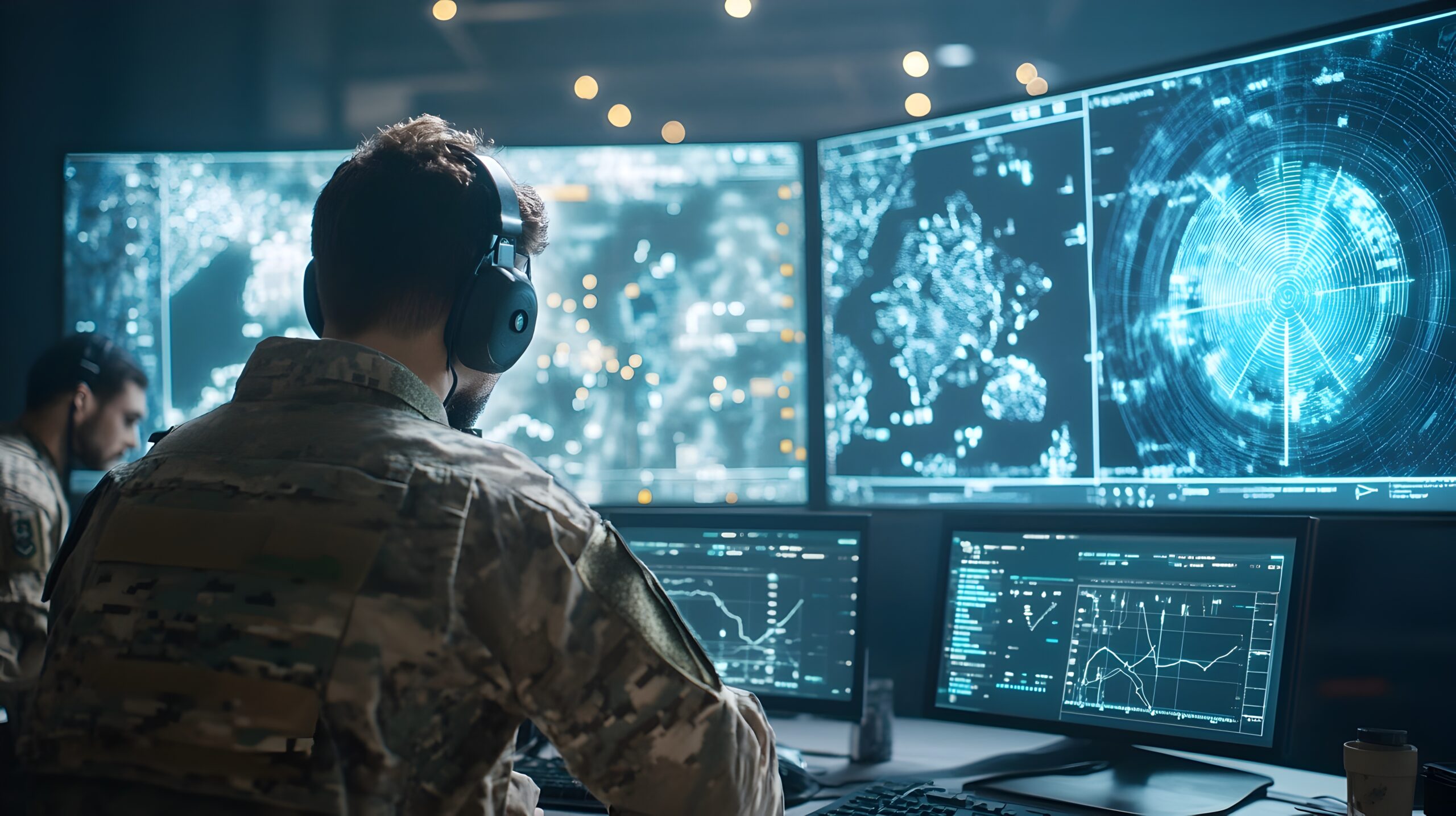
Artificial intelligence (AI) has rapidly evolved from a novel concept to an integral part of military operations worldwide. Since the launch of OpenAI’s ChatGPT in 2022, AI has permeated various sectors, including defense, where its applications are becoming routine. In January 2025, President Trump hosted leaders from OpenAI to unveil a plan called Stargate, which promises an investment of $500 billion in data centers, with the U.S. military identified as a key customer.
By August, the Pentagon’s Chief Digital & AI Office underwent a significant restructuring, merging into the traditional Research & Engineering undersecretariat. This shift highlights the growing institutionalization of AI within military frameworks. In December, Secretary of Defense Pete Hegseth and R&E Undersecretary Emil Michael launched GenAI.mil, a new website designed to provide commercial large language model tools to the three million military and civilian personnel within the Department of Defense.
Transformative AI Applications in Military Operations
The military’s adoption of AI extends beyond chatbots, as it explores various applications for operational efficiency. For instance, the U.S. military is testing AI systems for airspace management over active battlefields, enabling automated recognition of targets such as enemy tanks, and even enhancing the production of nuclear submarines. These innovations rely on different machine learning techniques, with some integrating generative AI to improve traditional software capabilities.
Several significant stories emerged in 2025 that underscore the transformative impact of AI on military strategies:
1. **AI Boosts Ukraine’s Drone Efficiency**: In March, former Ukrainian defense official Kateryna Bondar revealed a report detailing how Ukraine has leveraged AI to enhance the effectiveness of its attack drones. By utilizing AI algorithms both in the drones and at headquarters, Ukraine’s defense sector has successfully improved targeting accuracy. This dual approach, combining advanced models with streamlined algorithms, is now a model being explored by the U.S. military.
2. **NGA’s AI-Generated Intelligence Reports**: The National Geospatial-Imagery Agency (NGA) has been at the forefront of AI integration, especially in handling vast amounts of geospatial data. As part of its evolution, NGA took over the geospatial segment of Project Maven, focusing on target detection from surveillance footage. In June, Vice Adm. Frank Whitworth announced that NGA had progressed to a point where AI-generated reports were distinctly recognized, stating, “No human hands actually participate in that particular template.”
Significant Milestones and Challenges in AI Adoption
3. **Joint Fires Network Transition**: In September, at the annual Air Force Association conference, Maj. Gen. Luke Cropsey announced that the Joint Fires Network, which utilizes AI to assign enemy targets to U.S. weapon systems, was transitioning from research and development to a formal acquisition program. This shift signifies the military’s commitment to integrating AI into operational planning across potential conflict zones, notably in the Pacific theater.
4. **AI’s Rapid Yet Flawed Planning**: The Air Force’s experiments with AI in developing military strategies highlighted both its speed and limitations. In one exercise, AI generated ten recommended courses of action in approximately eight seconds, compared to three from human officers in 16 minutes. Despite this speed, some AI-generated plans proved unworkable, lacking crucial contextual understanding. The military now faces the challenge of ensuring AI outputs are reliable before implementation in real-world scenarios.
5. **Hacking Threats and AI Cyber Defense**: The emergence of AI in cyber warfare was starkly illustrated by a Beijing-backed hacker group allegedly using generative AI to conduct cyber attacks. According to Anthropic, the hackers manipulated the Claude AI system into believing they were legitimate cybersecurity researchers, allowing them to compromise around 30 government agencies and private companies. This incident underscores the urgent need for enhanced AI-driven cyber defense mechanisms in democratic nations.
As military agencies continue to integrate AI into their operations, the implications are profound. The ability to automate complex tasks could present significant advantages in modern warfare, but it also raises critical ethical and operational questions. The ongoing developments in AI will likely shape military strategies and operations for years to come, making it essential for stakeholders to navigate these advancements with caution.