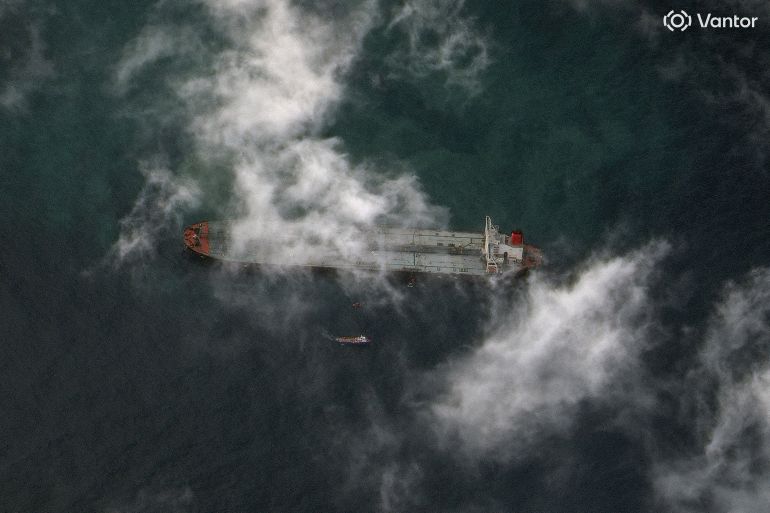
The United States plans to prioritize economic pressure over military action against Venezuela in the coming months, as it seeks to enforce sanctions on Venezuelan oil. A report from the Reuters news agency, citing an unnamed US official, indicates that the White House has instructed the military to concentrate on a “quarantine” of Venezuelan oil, while maintaining a military presence in the region.
According to the official, “While military options still exist, the focus is to first use economic pressure by enforcing sanctions to reach the outcome the White House is looking for.” This strategy reflects a shift in approach as tensions escalate in the Caribbean.
Military Presence and Sanctions
In December 2020, US President Donald Trump deployed 15,000 troops, aircraft carriers, guided missile destroyers, and amphibious assault ships to the Caribbean. This deployment represents the largest concentration of US forces in the region in decades, raising concerns that Trump may consider military intervention in Venezuela to combat international drug cartels and what he describes as “narcoterrorists.”
On December 15, Trump ordered a “total and complete blockade” of all US-sanctioned oil tankers entering and leaving Venezuela. US forces have already intercepted two oil tankers and are pursuing a third vessel. Oil remains vital to Venezuela’s economy, despite the country facing various US-imposed sanctions since 2005, which intensified during Trump’s administration in 2019.
Some analysts suggest that targeting Venezuelan oil may serve as a form of de-escalation. The enforcement of sanctions will be primarily executed by the US Coast Guard, a civilian agency during peacetime and a component of US law enforcement. This approach allows agents to board vessels under US sanctions without escalating to a naval blockade, which could be construed as an act of war.
Venezuelan Response and Allegations
In response to the US oil seizures, Venezuela has labeled the actions as “worse than piracy” in a statement addressed to the United Nations Security Council. The US military has conducted air strikes on numerous boats in the Caribbean and eastern Pacific since September, targeting vessels alleged to be transporting illicit drugs to the US. These operations, ordered by Trump without congressional approval, have resulted in at least 105 fatalities and are classified by the White House as a “non-international armed conflict.”
The Trump administration has accused Venezuelan President Nicolas Maduro of supporting major drug cartels, including Tren de Aragua and Cartel de los Soles, both designated as terrorist organizations earlier this year. As the US continues to exert economic and military pressure, the situation remains fluid, with potential implications for regional stability and US-Venezuela relations.