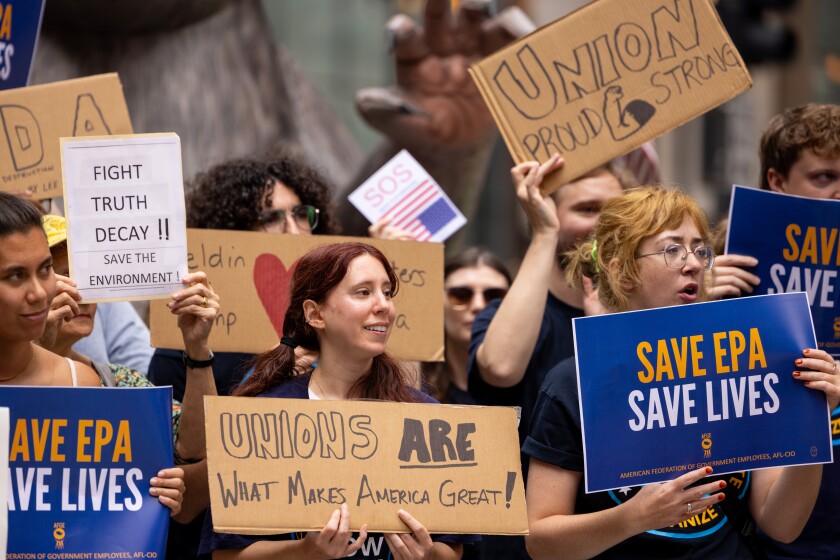
UPDATE: In a shocking move, President Donald Trump has initiated drastic cuts to the Environmental Protection Agency (EPA), igniting a firestorm of backlash from Chicago residents and environmental advocates. Just two weeks into his new term, Trump threatened to fire numerous EPA employees and has since launched a controversial deregulation campaign, prompting urgent concerns for public health and environmental safety.
The president’s EPA chief, Lee Zeldin, confirmed the rollback of critical regulations, impacting water pollution and greenhouse gas emissions. This aggressive approach is already drawing comparisons to the previous Trump administration, with Nicole Cantello, president of the EPA employee union in Chicago, stating, “It is so significantly worse than before.” Cantello represents around 700 workers who now face job insecurity as the agency prioritizes deregulation over environmental protection.
In a bid to cut costs, Trump has also eliminated nearly $600 million in government grants previously pledged to assist energy companies in reducing methane emissions and enhancing the electric grid. Retired mail carrier Gerald Jones, a Chicago resident, voiced his frustration, saying, “I really think it’s terrible,” referring to the loss of rooftop solar funding that had significantly reduced his utility bills.
The administration’s decision to dismantle federal programs related to “environmental justice” has sparked particular outrage. This movement, originating from Chicago’s South Side decades ago, aimed to protect vulnerable communities from excessive pollution. Critics argue that tying environmental justice to diversity initiatives is not only disingenuous but detrimental to those most affected by environmental degradation.
As the situation unfolds, many Chicagoans are expressing alarm about the future of their health and environment. “The health of our friends and family may be jeopardized,” said Cantello, echoing widespread concern among residents. The EPA’s cuts have created a ripple effect, leading to rising electricity costs driven by the demands of burgeoning AI data centers that require vast amounts of energy.
In Illinois, lawmakers are scrambling to provide sustainable energy solutions to meet climate goals while accommodating the energy needs of these data centers. The urgency is palpable, as reports indicate that these facilities could further strain local water sources, threatening drinking water supplies for residents.
In parallel, the city is grappling with stalled initiatives. Mayor Brandon Johnson pledged to pass an environmental protection ordinance to alleviate pollution in overburdened neighborhoods, but progress has stalled since April 2025. “The mayor still backs the ordinance, but negotiations are not expected to finalize soon,” a spokesperson confirmed, as community members await critical updates.
Controversial developments surrounding the proposed relocation of the General Iron facility, which faced federal civil rights scrutiny, further illustrate the challenges faced by Chicago’s marginalized communities. The facility’s move from a wealthy, predominantly white neighborhood to a low-income community of color has raised alarm bells, prompting federal intervention.
As Trump continues to advocate for fossil fuels and nuclear energy, he faces increasing scrutiny for sidelining renewable energy sources, particularly as the demand for power surges due to AI technologies. The juxtaposition between environmental responsibility and economic activity is at the forefront of this heated debate.
The implications of these actions resonate deeply within Chicago, where residents are grappling with the immediate consequences of policy changes. The community is urged to stay informed and engaged as the situation develops, with many citizens rallying for accountability and more robust environmental protections.
With the stakes this high, the narrative surrounding Trump’s EPA actions is far from over. As Chicagoans brace for the repercussions of these decisions, community voices will continue to shape the conversation around environmental justice and public health.
Stay tuned for more updates on this urgent and developing story.