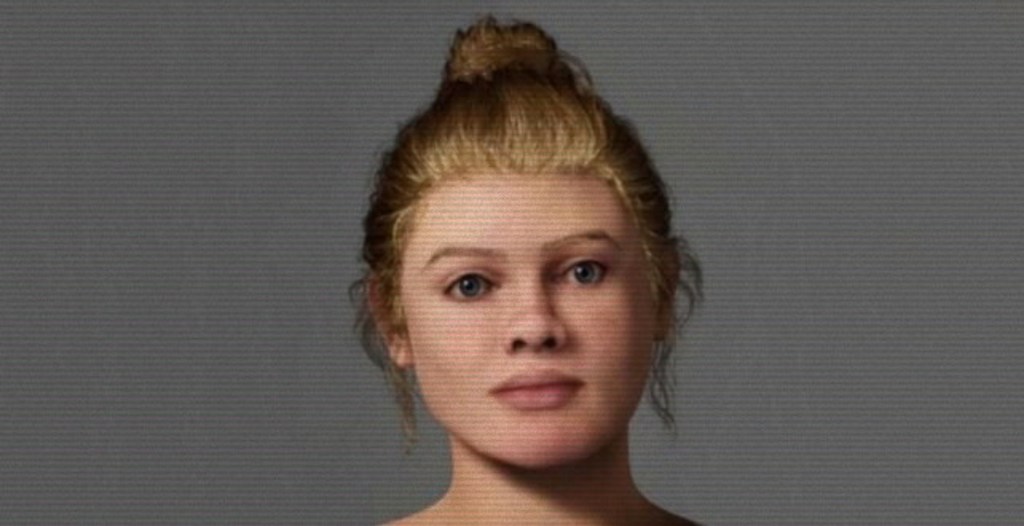
URGENT UPDATE: The mystery surrounding the “Beachy Head Woman,” a skeletal discovery over a decade old, has been dramatically resolved through advanced DNA analysis. Researchers from the Natural History Museum in London revealed today that she was not a migrant from Africa or the Mediterranean as previously thought, but rather a local inhabitant of southern England during Roman-occupied Britain.
This groundbreaking study, published in the Journal of Archaeological Science, utilized high-quality DNA sequencing techniques to uncover her true ancestry. The findings indicate that her genetic profile aligns closely with individuals from rural Roman-era Britain, dispelling myths about her origins that had persisted for years.
Previously labeled as the “first Black Briton,” the Beachy Head Woman lived between 129 and 311 CE and was likely aged between 18 and 25 at her time of death. Researchers discovered that she likely had light hair, blue eyes, and a skin complexion that varied between pale and dark, emphasizing that initial assessments based on skull shape were both inaccurate and rooted in pseudoscience.
DNA analysis revealed that there is no evidence supporting recent African ancestry, a conclusion that directly challenges earlier claims and showcases the pitfalls of relying on outdated scientific methods. As the research team noted, the earlier approaches were deeply intertwined with biases and inaccuracies that skewed our understanding of human history.
The Beachy Head Woman serves as a poignant reminder of how easily history can be misinterpreted when modern perspectives are projected onto ancient realities. Her seafood-rich diet and evidence of surviving a serious leg injury add layers to her story, connecting her more closely to the lives of those in her time rather than distant lands.
These revelations not only reshape our understanding of this ancient individual but also call into question broader historical narratives shaped by flawed methodologies. As science progresses, it becomes increasingly clear that many established theories may require reevaluation.
With this breakthrough, the implications extend beyond the individual case. The study encourages a critical reassessment of how we interpret historical and archaeological data, reminding us of the importance of modern techniques in uncovering the truth.
Stay tuned for further updates as this story continues to develop and shapes our understanding of ancient Britain. The findings are likely to spark discussions within academic circles and beyond, illustrating the dynamic nature of historical interpretation in light of new evidence.