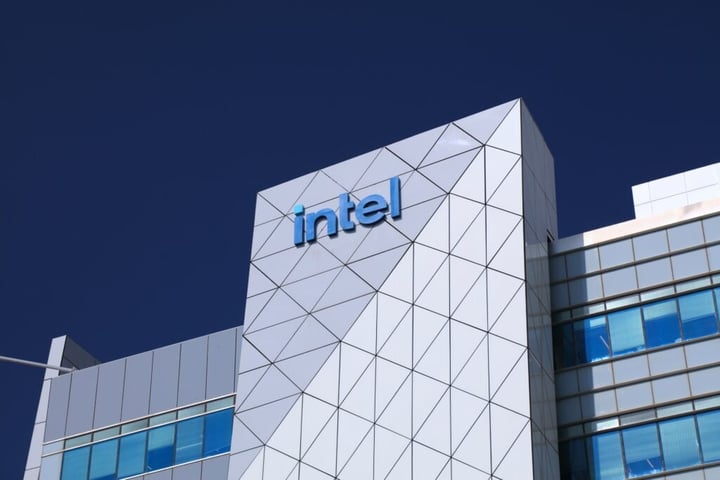
On Friday, Intel Corp (NASDAQ:INTC) CEO Lip-Bu Tan emphasized that 2025 will be a critical year for the company as it navigates a resurgence in stock value and strategic funding partnerships. The remarks come in the wake of a remarkable 79% increase in Intel’s stock price, driven by significant investments and a renewed focus on artificial intelligence (AI).
Tan shared his vision for the future of Intel through a post on X, highlighting a “cultural reset” within the company. He stated that a strong commitment to execution and increased confidence from customers and partners are key to Intel’s new direction. Reflecting on his appointment just nine months ago during a challenging time for the semiconductor giant, Tan expressed gratitude towards Intel employees for their support in laying the groundwork for a “New Intel.”
Investment Boosts AI Strategy
Tan’s leadership has coincided with a renewed emphasis on AI, a sector where Intel aims to enhance its competitive standing. Since his hiring in March 2025, Tan has leveraged his connections and venture capital expertise to secure substantial funding commitments. Notably, Intel received $5 billion from Nvidia Corp (NASDAQ:NVDA) and $2 billion from SoftBank Group (OTC:SFTBF) (OTC:SFTBY). These investments not only bolster Intel’s financial position but also reinforce its commitment to advancing AI chip technology and manufacturing capabilities.
Despite these achievements, Tan’s tenure has faced challenges. Earlier this year, concerns arose regarding his ties to venture firms with investments in numerous Chinese companies, some allegedly linked to military applications. This situation prompted former President Donald Trump to call for Tan’s resignation, citing conflicts of interest. In response, Tan met with Trump in the Oval Office, addressing these concerns and facilitating ongoing collaboration on U.S. economic and national security initiatives.
The U.S. government has also played a role in Intel’s restructuring efforts. It has reconfigured previous CHIPS Act funding into a $5.7 billion equity investment, granting the government a 10% ownership stake in Intel. This arrangement aims to stabilize Intel’s struggling foundry division, with provisions allowing the government to purchase an additional 5% stake at $20 per share if Intel’s ownership in the foundry dips below 51%.
Controversies and Challenges
In addition to political scrutiny, Intel has recently found itself at the center of a legal dispute involving the Taiwan Semiconductor Manufacturing Company Ltd (NYSE:TSM). This lawsuit accuses former TSMC executive Wei-Jen Lo, now at Intel, of violating non-compete and non-disclosure agreements by allegedly leaking sensitive AI chip trade secrets. TSMC claims that Lo sought confidential information to aid Intel’s competitive edge, prompting an investigation by Taiwanese authorities. However, Intel has firmly denied any wrongdoing in this matter.
Amidst these controversies, Intel reported impressive financial results for the third quarter. The company posted revenues of $13.65 billion, exceeding Wall Street forecasts of $13.14 billion. Adjusted earnings reached 23 cents per share, significantly surpassing analyst expectations of just 1 cent per share. Year-over-year revenue growth of 3% underscored the company’s recovery trajectory.
As a result of this financial turnaround, Intel’s shares have surged approximately 79.03% year-to-date, reflecting renewed investor confidence. Analysts at Benzinga Edge have indicated a strong outlook for Intel in both the medium and long term, despite short-term fluctuations.
With a strategic focus on AI and a commitment to addressing internal and external challenges, Lip-Bu Tan is navigating Intel through a transformative period, positioning the company for potential growth in the competitive semiconductor market.