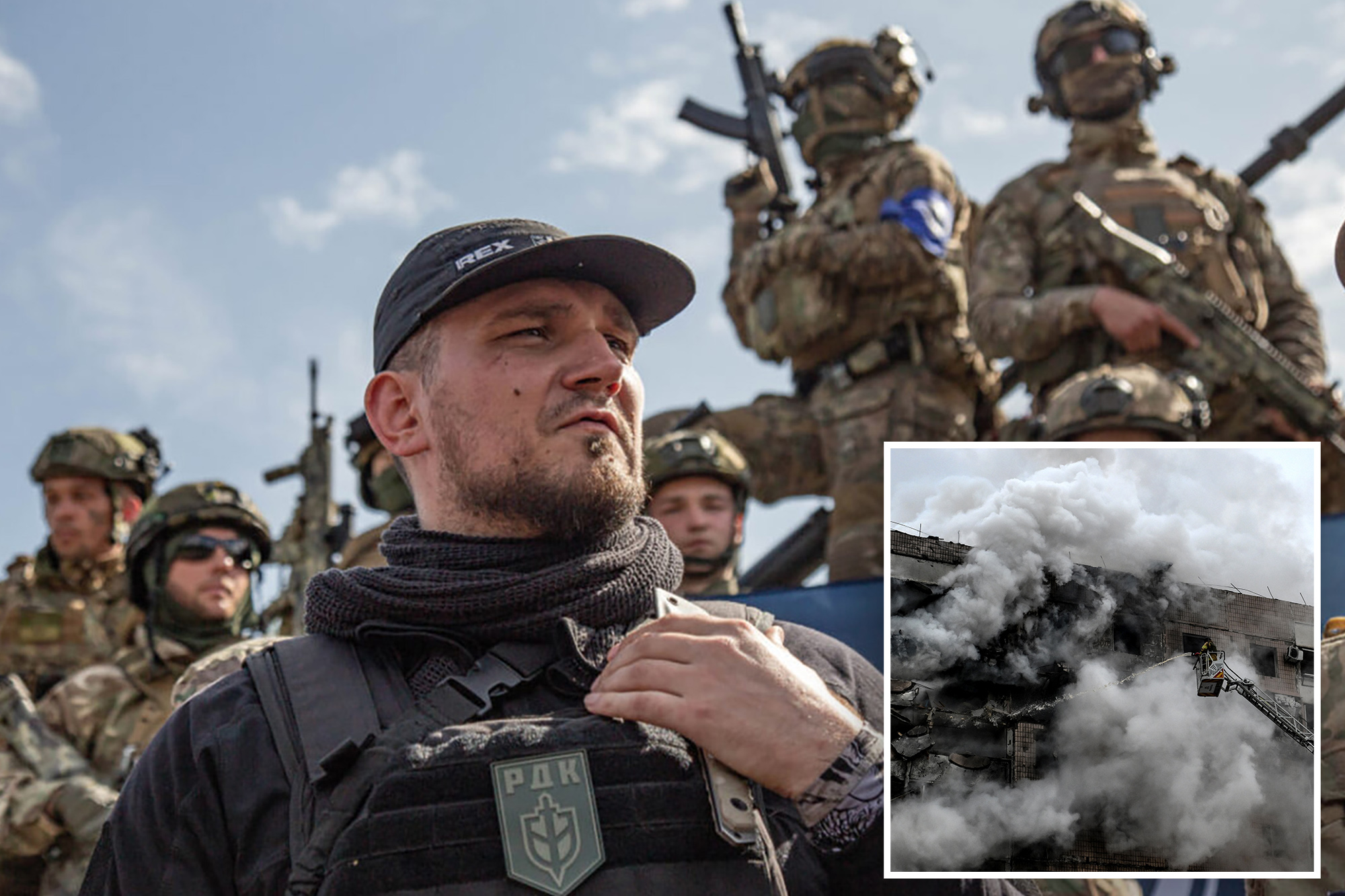
Denis Kaputsin, the leader of the Ukrainian anti-Putin paramilitary group known as the Russian Volunteer Corps, was killed in combat in the Zaporizhzhia region during an overnight drone strike. The militia announced his death on Saturday, describing Kaputsin as a hero who died during a mission on the frontline. The organization pledged to avenge his death, stating, “We will definitely take revenge, Denis. Your legacy lives on.”
Kaputsin, aged 41, also known as Denis Nikitin or “White Rex,” had been living in Ukraine since 2017. Originally from Moscow, he relocated to Germany with his family at the age of 17. He later moved to Ukraine where he became known for his involvement in football hooliganism and controversial views, which have led to his ban from several European countries—a label he has contested.
Rise of the Russian Volunteer Corps
When Russian President Vladimir Putin initiated a full-scale invasion of Ukraine in February 2022, Kaputsin played a significant role in establishing what became Ukraine’s elite Third Assault Brigade. Months later, he founded the Russian Volunteer Corps, pledging to combat Putin’s regime and to “deprive Russia of a future.” This commitment was clearly articulated on the corps’ official website.
Since the onset of the war, the Russian Volunteer Corps garnered attention for its cross-border operations into Russian territories, where they captured dozens of individuals. These incursions were met with condemnation from Putin, who labeled the group as “saboteurs” and “terrorists.” Following one such operation in March 2023, Kaputsin was added to the Kremlin’s list of “terrorists and extremists” and was subsequently placed on the wanted list by Russia’s Interior Ministry.
Legacy and Impact
The announcement of Kaputsin’s death has sparked reactions from both supporters and opponents of the ongoing conflict. The Russian Volunteer Corps emphasized his character, stating that his lifestyle as a warrior was consistent with his words, highlighting his fearlessness and commitment to his cause. “He died during a combat trip as a man,” the group’s post conveyed.
As the conflict in Ukraine continues to escalate, the death of a prominent figure like Kaputsin signals a significant moment for anti-Putin forces. His leadership and the operations of the Russian Volunteer Corps have directly challenged the Kremlin, raising questions about the future of such militias in the ongoing conflict.
Kaputsin’s story reflects the complexities of the war in Ukraine, revealing the motivations and risks faced by those opposing the Russian government. As the Russian Volunteer Corps vows to continue their mission, the impact of Kaputsin’s death will likely resonate within both Ukrainian and Russian communities.