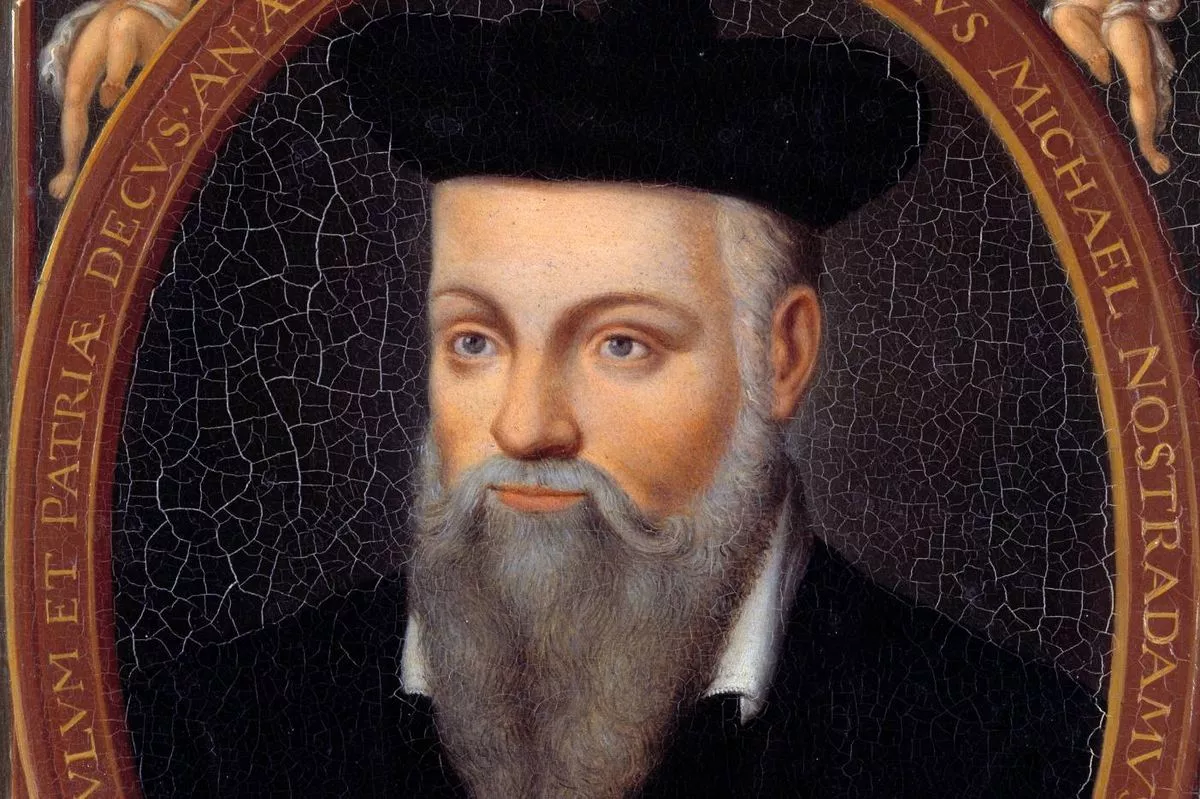
The 16th-century French astrologer Nostradamus has captivated audiences with his prophetic insights, particularly as we approach the new year. His predictions, which were cryptically encoded in quatrains, have sparked renewed interest due to their ominous implications for global affairs. Among his many prophecies, a few are gaining attention as potential forecasts for 2026, including a prediction about a significant celestial event.
Nostradamus’ collection, published in 1555, contains no fewer than 942 quatrains, and interpretations of these verses often vary widely. One quatrain suggests a “great war” lasting seven months, with the phrase “people dead through evil” potentially referencing the ongoing conflict between Russia and Ukraine. This particular interpretation has been noted by various sources, including the Times of India.
Another notable quatrain hints at historical events, with lines that some believe forecast the atomic bombings of Hiroshima and Nagasaki at the end of World War Two. The verse states, “Within two cities, there will be scourges the like of which was never seen.” Such interpretations add to the mystique surrounding Nostradamus’ writings and their perceived relevance to modern conflicts.
Chilling Predictions for 2026
Among the more whimsical predictions is a reference to a “great swarm of bees” arising unexpectedly. Some speculate that this event, linked to the number 26, may occur next year. The symbolic meaning of the bees remains unclear, and the idea of a massive swarm causing significant damage through an “ambush” seems improbable.
Another striking prediction involves a “great man” who will be “struck down in the day by a thunderbolt.” This prophecy, described in the 26th verse of Century I, leaves room for various interpretations. The term “great man” could refer to a prominent figure, such as a celebrity or world leader, suggesting a dramatic event during the daylight hours.
Perhaps most disturbing is Nostradamus’ description of a catastrophe in Switzerland, specifically in the Italian-speaking region of Ticino. His verse warns, “Because of the favour that the city will show… the Ticino will overflow with blood.” This imagery could symbolize a mass casualty event or a natural disaster, raising concerns about the region’s future.
Skeptics of Nostradamus argue that his writings, composed in Middle French, utilize intentionally ambiguous Latin phrasing. The existence of multiple manuscripts, spelling errors, and various interpretations over the centuries complicate efforts to ascertain his true meanings.
Despite the debates surrounding Nostradamus’ accuracy and intent, his predictions continue to capture the imagination of many. As we enter 2026, the prospect of interpreting these enigmatic verses remains a topic of intrigue, whether viewed through the lens of history or modern events.