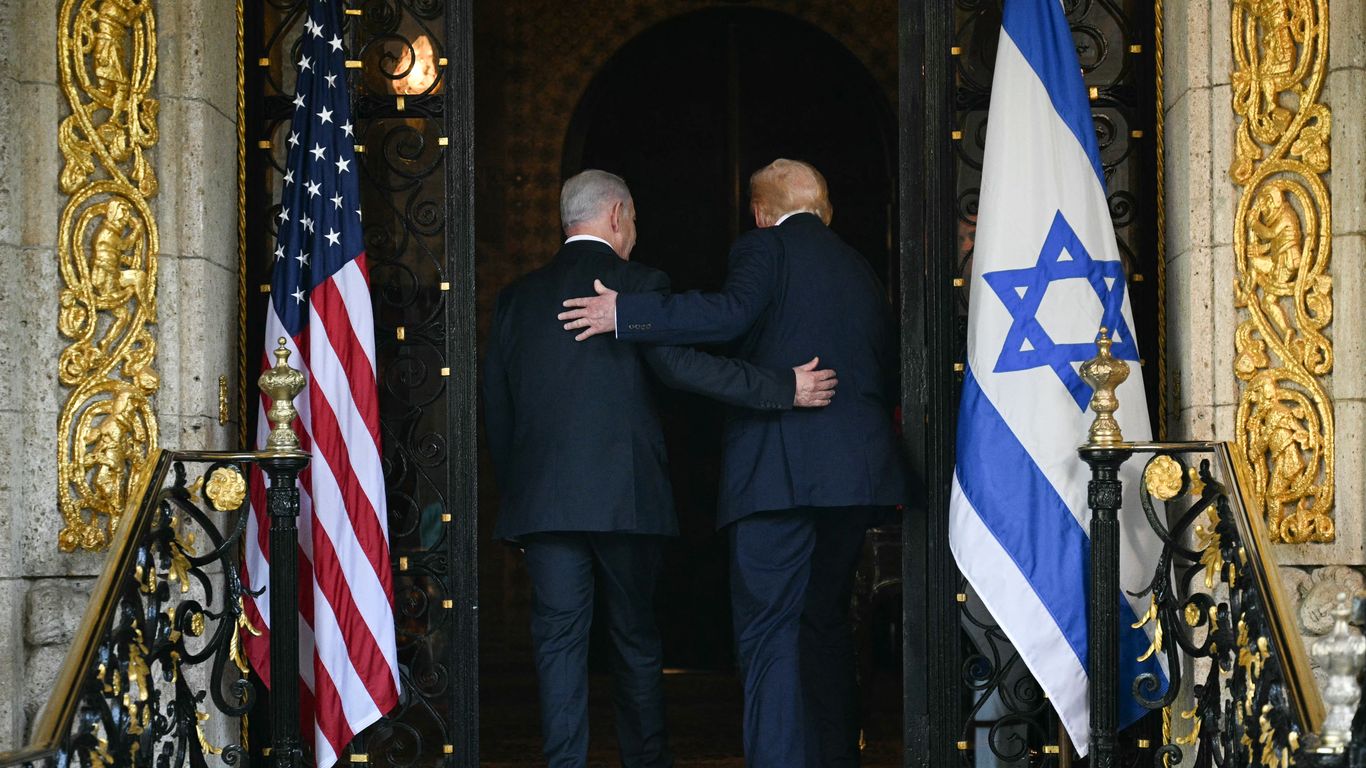
Israeli Prime Minister Benjamin Netanyahu and former U.S. President Donald Trump recently explored the possibility of renewed military action against Iran during a meeting on Monday. According to a U.S. official and two other sources familiar with the conversation, the leaders discussed prospective strikes in 2026 as a means to address ongoing security concerns.
This dialogue comes on the heels of a twelve-day conflict with Iran that both leaders deemed a significant success. Netanyahu has maintained that further strikes may be necessary to impede Iran’s ability to rebuild its military capabilities. In response, Trump indicated that if Iran attempts to revive its nuclear program, the United States would take decisive action to dismantle it once more. He expressed a preference for negotiating a nuclear deal with Tehran, highlighting a complex web of diplomatic and military considerations.
The U.S. official noted that Trump would likely support a “round two” of military action if credible evidence emerges of Iran’s efforts to reconstitute its nuclear program. However, the official cautioned that defining what constitutes “reconstitution” will be a contentious issue.
In previous statements, Trump has claimed that the U.S. effectively obliterated Iran’s nuclear capabilities. This assertion complicates the process of justifying new strikes, especially given that the U.S. military’s focus has primarily been on Iranian nuclear facilities, while Israel has targeted conventional military assets, including ballistic missiles. Over the past few weeks, Israeli officials have voiced concerns regarding Iran’s missile program, emphasizing the need for vigilance.
During the meeting, Netanyahu presented an update on Iran’s nuclear program, six months following the last significant military engagement. He also raised alarms about Hezbollah’s efforts to enhance its arsenal of long-range missiles in Lebanon. Despite the serious nature of their discussions, no specific timeline or actionable agreements regarding future military operations were established.
The Israeli Prime Minister’s Office declined to comment on the meeting, and the White House directed inquiries to Trump’s public statements.
In the face of potential military escalation, Iranian President Masoud Pezeshkian responded to Trump’s and Netanyahu’s remarks by warning of a “harsh” reaction to any acts of aggression. Iranian Foreign Minister Abbas Araghchi called for renewed negotiations with the U.S., advocating for a spirit of “respect.” Discussions about a potential nuclear deal took place as recently as September, but significant progress has stalled.
Some officials from both the U.S. and Israel believe that the most likely trigger for conflict in the near future could stem from miscalculations, with one side acting preemptively against perceived threats from the other. Just one week prior, Israeli officials alerted the Trump administration that a missile exercise conducted by Iran’s Revolutionary Guards could be a façade for planning an attack.
In a broader context, two senior U.S. officials revealed that Netanyahu and Trump agreed to advance to “phase two” of the Gaza ceasefire agreement during their discussions. Trump promised Netanyahu that if Hamas does not comply with the ceasefire terms and fails to disarm, he would authorize military action against the group.
While Netanyahu expressed skepticism about the Gaza situation, he allowed space for progress on the ceasefire agreement’s second phase. Trump is expected to announce this transition on January 23, 2024, coinciding with the establishment of the Gaza Board of Peace and the formation of a new Palestinian technocratic government. The inaugural meeting of the Gaza Board of Peace, which will be chaired by Trump, is set to occur during the World Economic Forum in Davos.
The evolving dynamics in this region underscore the intricate balance of military strategy, diplomatic negotiations, and the persistent quest for stability amidst ongoing tensions.