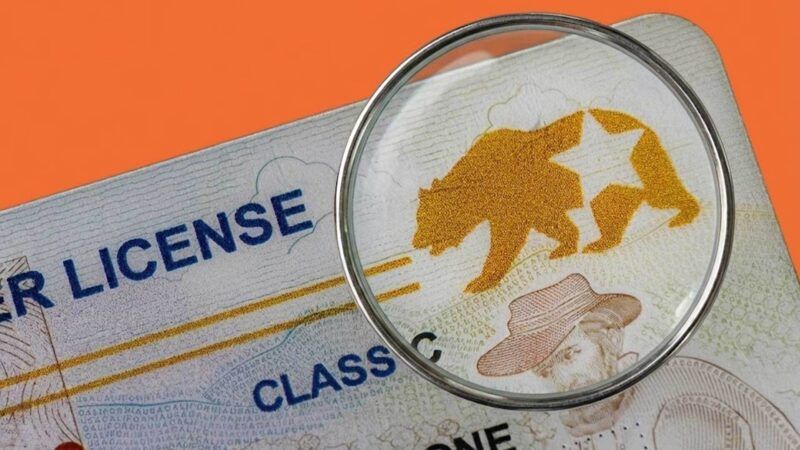
UPDATE: The Department of Homeland Security (DHS) has just admitted that the REAL ID, a federal identification program decades in the making, is unreliable for confirming U.S. citizenship. This shocking revelation comes in the wake of a federal civil rights lawsuit filed by the Institute for Justice on behalf of Leo Garcia Venegas, a U.S. citizen who was wrongfully detained during immigration raids.
In a court filing dated December 11, Philip Lavoie, acting assistant special agent in charge of DHS’ Mobile, Alabama office, stated, “REAL ID can be unreliable to confirm U.S. citizenship.” This statement raises serious questions about the efficacy of the REAL ID system, which was designed to establish a uniform identification standard across states, following the 9/11 attacks.
Venegas, who faced wrongful detention during immigration enforcement actions in May and June, claims that masked federal agents targeted him based solely on his ethnicity. During these encounters, agents retrieved his Alabama-issued REAL ID but suggested it could be fake. Venegas was handcuffed for an hour the first time and for “between 20 and 30 minutes” during the second detention before being released.
Lavoie’s declaration indicates that due to varying state laws, a REAL ID might be issued to non-citizens, prompting agents to seek additional verification of U.S. citizenship. This contradicts the very purpose of the REAL ID Act, which mandates that individuals present proof of citizenship or lawful status to obtain the ID.
The REAL ID Act was enacted in 2005 as a security measure, aimed at enhancing identification for federal purposes, including airport security. However, it faced widespread criticism and compliance issues, leading to delays in its enforcement until this May.
In response to Lavoie’s claims, the Institute for Justice pointed out the absurdity of DHS questioning the validity of an ID that it certifies. They argue that this policy likely violates the Fourth Amendment, which protects against unreasonable searches and seizures.
A DHS spokesperson defended the REAL ID, stating that it is designed to be harder to forge and is not an immigration document. However, this raises concerns for U.S. citizens like Venegas, who are not required to carry immigration papers.
This development is particularly alarming given the recent Supreme Court ruling, which allows for profiling based on race and ethnicity in immigration enforcement. The court’s decision raises fears that U.S. citizens could be wrongfully targeted based on appearance, a situation that Lavoie’s declaration underscores.
As of now, the implications of this revelation are profound. The DHS’s admission that REAL ID may not reliably confirm citizenship could lead to increased scrutiny and challenges for individuals presenting this identification.
WHAT’S NEXT: The Institute for Justice’s lawsuit will be closely watched as it may set a precedent regarding citizens’ rights and the validity of government-issued IDs. This case highlights the urgent need for a reevaluation of identification standards and civil liberties in the U.S. As this story develops, the conversation will likely intensify regarding the balance between security measures and the protection of individual rights.
Stay tuned for further updates on this critical issue impacting countless Americans.