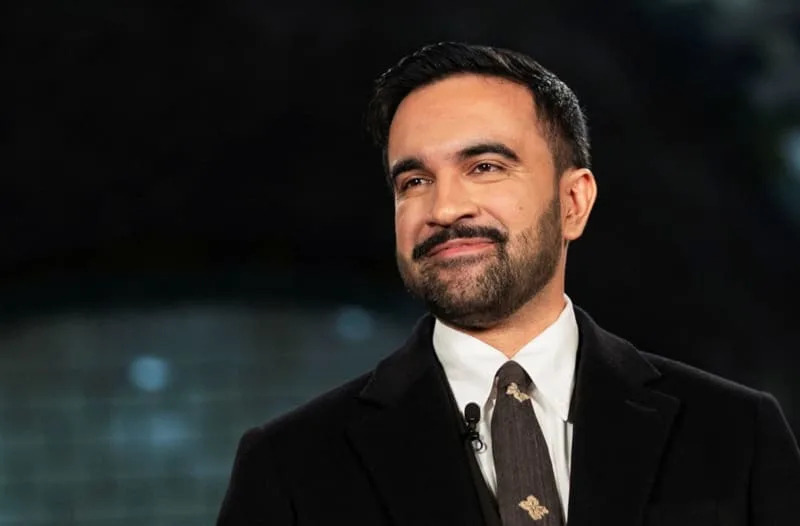
New York City ushered in the New Year on January 1, 2026, with the historic inauguration of its new mayor, Zohran Mamdani. The ceremony took place shortly after midnight at the Old City Hall subway station, marking a significant moment for the city and its 8 million residents. Mamdani, accompanied by his wife, Rama Duwaji, took the oath of office administered by New York State Attorney General Letitia James, pledging to uphold the Constitution of the United States and the laws of New York.
Standing beneath the vaulted ceilings of the subway station, Mamdani expressed his gratitude, stating, “Happy New Year to New Yorkers, both inside this tunnel and above. This is truly an honor and a privilege of a lifetime.” His choice of venue reflects a commitment to the working populace, highlighting the importance of the city’s infrastructure and those who keep it operational.
Mamdani, a 34-year-old former state lawmaker and the city’s first Muslim mayor, has a vision that includes ambitious proposals such as a rent freeze, free public transportation, and childcare. His campaign focused on affordability issues, resonating with many voters and leading to a record-breaking turnout of over 2 million ballots cast. He secured approximately 50 percent of the vote, significantly outpacing both independent candidate Andrew Cuomo and Republican Curtis Sliwa.
The inauguration ceremony was not merely a formality; it was a reflection of Mamdani’s progressive values. Following the midnight oath-taking, a more celebratory event was planned for the afternoon at City Hall, featuring music and speeches before an audience of around 4,000 guests. Livestream viewing areas along Broadway were established to allow tens of thousands more to witness what Mamdani’s team has dubbed the “Inauguration of a New Era.”
Mamdani’s transition team reported that he raised $2.6 million for the inauguration and transition, setting a record for mayoral inaugural funds this century. The funds came from nearly 30,000 contributors, reflecting a broad base of support. The inaugural committee included community figures such as Sami Zaman, the owner of Sami’s Kabab House, and various artists and activists, further emphasizing Mamdani’s community-oriented approach.
As Mamdani prepares to leave his one-bedroom apartment in Astoria, where he benefited from the city’s rent stabilization program, he will move into Gracie Mansion, the official residence of the mayor. His ascension comes amid mixed reactions from the financial sector, with concerns expressed by bankers regarding his democratic socialist policies. However, since his election, many have begun to explore ways to collaborate with him.
New York City’s history includes another mayor associated with democratic socialism, David Dinkins, who served from 1990 to 1993. Dinkins faced significant challenges, including budget deficits, but managed to stabilize the city’s economy. Mamdani’s supporters hope he will navigate similar challenges with innovative solutions.
Political analysts note that Mamdani’s inauguration, with prominent figures like Alexandria Ocasio-Cortez and Bernie Sanders involved, signals a shift toward a more progressive administration. Grant Reeher, a political science professor at Syracuse University, remarked that James’s presence at the ceremony sends a clear message of independence from the federal administration.
As New York City enters a new chapter with Mamdani at the helm, the focus will be on how he implements his policies and addresses the complex challenges facing one of the world’s most vibrant urban centers. The coming months will reveal how his leadership style and vision will shape the future of New York City.