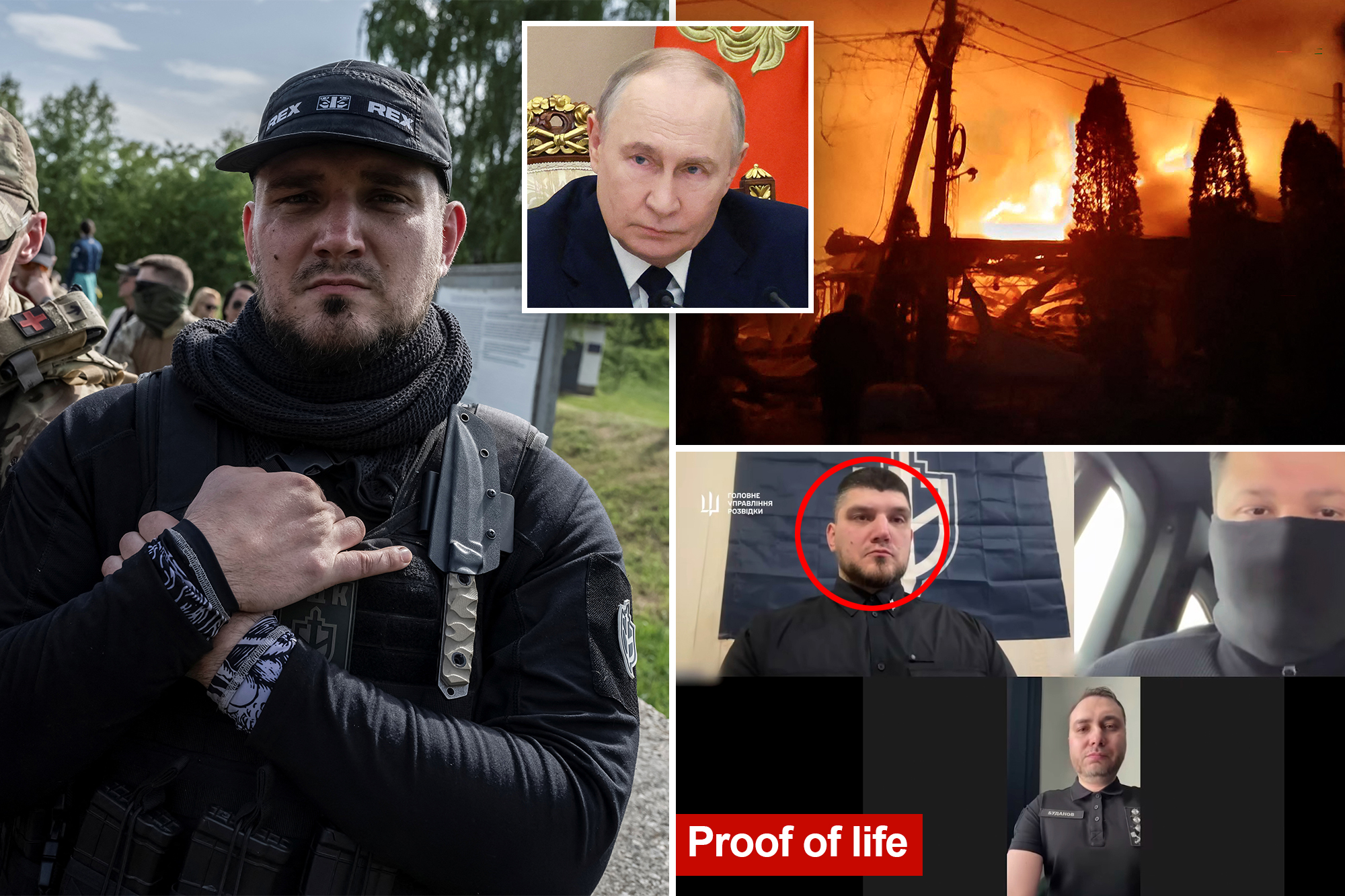
The Kremlin believed it had struck a blow against one of its most wanted enemies, only to find itself outsmarted. Russian authorities paid a bounty of $500,000 for the assassination of Denis Kapustin, a prominent anti-Putin militant fighting alongside Ukraine. This payment, intended to eliminate a key adversary, inadvertently funded the very conflict Russia seeks to control.
Kapustin, also known as “White Rex,” was reported dead following an alleged Ukrainian drone strike on December 27, 2023. The former football hooligan, banned from the Schengen Area since 2019 for promoting neo-Nazi ideology, has emerged as a significant figure in Ukraine’s defense against Russian aggression. He is the founder of the pro-Ukrainian Russian Volunteer Corps (RDK), established in 2022, which has conducted cross-border raids into Russia’s Belgorod and Kursk regions.
Following the announcement of Kapustin’s supposed death, Russian intelligence services disbursed the bounty. However, it was soon revealed that the funds were redirected to support Ukrainian efforts. The RDK confirmed Kapustin’s survival shortly after, stating, “We will definitely take revenge, Denis. Your legacy lives on.”
On New Year’s Day, Kapustin reappeared in a video released by Ukraine’s military intelligence agency, HUR. General Kyrylo Budanov, the head of HUR, welcomed him back, saying, “First of all, Mr Denis, congratulations on your return to life. I am glad that the money allocated for your assassination was used to support our struggle.”
The dramatic twist highlighted the ongoing intelligence battle between Ukrainian and Russian forces. Kapustin, who relocated to Ukraine in 2017 after his family moved from Moscow to Germany, played a crucial role in forming units that later became part of Ukraine’s 3rd Assault Brigade, a key force in defending Kyiv during the early weeks of Russia’s full-scale invasion.
The RDK was created with the explicit aim of overthrowing President Vladimir Putin to restore peace in Russia, a goal that Russia has reacted to with fierce hostility. The group is classified as a terrorist organization by Russian authorities, and Kapustin has been sentenced in absentia to life in prison on charges of treason and terrorism.
Recent developments in the conflict indicate an escalation in hostilities. As of January 1, 2024, the war reached its 1,409th day, with Ukraine launching multiple drone strikes across several Russian regions, targeting energy and industrial sites. Reports indicate strikes in Krasnodar, Tatarstan, and Kaluga, with significant damage reported at facilities such as the Ilskiy oil refinery and an energy storage site in Almetyevsk.
Both sides have accused each other of targeting civilian infrastructure. Moscow reported a strike on a hotel in Russian-occupied southern Ukraine, while Kyiv insisted its attacks focus strictly on military and energy targets. Kherson regional governor Oleksandr Prokudin reported civilian casualties, including a man killed and an elderly woman injured.
Ukrainian intelligence has demonstrated a consistent ability to outmaneuver Russian agencies, historically known for their ruthlessness. Instances of Ukrainian operatives using Russian intelligence tactics against their own have surfaced, such as a reported case in which a Ukrainian double-agent sabotaged a mission from the FSB, Russia’s security service.
The ongoing conflict continues to claim high-profile figures on both sides. Recent deaths include Lieutenant General Fanil Sarvarov, who was killed in a blast in Moscow, and Lieutenant General Igor Kirillov, who died under similarly explosive circumstances. Ukrainian sources have justified these actions, asserting that such individuals were legitimate targets due to their involvement in war crimes.
As the war rages on, the Kremlin’s attempt to eliminate a prominent adversary has not only failed but also backfired, inadvertently empowering the very forces it seeks to suppress. The unfolding situation serves as a stark reminder of the complexities and unpredictable nature of modern warfare.