Research conducted at Karolinska Institutet has uncovered new insights into the protein p53, often referred to as the “guardian of the genome.” This protein plays a crucial role in regulating blood vessel growth, exhibiting both inhibiting and damaging effects depending on its activation levels. The findings, published in the journal Cell Death & Disease, shed light on p53’s complex influence on endothelial cells, which are essential for the formation and maintenance of blood vessels.
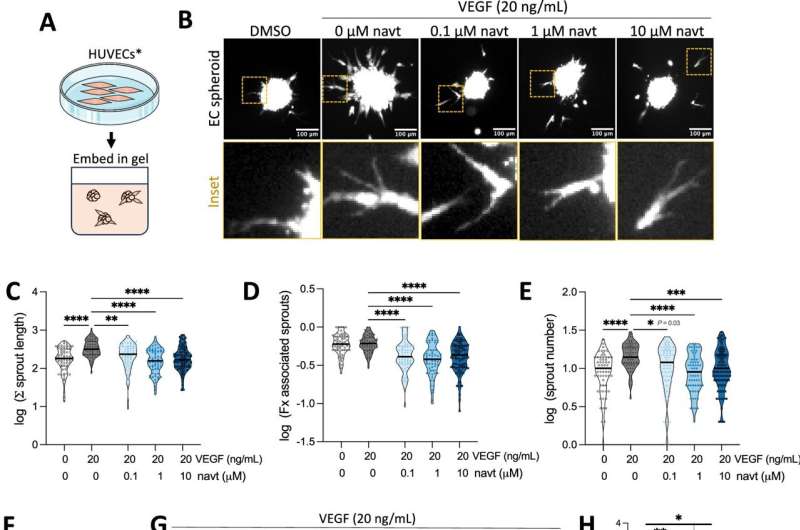
Understanding p53’s dual effects is vital as it could guide future therapies targeting abnormal blood vessel growth, particularly in conditions like cancer and certain eye diseases. Researchers, led by Pavitra Kannan, conducted experiments using a new class of compounds to carefully modulate p53 levels in healthy blood vessel cells during the process of angiogenesis, which is the formation of new blood vessels.
Insights into p53 Activation Levels
The team observed that the response of blood vessel cells to p53 activation is highly sensitive, even to minimal increases in p53 levels. When p53 levels were low, the cells temporarily halted division. Conversely, elevated p53 levels pushed these cells into irreversible states where they could neither divide nor survive. This stark difference in cellular outcomes highlights the complexity of p53’s regulatory role.
Despite the varied responses to different p53 levels, both low and high levels resulted in reduced blood vessel growth. This indicates that the same protein can elicit vastly different effects based on its concentration within the cells. Kannan remarked, “One of the most striking observations was how sensitive these blood vessel cells are even to very low p53 levels compared to other cell types.”
Implications for Future Research
The implications of this research extend beyond basic science. Abnormal blood vessel growth is a hallmark of many diseases, including various cancers and eye disorders. By understanding how p53 influences blood vessel formation, scientists can explore new avenues for therapeutic interventions.
The study, led by Omayma Al-Radi and colleagues, provides a clearer picture of how varying p53 levels can be harnessed in medical treatments aimed at regulating blood vessel growth. This research not only contributes to the existing knowledge of p53 but also lays the groundwork for future studies focusing on vascular health and disease management.
In summary, the findings from Karolinska Institutet offer valuable insights into the dual roles of the p53 protein, emphasizing its potential as a target for therapies addressing uncontrolled blood vessel growth in critical health conditions.