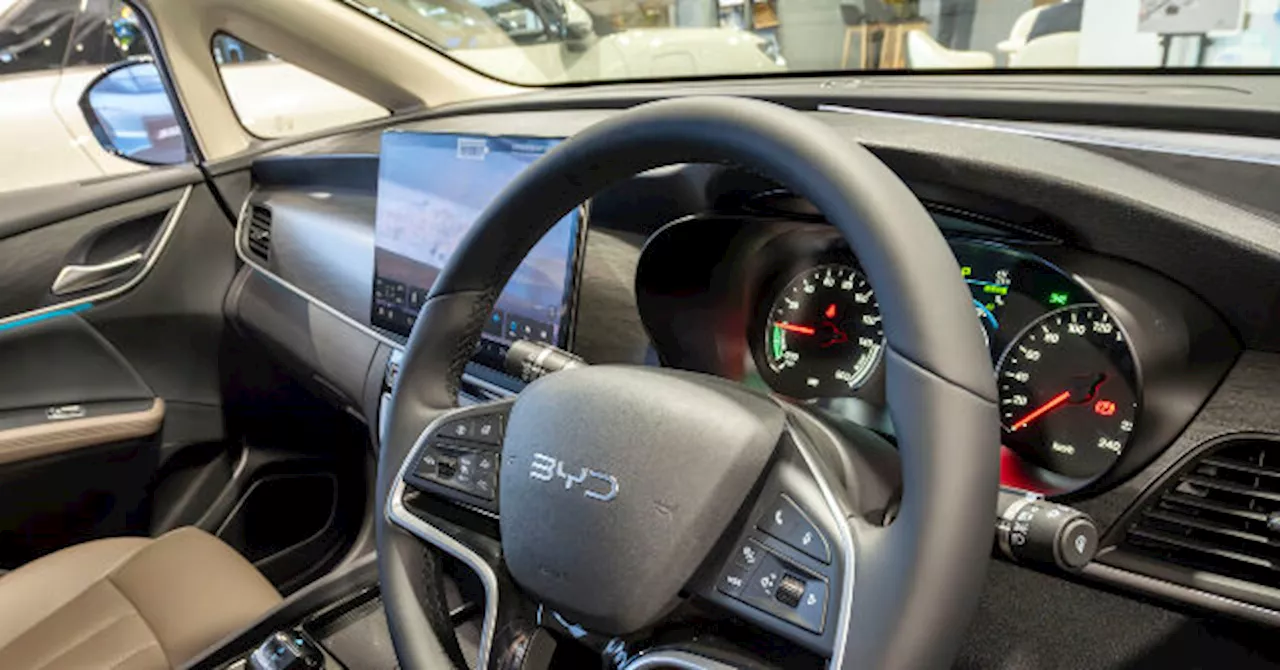
BREAKING: In a dramatic turn of events, BYD has officially surpassed Tesla as the world’s leading electric vehicle (EV) manufacturer in 2025, marking a pivotal shift in the global automotive industry. While Tesla’s sales plummeted by 9 percent to 1.64 million vehicles, BYD’s sales skyrocketed by 28 percent, reaching over 2.25 million units.
This significant change was confirmed in Tesla’s year-end report and highlights increasing challenges for the California-based automaker. Factors contributing to Tesla’s decline include the end of substantial U.S. government subsidies, fierce competition from Chinese brands, and a lukewarm reception for its latest models. Industry analysts warn that 2026 could be even tougher for Tesla as it grapples with these market pressures.
BYD’s success is particularly notable in the UK, where sales surged by an astonishing 880 percent. The company’s growth is fueled by aggressive expansion strategies and strong support from the Chinese government, which has led to a growing presence in key European markets like Germany and France. This expansion has raised alarms within the European Union, prompting protective tariffs on Chinese EVs, reaching up to 38 percent.
The EU’s concerns stem from fears of job losses in their automotive sectors due to competitive pricing and government subsidies favoring Chinese manufacturers. As Chinese brands gain traction, traditional automakers in Europe are feeling the heat, leading to a complex interplay of trade policies and market dynamics.
Looking ahead, analysts predict a challenging landscape for the EV market in 2026, yet there are hopes for recovery by 2027 with the introduction of more affordable, domestically produced EVs. In response to the shifting market, Tesla is pivoting its focus towards self-driving “robotaxi” technology, indicating a strategic realignment in the face of adversity.
The evolving dynamics of the EV market reflect broader trends in technological advancements and consumer preferences. With BYD’s remarkable rise, the balance of power in the electric vehicle sector appears to be shifting significantly from West to East.
Expect further developments as the industry adapts to the challenges ahead, and watch for the impact on global automotive policies and consumer choices. The competition is heating up, and the future of electric vehicle manufacturing is more critical than ever.