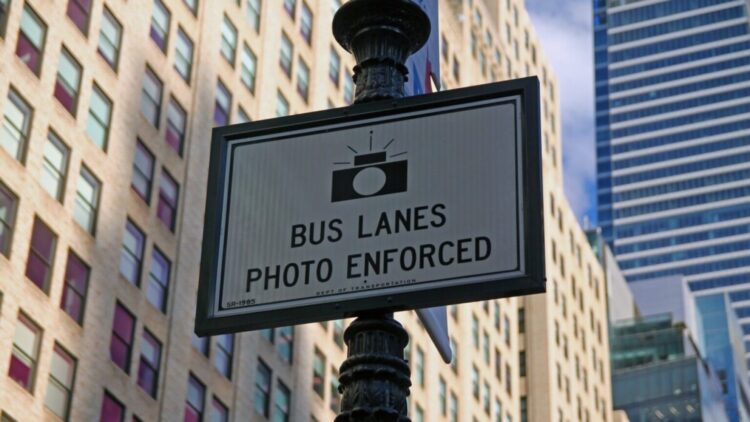
New York City has introduced an automated camera system to enhance bus lane enforcement, aiming to eliminate illegal use of dedicated bus lanes. The Metropolitan Transportation Authority (MTA) has expanded its Automated Camera Enforcement (ACE) program, now covering additional bus routes in Queens and the Bronx. This initiative is designed to improve urban mobility, reduce traffic congestion, and enhance the safety of public transport for users.
The ACE program targets vehicles that block bus lanes and bus stops, which can severely disrupt service and create hazards for passengers, particularly those with mobility challenges. According to an official statement from the MTA, “The ACE program is a bus-mounted camera system that issues violations to vehicles occupying bus lanes, to double-parked vehicles along bus routes, and to vehicles blocking bus stops.” This system aims to ensure that buses can safely pick up and drop off passengers at designated locations.
Expanding Enforcement to Key Routes
As of 2026, the ACE program operates across 51 routes, accommodating over 840,000 passengers weekly. With the recent expansion, four new lines—Q6, Bx20, Bx3, and Bx7—will come under enforcement, focusing on critical areas in Queens and the Bronx. The goal is to deter private vehicles from encroaching on these lanes, thereby improving the efficiency of public transport.
Fines for violations have also been adjusted. Drivers caught infringing on bus lanes will initially receive a warning fine of $50. Repeat offenders may face penalties increasing to $250. This tiered system is expected to discourage habitual violations and reinforce the importance of keeping bus lanes clear.
Public Transport’s Role in Urban Efficiency
In a bustling metropolis like New York, effective public transportation is crucial for economic and social efficiency. The bus system is a primary mode of transport for a large segment of the population, valued for its accessibility and safety. However, the behavior of some private vehicle drivers, who frequently invade bus lanes, undermines this system, risking the safety of passengers.
The introduction of dedicated bus lanes was a strategic response to the challenges posed by congestion on regular roads. By creating these lanes, the city aimed to expedite bus travel and enhance overall traffic flow. Despite these efforts, many private drivers continue to misuse these exclusive lanes, prompting the need for stricter enforcement through the ACE program.
The implementation of automated cameras represents a significant step toward maintaining the integrity of New York’s public transportation system. By holding drivers accountable for their actions, the MTA hopes to foster a safer and more reliable environment for all bus passengers.
In summary, the expansion of the ACE program is a critical move for New York City as it addresses ongoing challenges in public transport. With the addition of new routes and increased penalties, city authorities are taking proactive measures to protect the efficiency and safety of public transportation, ultimately benefiting the wider community.