On January 3, 2024, Earth reached perihelion, the point in its orbit where it is closest to the sun at approximately 91.5 million miles. This astronomical event occurs just once a year, with our planet typically varying in distance from the sun throughout the year. While the average distance is often cited as 93 million miles, the actual distance can fluctuate significantly, influencing not only our seasonal changes but also the speed at which Earth travels in its orbit.
During this period, Earth travels faster through space due to its proximity to the sun. As a result, the winter months, particularly the “winter half” of the year, are shorter than the summer half. Observers can easily verify this phenomenon by counting the days between the spring and fall equinoxes and comparing them to the days between fall and spring. The difference is noticeable, with the transition from fall to spring occurring at a quicker pace.
The impact of perihelion is subtle yet significant. While being nearer to the sun does not transform January into a summer month, it does contribute to slightly milder winters in the northern hemisphere. This year, as the winter solstice marked the shortest day of the year last December, daylight has gradually increased. Interestingly, this added daylight comes not from earlier sunrises, but from later sunsets. In fact, the sun will begin to rise earlier starting this week.
Jupiter and Venus: Bright Lights in the Sky
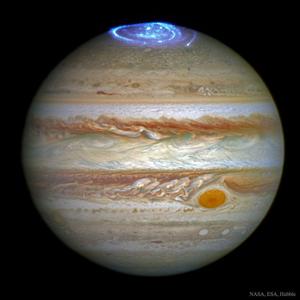
As Earth moves through its orbit, the visibility of celestial bodies changes. Currently, Jupiter stands out as the brightest planet in the night sky. This prominence is due in part to its sheer size, being 11 times the diameter of Earth and possessing a mass over 300 times greater. Jupiter’s gravitational pull has a noteworthy influence on Earth’s orbit, contributing to variations in our distance from the sun.
Jupiter will reach opposition on January 10, 2024, when it aligns directly opposite the sun in relation to Earth. This positioning allows observers to see Jupiter at its brightest, as Earth is at its closest point to the giant planet. This event mirrors the full moon’s relationship to the sun, where the moon is fully illuminated when it is opposite the sun in the sky.
Meanwhile, Venus, once the “morning star” visible before dawn, has disappeared from view as it now lies on the opposite side of the sun from Earth. The sun’s glare will keep Venus hidden for several weeks, but it is expected to reappear in the evening sky shortly, resuming its role as the “evening star.”
In summary, January’s perihelion brings a unique perspective on Earth’s relationship with the sun and the other planets. As we enjoy the beauty of our night sky, the intricate dance of celestial bodies continues to influence life on Earth, reminding us of the dynamic nature of our solar system.
As the new year unfolds, many look forward to the longer days ahead, wishing for a year filled with hope and opportunities.