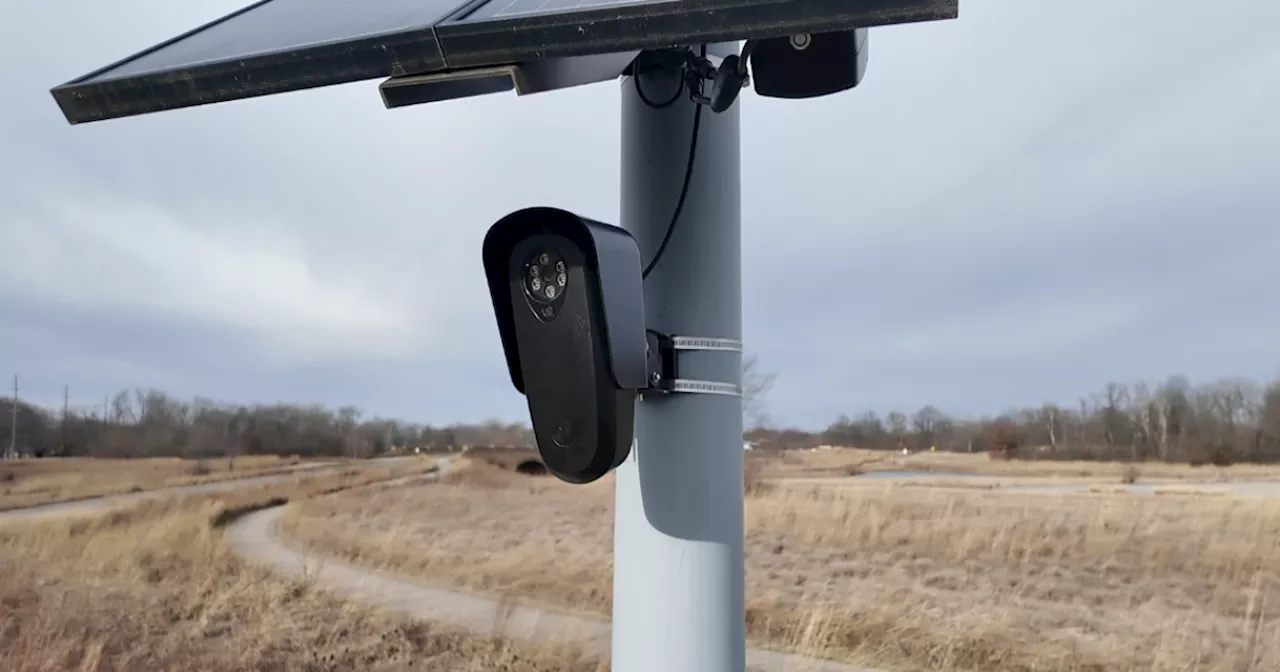
A growing movement in Indiana seeks to regulate the use of automated license plate readers, commonly known as Flock cameras, which are increasingly utilized by law enforcement across Hamilton County and other cities. While these cameras assist police in solving crimes, they have also raised significant concerns regarding privacy and oversight.
Flock cameras do not monitor driving behavior or speed; instead, they capture and store every license plate number that passes by, creating a comprehensive digital record. According to Sgt. Angela Ellison of the Fishers Police Department, these cameras serve as a valuable tool for law enforcement. “It’s really just helping our solvability with cases and helps us get leads. Sometimes, it may not work out, but it’s just one extra tool we have,” she stated.
Recently, the technology played a crucial role in resolving a road rage incident in Fishers. Officers used the Flock system to locate and arrest a suspect after a victim could only describe the vehicle as a black minivan, following an exchange of gunfire.
Privacy Concerns Raised
Despite their benefits, the use of Flock cameras has prompted privacy advocates to call for stricter regulations. Walker Lasbury, director of Eyes off Indiana, is spearheading a petition aimed at urging state lawmakers to introduce new policies governing the technology. “In Indiana, there’s currently no regulation regulating their use,” Lasbury explained. “Police departments can retain your data for as long as they like, share it with whomever they like, all without any transparency or oversight at all.”
The absence of regulations contrasts with other surveillance technology, such as home security cameras. Sgt. Ellison clarified that while consumers can freely use personal camera footage, police are bound by stricter guidelines. “You get to own it and look through it whenever you want. And honestly, you can do with it whatever you want. That’s not the case for us. We have to use it if there’s been a criminal offense,” she noted.
Lasbury expressed hope that the regulation of these cameras would expand beyond Hamilton County. “I like that [Hamilton County] is regulating these cameras. However, if other counties don’t do the same, it opens us up to some big issues,” he said.
Responses from Local Police Departments
In an effort to understand how various law enforcement agencies handle the use of Flock cameras, inquiries were made to major police departments in Hamilton County. The responses reveal a mix of policies regarding the data collected by these cameras.
The Carmel Police Department, Noblesville Police Department, and Westfield Police Department all provided insights into their operational guidelines. The Westfield Police Department indicated that Flock stores all collected data, which is never sold and can only be used for investigative purposes. They also maintain a comprehensive FAQ page regarding their use of the Flock system, emphasizing transparency in their operations.
As the conversation around surveillance technology continues to evolve, the balance between law enforcement needs and citizens’ privacy rights remains a pivotal issue. The outcome of Lasbury’s petition could significantly influence how license plate cameras are regulated in Indiana and potentially set a precedent for other states.
The ongoing discussions highlight a crucial intersection of technology, public safety, and individual rights, emphasizing the need for thoughtful regulation in an increasingly digital world.