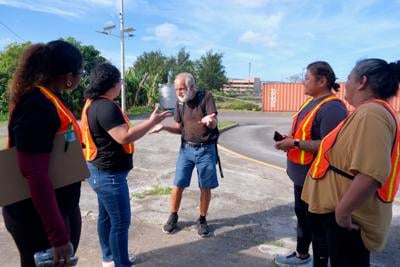
The Guam Homeless Coalition (GHC) is actively seeking 250 volunteers to assist with the 2026 Point-in-Time (PIT) homeless count scheduled for January 30, 2026. This annual event, conducted across the United States, aims to provide a critical snapshot of homelessness in the region. The data collected during this one-night count is essential for understanding the extent of homelessness and evaluating the effectiveness of existing resources.
According to a release from the GHC, the information gathered will help identify the minimum number of individuals experiencing homelessness, assess current services, and highlight areas that require additional support. Volunteers, who must be at least 18 years old, are required to complete a five-hour training session. This training covers best practices for engaging with participants sensitively and provides detailed instructions for administering the PIT count survey, as well as logistical information.
Even those who have previously participated in the PIT count must undergo this training. GHC has announced four training sessions scheduled for late January. The sessions will take place from 9 a.m. to 2 p.m. on January 20, 21, and 22 at the Catholic Social Service Adult Daycare Center in Barrigada. A virtual training session will also be held on January 23. Volunteers who have participated three or more times in previous counts have the option to attend the virtual training.
Individuals interested in volunteering can register online at the following link: https://forms.gle/tN8fpoXGV56fiRwaA. The registration deadline is set for January 16, 2026, but will close once the GHC reaches the target of 250 volunteers.
In a recent report during the GHC’s 2025 Housing and Homelessness Summit, it was noted that overall homelessness in Guam had decreased by 31%. This figure was part of preliminary results from the 2025 PIT count. Nevertheless, GHC Chair Aja Ramos expressed concern over a disturbing trend: the rapid increase in homelessness among children and families, the fastest-growing demographic within Guam’s homeless population.
According to Post files, many of these cases represent “hidden homelessness,” where families are living with relatives, doubling up in overcrowded homes, or continuously moving between temporary accommodations. These circumstances often go unrecorded in official counts like the PIT count, obscuring the true extent of the homelessness crisis.
Officials have pointed to several factors contributing to the rise in family homelessness, including escalating rental prices, stagnant wages, high child care costs, and domestic instability. The GHC emphasizes that understanding these issues is vital for addressing the needs of Guam’s most vulnerable residents.