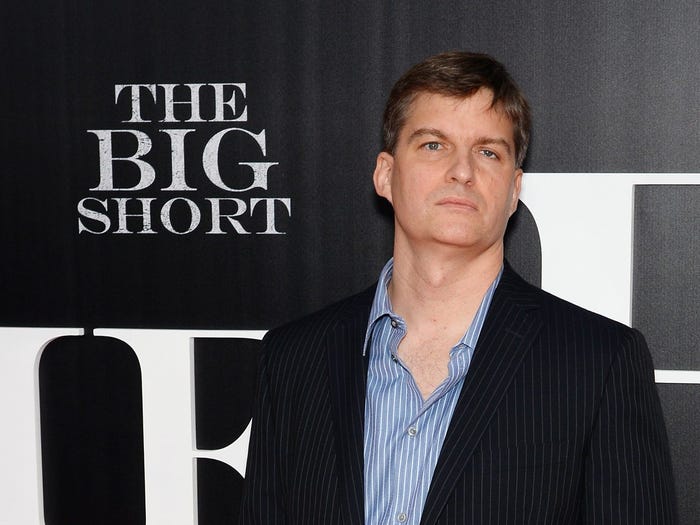
BREAKING: Renowned investor Michael Burry, famed for his role in “The Big Short,” has issued a stark warning about the future of Big Tech amidst the AI boom. In a newly published Substack post, he claims that the era of massive profits from minimal investments is coming to a close, primarily due to the demands of artificial intelligence (AI).
Burry’s urgent analysis reveals that the return on invested capital (ROIC) for major tech companies is on a downward trajectory. He emphasizes that this crucial metric is the key indicator for investors monitoring the AI sector, rather than traditional measures like revenue growth or market expansion. “The measure to beat all measures is return on invested capital (ROIC), and ROIC was very high at these software companies,” Burry noted. “Now that they are becoming capital-intensive hardware companies, ROIC is sure to fall, and this will pressure shares in the long run.”
This revelation is particularly alarming as companies like Microsoft, Google, and Meta shift from their historically asset-light business models to more capital-intensive operations driven by AI infrastructure, including data centers and chips. Despite the potential for AI to broaden tech firms’ market reach, Burry warns that declining ROIC could significantly affect stock prices for years.
In his post, Burry draws parallels between the current AI landscape and the infamous dot-com bubble of the late 1990s, suggesting that the hype surrounding AI could lead to a similar collapse. He referred to OpenAI as the “Netscape of our time,” emphasizing the risks associated with inflated valuations and unsustainable spending in the AI sector. “At some point, this spending on the AI buildout has to have a return on investment higher than the cost of that investment, or there is just no economic value added,” he asserted.
Burry’s hedge fund, Scion Asset Management, has made significant bets against AI giants like Nvidia and Palantir Technologies, which are presently seen as leaders in the AI revolution. A regulatory filing from September 2022 confirms these moves as Burry positions himself against a potential downturn.
As leading AI companies ramp up expenditures to establish the necessary infrastructure for data-intensive applications, many investors are becoming increasingly wary. Despite substantial investments from debt and equity sources, profits from AI ventures remain elusive, prompting Burry to caution that AI could be on the brink of a major correction. He speculated, “Will it be the Panic of 2026? 2027? Does not have to be.”
The implications of Burry’s warnings are significant for investors, tech firms, and the broader market. With $1 trillion projected to be spent on AI by 2025, the stakes are high. If Burry’s predictions hold true, a wave of bankruptcies among AI companies may follow, reshaping the landscape of Big Tech.
This urgent update calls for close monitoring of the tech sector as investors grapple with the potential fallout from declining returns and rising capital demands. As the AI narrative continues to evolve, stakeholders must remain vigilant about the economic realities that could redefine the future of technology and investment.