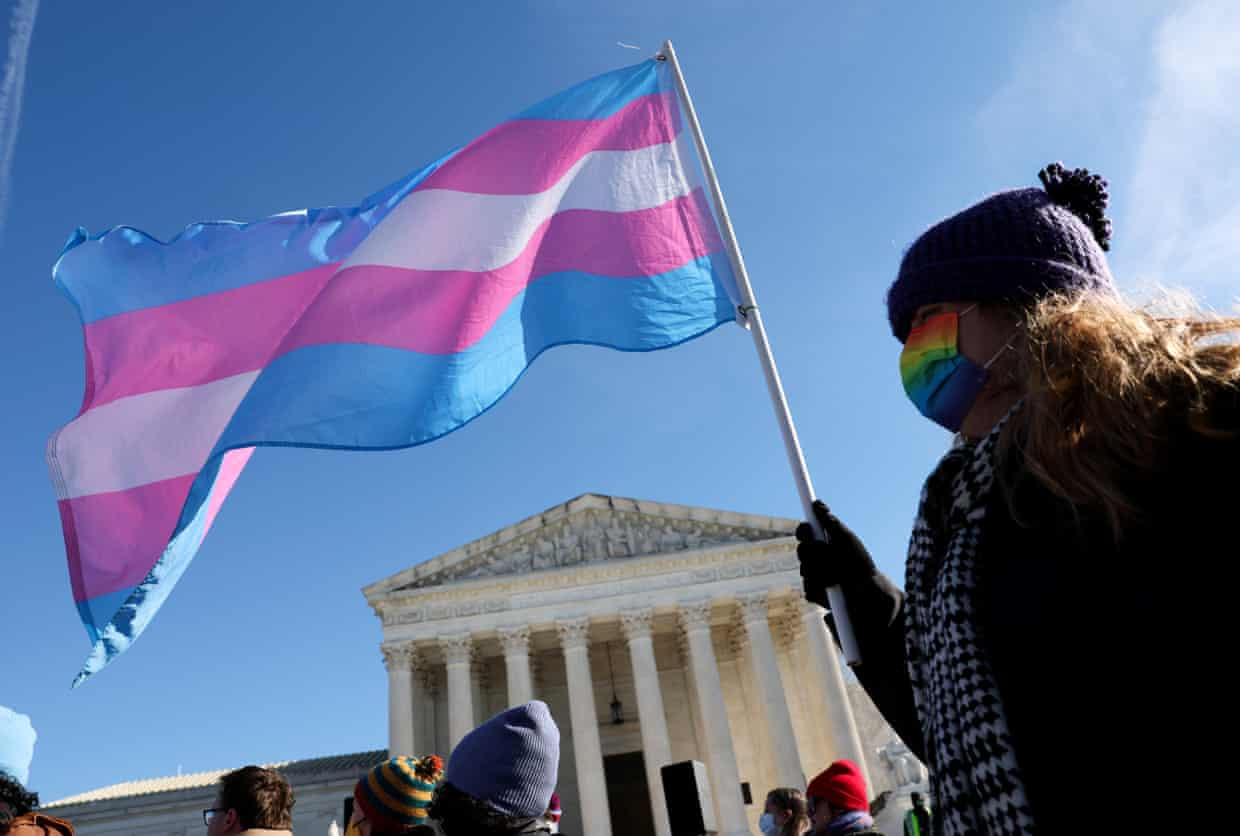
The US Supreme Court is set to deliberate on the rights of transgender youth athletes during a crucial hearing on March 5, 2024. The cases in question involve state laws from Idaho and West Virginia that prohibit transgender girls from joining girls’ sports teams. The outcomes of these cases may significantly impact civil rights, potentially undermining protections for transgender youth and the broader LGBTQ+ community.
In the case of West Virginia v. BPJ, 15-year-old Becky Pepper-Jackson is challenging a 2021 law that bars her from participating in track events. A federal court previously blocked the enforcement of this ban, but the state has appealed to the Supreme Court. Meanwhile, in Little v. Hecox, Lindsay Hecox, a transgender college student, is contesting Idaho’s 2020 law, which is the first of its kind to categorically prohibit transgender women and girls from competing in women’s sports. Although Hecox has sought to dismiss her case due to her decision not to participate in college sports, the Supreme Court will still hear arguments regarding the matter.
As of now, 27 states have enacted laws restricting transgender youth from participating in school sports, primarily targeting transgender girls. While proponents of these laws argue that they promote fairness and safety in women’s sports, advocates for trans rights contend that such measures are discriminatory and lack credible evidence to support claims of endangerment to cisgender girls and women.
Critics emphasize that these laws aim to exclude a small segment of the population. For instance, many Republican legislators have struggled to identify any transgender girls actively competing in their states. Moreover, Charlie Baker, president of the National Collegiate Athletic Association (NCAA), testified that he was aware of fewer than ten transgender college athletes across the nation.
The legal arguments against the bans are spearheaded by organizations such as the American Civil Liberties Union (ACLU), which asserts that these laws violate the equal protection clause of the Constitution. In the West Virginia case, attorneys also argue that the ban infringes upon Title IX, a federal law that prohibits sex discrimination in educational settings.
Support for these state bans comes from the Alliance Defending Freedom, a Christian legal organization known for its advocacy against LGBTQ+ rights and its involvement in anti-abortion cases. The Supreme Court will evaluate whether the laws are discriminatory and warrant “heightened scrutiny,” which requires the government to provide a stronger justification for such bans.
Should the court’s conservative majority determine that the bans do not necessitate heightened scrutiny, it could establish a precedent that deems anti-trans laws “presumptively constitutional,” as warned by the ACLU. A ruling that excludes transgender individuals from the protections of Title IX could pave the way for further policies that restrict trans students’ access to bathrooms and their ability to use chosen names and pronouns. Such outcomes could leave LGBTQ+ youth with diminished protections against harassment and discrimination.
In a poignant statement, Pepper-Jackson expressed her desire for equality in sports, stating, “All I’ve ever wanted was the same opportunities as my peers. But in 2021, politicians in my state passed a law banning me – the only transgender student athlete in the entire state – from playing as who I really am. This is unfair to me and every transgender kid who just wants the freedom to be themselves.”
The Supreme Court’s decision is anticipated to have lasting implications for transgender rights and the landscape of youth sports across the United States. As the nation watches, the stakes for trans athletes and their advocates have never been higher.