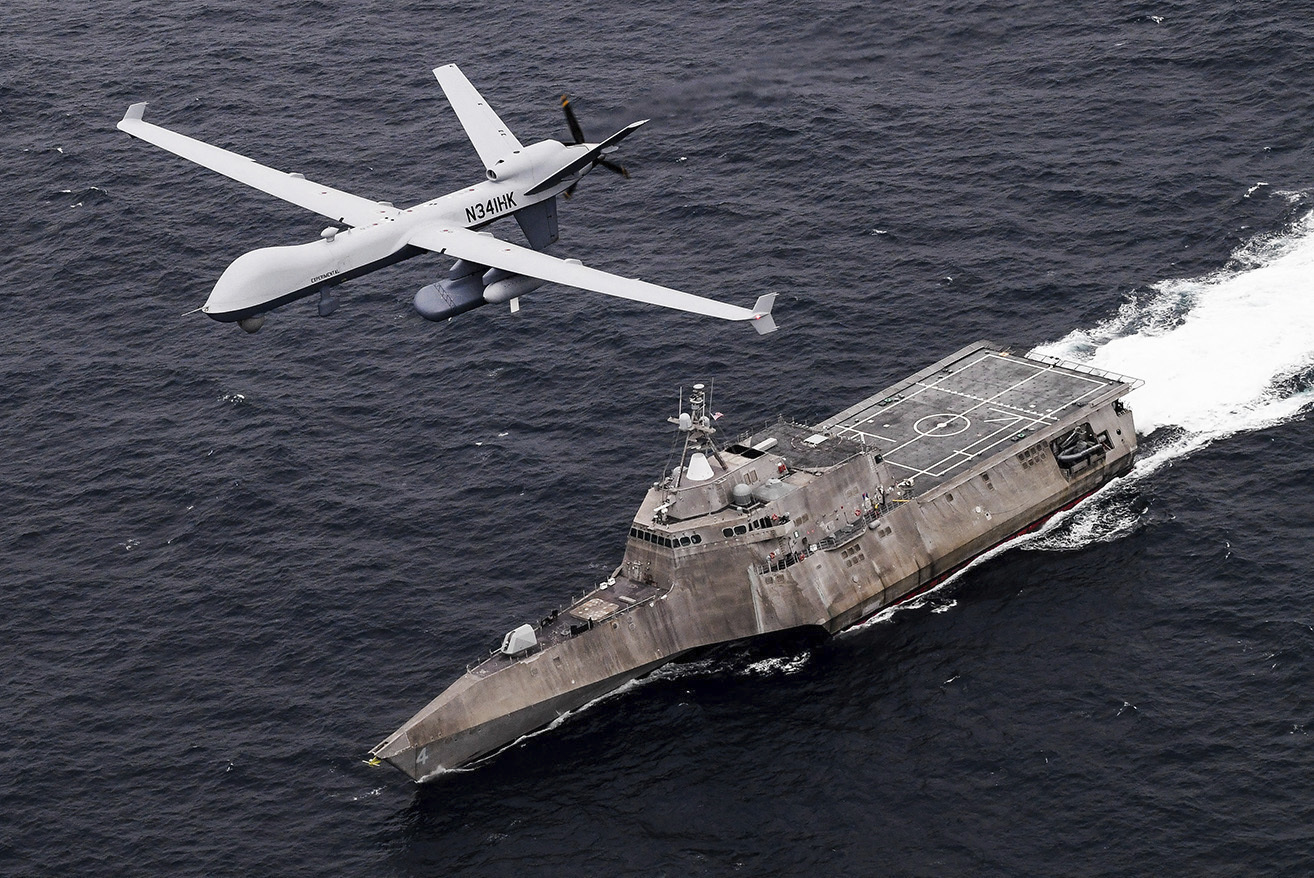
Germany has taken a significant step in enhancing its maritime surveillance capabilities by ordering eight MQ-9B SeaGuardian remotely piloted aircraft from General Atomics Aeronautical Systems. This acquisition, valued at €1.52 billion (approximately $1.77 billion), was formalized through a contract executed with the NATO Support and Procurement Agency. The German parliamentary budget committee approved the procurement on December 17, 2023, with the announcement made on January 15, 2024.
The deal includes four complete systems, each comprised of two aircraft, along with four “certifiable” ground control stations. These facilities will enable the SeaGuardians to operate safely in civilian airspace. The first deliveries are expected in 2028. The German Navy plans to deploy these drones from Naval Air Wing 3 Graf Zeppelin located in Nordholz.
Enhanced Maritime Surveillance Capabilities
The SeaGuardians will primarily focus on maritime surveillance and anti-submarine warfare in the Baltic Sea and North Atlantic regions. These missions have gained urgency due to increased concerns regarding Russian underwater activities and the protection of critical infrastructure in European waters. This acquisition complements Germany’s existing fleet of eight P-8A Poseidon maritime patrol aircraft, the first of which arrived in Germany in November 2025.
General Atomics promotes the MQ-9B SeaGuardian as having over 30 hours of endurance and a mission radius of 1,200 nautical miles (over 2,000 kilometers). The aircraft features pole-to-pole satellite control, de-icing capabilities for cold weather, and an integrated Detect and Avoid System designed for operations in civilian airspace. Furthermore, these drones can be equipped with specialized maritime surveillance radars and configured with anti-submarine warfare kits, capable of deploying up to 40 ‘A’-size or 80 ‘G’-size sonobuoys. Initially, Germany has indicated that the systems will focus on reconnaissance missions.
“The proliferation of MQ-9B in Europe delivers commonality between NATO countries, and for Germany, it will provide opportunities for interoperability with their fleet of P-8As,” stated Linden Blue, CEO of General Atomics Aeronautical Systems.
Strategic Response to Regional Threats
Interoperability with allied forces was a crucial factor in Germany’s decision to procure the SeaGuardians. The German military noted that they would benefit from the operational experiences of British and Belgian forces with similar aircraft. Additionally, Poland is set to join this initiative, having signed a $310 million contract for MQ-9B SkyGuardian systems in December 2024.
Germany’s renewed focus on maritime surveillance comes in response to an increased presence of Russian naval assets in the North and Baltic Seas. In July 2023, the German government launched a mission aimed at countering the Russian shadow fleet of tankers allegedly circumventing EU sanctions to finance the ongoing conflict in Ukraine.
“The more complete the picture, the sooner we can cooperate with our partner countries in the Baltic Sea region to take appropriate measures,” remarked Patrick Schnieder, Germany’s Transport Minister, emphasizing the need for enhanced surveillance capabilities.
As Germany strengthens its maritime defense, the integration of the SeaGuardians into its naval operations marks a pivotal moment in the country’s strategic approach to security in European waters. The anticipated advancements in reconnaissance and anti-submarine warfare capabilities reflect a broader commitment to ensuring stability and safety in the region.