Donald Trump has reignited the debate over Greenland, sharing a provocative image on the official White House Instagram account. The post, which features the President looking out a window toward a map of Greenland, was uploaded on March 15, 2024, alongside the caption “Monitoring the situation.” This comes just hours after Trump stated that the United States would take control of the Arctic territory “one way or another.”
The original photograph depicted Trump observing construction work for a future White House ballroom. After the image was altered, it was re-shared, raising eyebrows among political analysts and international observers. Trump’s comments have sparked significant concern regarding his approach to Greenland, as he suggested that acquiring the territory would be easier than doing so through military means.
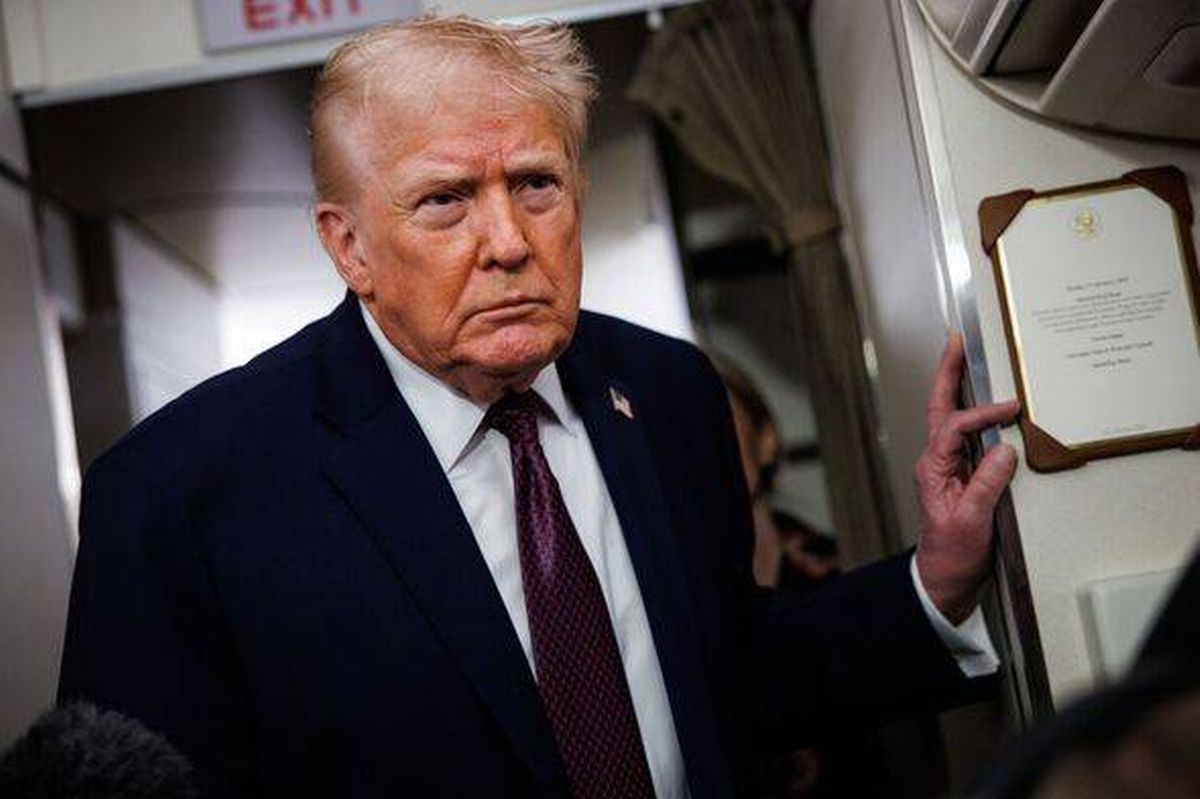
In a press interaction aboard Air Force One, Trump emphasized the urgency of the situation, stating, “If we don’t take Greenland, Russia or China will. And I’m not going to let that happen… One way or the other, we’re going to have Greenland.” His remarks highlighted that he views US ownership of Greenland as inevitable, despite potential strains on NATO relations.
Trump’s insistence on pursuing control over Greenland has drawn stark reactions. He noted that the territory would benefit from stronger ties with Washington, particularly in defense matters. “Greenland does not want to see Russia or China take over,” he claimed. He further criticized Greenland’s current defense capabilities, suggesting that they were inadequate against external threats. Notably, he did not provide evidence to support his assertions regarding Russian and Chinese naval activity near Greenland, claims which have been challenged by Denmark.
In response to Trump’s comments, Chinese foreign ministry spokesperson Mao Ning dismissed the notion that the US must control Greenland to prevent other nations from expanding their influence. She stated, “The Arctic concerns the overall interests of the international community,” reinforcing that all nations’ legitimate rights in the region should be acknowledged.
The mayor of Nuuk, Greenland’s capital, Avaaraq Olsen, voiced her concerns about the escalating tensions and misinformation coming from the Trump administration. “To Donald Trump I would say I don’t want him here. Really, the lying has to stop,” she remarked, referencing Trump’s statements about military threats from Russia and China.
Greenland, which has a population of approximately 57,000, is currently under the protection of Denmark, whose military capabilities are significantly less than those of the US. The United States already maintains a military base on the island, which has prompted Danish authorities to warn that any attempt to annex Greenland could jeopardize NATO stability.
Danish Prime Minister Mette Frederiksen addressed the growing conflict over Greenland, declaring it a “decisive moment” for Denmark. She emphasized the importance of international law and the rights of the Greenlandic people to self-determination. In a Facebook post, Frederiksen stated, “We are ready to defend our values – wherever it is necessary – also in the Arctic.”
NATO leaders are currently deliberating on strategies to address security concerns in the Arctic. Dutch Prime Minister Mark Rutte confirmed that all allies recognize the significance of the region and are working on measures to enhance security. He noted that the opening of new sea lanes poses risks of increased activity from Russian and Chinese forces.
On the diplomatic front, US Secretary of State Marco Rubio is scheduled to meet with Danish officials at the White House to discuss these developments. Additionally, the UK is reportedly in talks with NATO allies regarding troop deployments to counter perceived Russian aggression.
As the situation continues to evolve, Trump’s remarks and actions are likely to remain a focal point in discussions about Arctic security and international relations. The implications of his statements extend beyond Greenland, raising questions about the future of NATO and the United States’ role in global affairs.