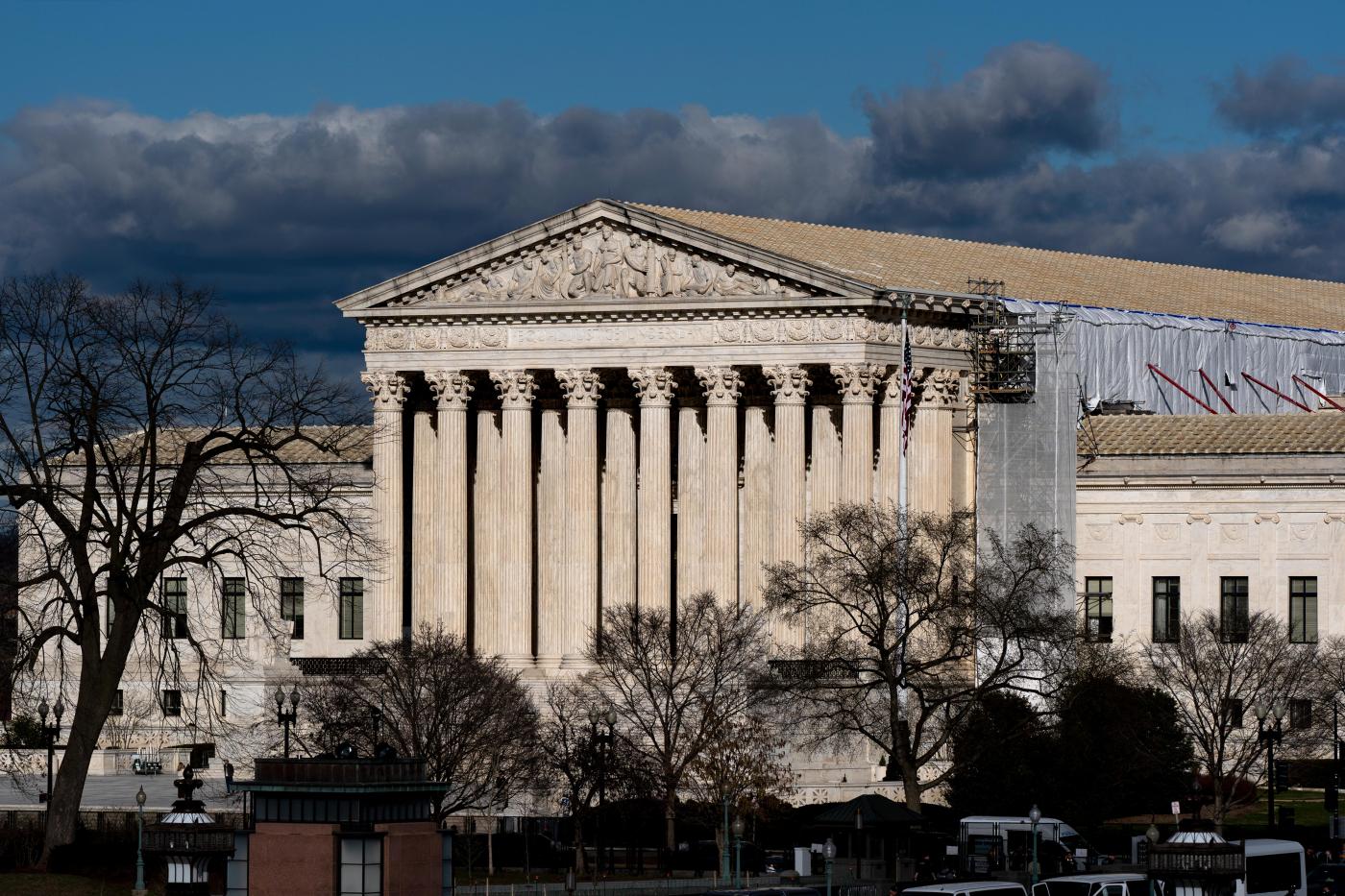
The U.S. Supreme Court clarified the application of federal gun statutes on October 25, 2023, ruling that prosecutors cannot secure separate convictions under overlapping provisions when a single act meets identical criminal elements. The decision stems from the case of Dwayne Barrett, whose prior convictions included robbery and related gun offenses.
Barrett was convicted in federal district court after a series of robberies that occurred between August 2011 and January 2012. One robbery resulted in the fatal shooting of Gamar Dafalla. In March 2013, Barrett and a co-defendant were found guilty of murder, several robberies, and gun charges following a two-week jury trial.
During the commission of these crimes, Barrett was charged under two provisions of federal law. One statute criminalizes the use or carrying of a firearm during a violent crime or drug trafficking. The other increases penalties for offenses that result in death, which could lead to life imprisonment or the death penalty.
The government argued that Barrett’s actions warranted convictions under both statutes, treating the gun use that led to Dafalla’s death as grounds for separate charges. However, the Supreme Court rejected this approach in its ruling on Barrett v. United States (No. 24-5774).
Clarifying Legal Standards
The justices reasoned that Barrett’s conduct, although triggering multiple statutory provisions, constituted the same offense under established legal definitions. They determined that two offenses can be considered distinct only if each statute requires proof of an element that the other does not.
The Court concluded that the statutes in question do not allow for separate convictions for a single act that fulfills both provisions. Given this interpretation, the justices emphasized that Congress did not intend to permit dual punishments within the overlapping provisions. As a result, only one conviction can remain valid when a defendant’s actions technically breach both statutes.
This ruling addresses a growing inconsistency among federal appellate courts regarding the permissibility of dual convictions based on identical conduct. Legal analysts noted that the Supreme Court’s decision reinforces a key principle in criminal law concerning cumulative punishments. When statutes overlap and Congress has not expressly allowed multiple punishments, courts must treat such offenses as a single crime during sentencing.
Implications for Future Cases
Supporters of the ruling argue that it brings predictability and fairness to federal sentencing practices. Critics, however, caution that this decision may limit prosecutors’ abilities to pursue complex violent crimes involving firearms.
As lower courts implement the Supreme Court’s guidance from the Barrett case, they are expected to revisit previous cases where defendants received multiple convictions under overlapping gun provisions for the same actions. This landmark ruling is poised to significantly influence how prosecutors charge and judges sentence gun-related offenses moving forward.
For further developments or news tips, contact Jessica Botelho at [email protected] or visit her profile on X at J_Botelho_TND.