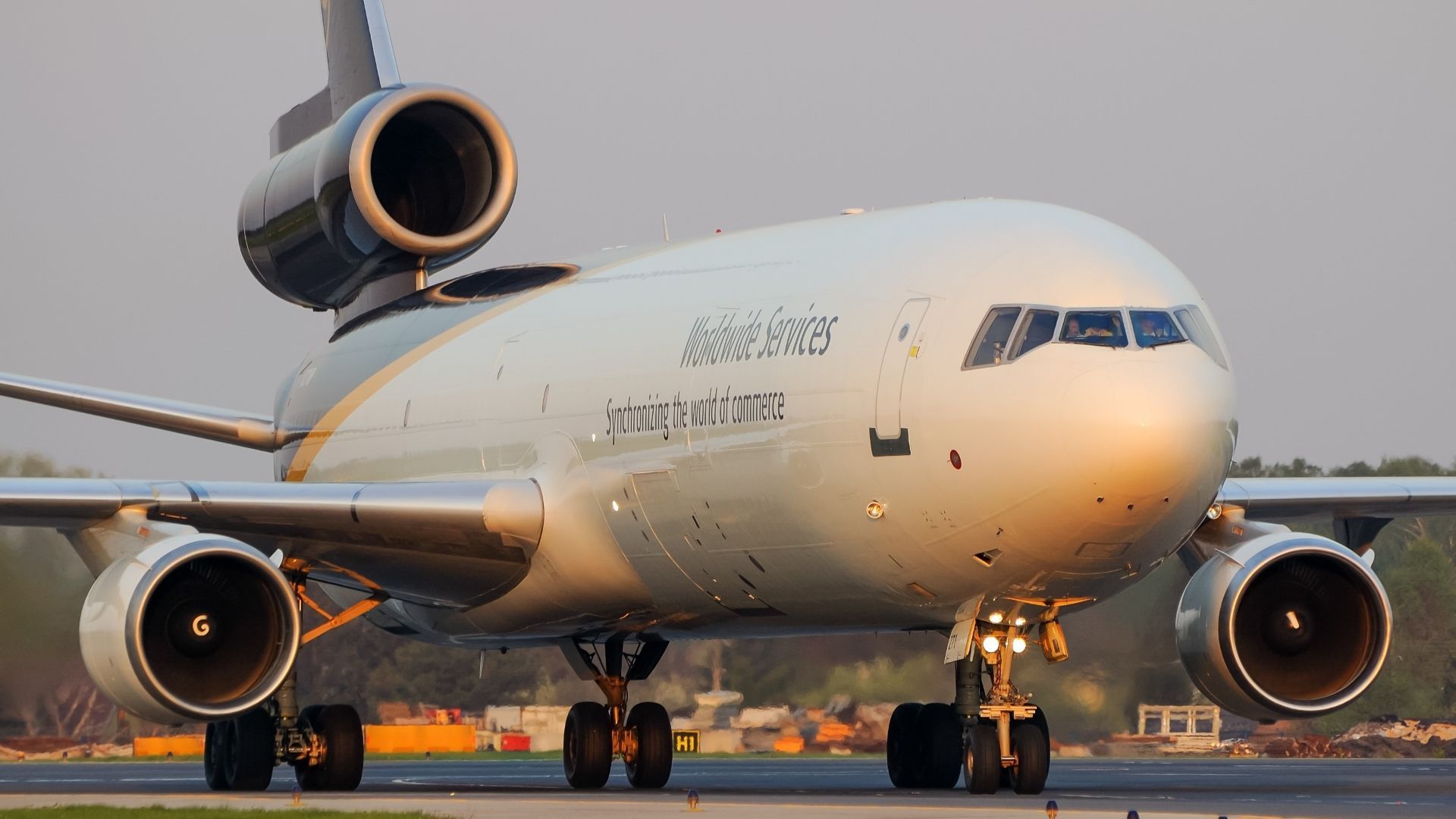
The National Transportation Safety Board (NTSB) has revealed critical findings in its investigation into the crash of UPS Flight 2976, which occurred on November 4, 2025. This incident involved the separation of the left engine from a McDonnell Douglas MD-11 during takeoff from Louisville, resulting in a fire and subsequent crash. The NTSB has pinpointed a faulty three-inch (7.62-centimeter) engine mount bearing as the root cause of the disaster, a component that had been flagged by Boeing nearly 15 years prior.
Investigation Details Uncovered
On January 14, 2026, the NTSB provided an update detailing how the left engine’s pylon assembly detached from the wing, leading to the catastrophic failure. The investigation revealed that the aft mount bearing housing had failed due to fractures in the two lugs that secure the bearing assembly. These lugs are typically bolted together, but in this case, they exhibited signs of fatigue cracking, which developed over time. With the damage severe enough, the engine and pylon assembly ultimately detached from the wing.
Boeing, which merged with McDonnell Douglas in 1997, had previously acknowledged potential issues with the MD-11’s pylon bearings. Following four prior incidents related to these bearings, the Federal Aviation Administration (FAA) issued a service bulletin recommending inspections every five years and suggested replacing the parts with a newer design. However, compliance with this recommendation was not mandatory.
Implications for Safety and Maintenance
The findings raise significant questions about the safety protocols in place for the MD-11 fleet. The aircraft involved in the crash, registered as N259UP, had not been fitted with the newer bearing design. Investigators are now tasked with determining whether UPS Airlines had completed the recommended procedures on any of its MD-11 aircraft. This inquiry will include a review of the airline’s maintenance practices, particularly since the aircraft underwent a visual inspection of its left pylon in 2021 and was not due for a more extensive examination of the mount lugs.
The NTSB will also investigate why Boeing deemed there was no safety risk associated with the issue and why mandatory action was not implemented for nearly 15 years after the initial flagging of the problem. As the investigation continues, the implications for ongoing maintenance and safety assurance for the MD-11 fleet are becoming clearer.
The FAA responded to the crash by issuing an emergency airworthiness directive that effectively grounded all US-registered MD-11s pending corrective action. While no specific corrective measures have been detailed, this directive has led to an indefinite grounding of the fleet.
Despite the age of many MD-11 aircraft, airlines, particularly FedEx Express, have expressed optimism about their return to service. The findings from the NTSB do not suggest the need for a costly redesign of the pylons, indicating that repairs or updates to the mount bearings could be both affordable and quick. As a result, these aircraft may resume operations as soon as official measures are introduced.
The ongoing investigation underscores the complexities of aviation safety and maintenance, particularly concerning aging fleets. As the NTSB continues to uncover details about the crash, the need for rigorous safety standards and compliance remains paramount.