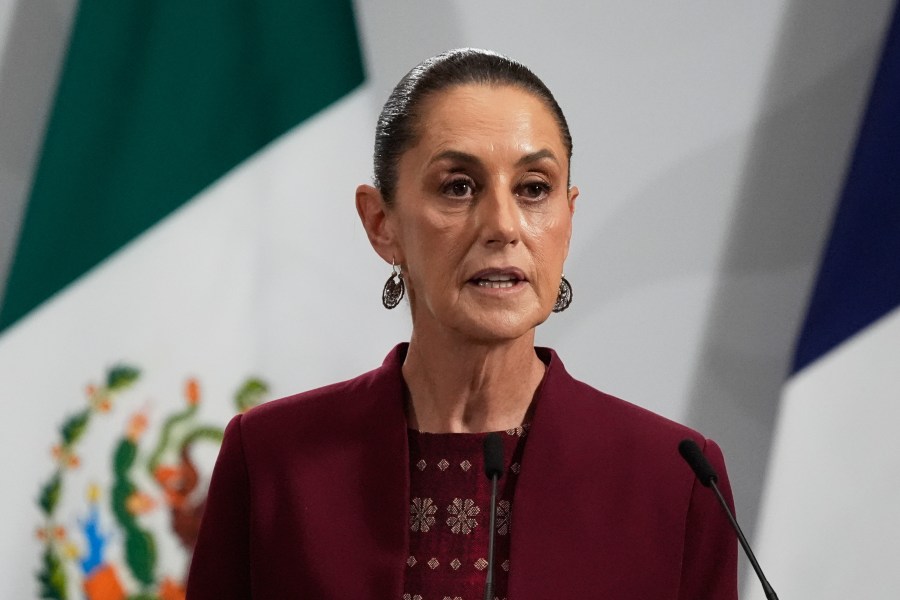
Mexican President Claudia Sheinbaum announced on September 15, 2023, that the government’s intensified efforts against drug cartels are yielding “compelling results.” This statement comes in response to escalating threats from the U.S. administration, particularly from President Donald Trump, who suggested a more aggressive American military presence in Mexico to combat drug trafficking and migration issues.
During a press conference in Mexico City, Sheinbaum emphasized that the Mexican government’s strategies are effectively addressing cartel violence and controlling the flow of migrants heading to the United States. “Our actions are demonstrating a significant reduction in violence and drug-related crime,” she stated, highlighting ongoing operations aimed at dismantling cartel networks.
The backdrop of Sheinbaum’s remarks includes Trump’s recent threats that U.S. forces “will now start hitting land” in Mexico. These comments have raised concerns about potential military intervention, which could strain diplomatic relations between the two neighboring countries. The U.S. President’s statements underscore the urgency that his administration places on curbing drug trafficking and the accompanying migration crisis.
In addressing these challenges, Sheinbaum outlined several key initiatives implemented by her administration. These include increased funding for law enforcement, enhanced intelligence sharing, and community engagement programs designed to foster local collaboration in crime prevention. She noted that these measures have already led to a notable decline in violent incidents linked to organized crime.
While the Mexican government remains committed to tackling cartel influence, it also seeks to maintain its sovereignty and avoid any direct military intervention from the United States. Sheinbaum reiterated her belief in a collaborative approach, stating, “We are open to working with our American counterparts, but we must prioritize our national integrity and autonomy.”
The situation remains fluid, as both nations navigate the complexities of drug trafficking, migration, and international relations. Sheinbaum’s administration is likely to face ongoing scrutiny as it balances the demands from the U.S. with domestic expectations for improved security and stability.
As this story develops, further information will be crucial to understanding the long-term implications of both the Mexican government’s actions and the responses from the Trump administration. The outcomes of these policies may significantly affect not only bilateral relations but also the broader landscape of drug trafficking and migration in North America.