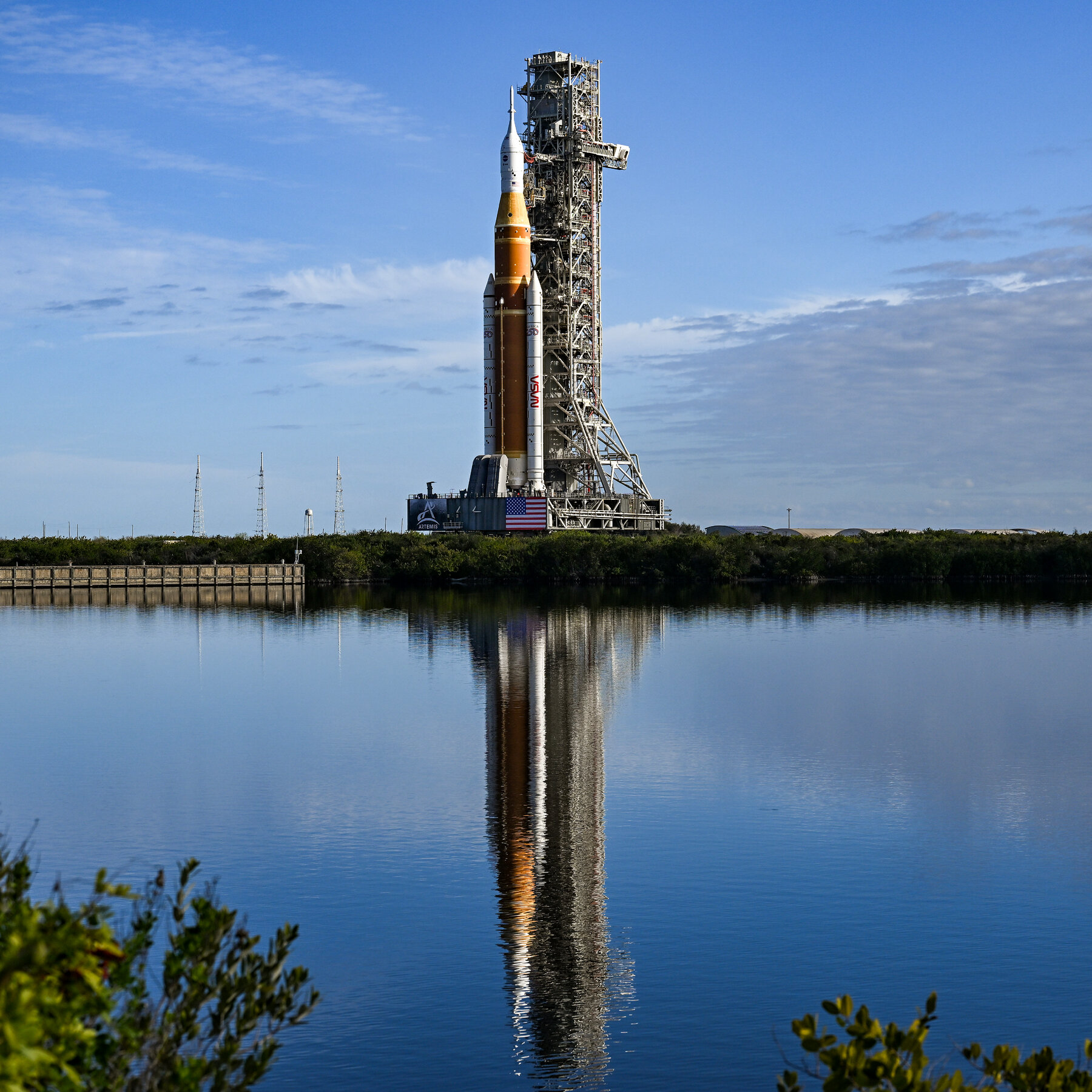
NASA has initiated the rollout of its powerful Space Launch System (SLS) rocket as part of the upcoming Artemis II mission, which aims to return humans to the Moon. On Saturday morning, the massive vehicle began its slow journey from the Vehicle Assembly Building to the launchpad at the Kennedy Space Center in Florida, covering a distance of 4.2 miles.
Commander of Artemis II, Reid Wiseman, shared his thoughts during the event. Reflecting on the beauty of the Moon, he noted how seeing the crescent moon at sunrise sparked his imagination about the far side, which remains hidden from Earth. “You just think about all the landmarks we’ve been studying on that far side and how amazing that will look,” Wiseman remarked.
The SLS vehicle, along with the Orion capsule and the launch tower, weighs approximately 14 million pounds. As the rocket moved, Jared Isaacman, NASA’s administrator, emphasized the significance of the event. “This is the start of a very long journey,” he stated, as he and the four crew members engaged with reporters.
The vehicle is transported by a specialized crawler, one of two built in the 1960s for the Apollo program and later modified for the space shuttles. This crawler moves at a peak speed of under one mile per hour, making the half-day trip from the Vehicle Assembly Building, where the 322-foot-tall rocket was assembled.
As the preparation for Artemis II progresses, NASA is focused on the mission’s objectives, which include conducting crewed flights around the Moon and testing vital systems for future lunar exploration. This mission marks a critical step toward establishing a sustainable human presence on the Moon and eventually exploring Mars.
The Artemis II mission is set to carry four astronauts on a mission that will circle the Moon and return to Earth, laying the groundwork for subsequent missions aimed at lunar research and habitation. With such ambitious goals, the excitement surrounding the rollout reflects the broader aspirations of NASA and its commitment to space exploration.
The journey of the SLS vehicle signifies more than just a physical movement; it represents the culmination of years of planning, engineering, and dedication from thousands of personnel involved in the Artemis program. As the mission unfolds, the world watches closely, eager to witness the next chapter in humanity’s exploration of the cosmos.