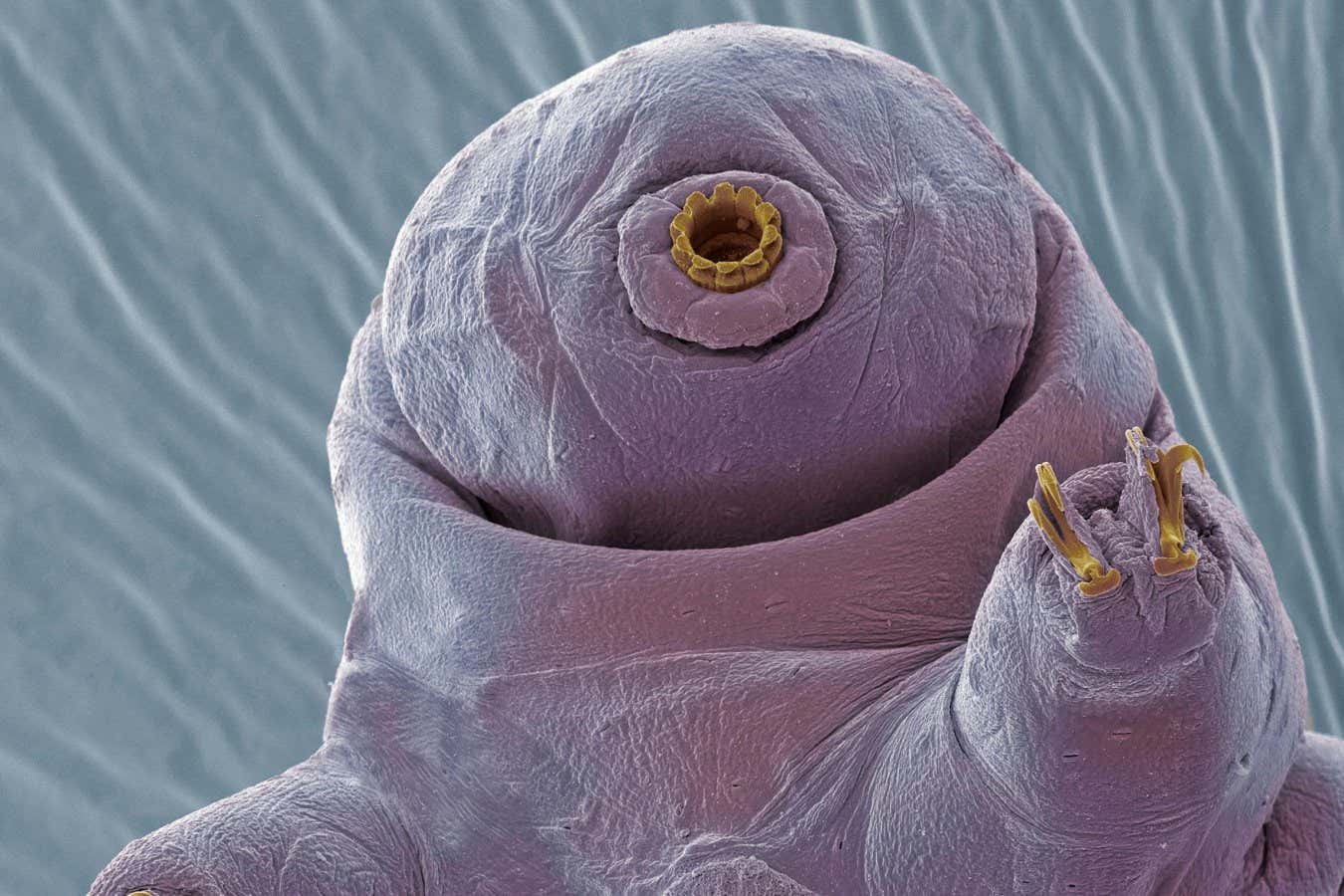
Innovative research from the University of British Columbia has revealed that while the protein Dsup, derived from tardigrades, offers potential protection against space radiation, its application in safeguarding astronauts may face significant challenges. Tardigrades, microscopic organisms renowned for their resilience, can survive extreme conditions, including radiation and the vacuum of space. This remarkable toughness has prompted scientists to investigate how Dsup can be harnessed for human use in space exploration.
In recent studies led by Corey Nislow and his team, findings indicate that Dsup not only shields DNA from harmful radiation but also protects against a broader spectrum of mutation-inducing chemicals. Despite these promising results, the protein carries a notable downside: it can reduce cell viability and potentially result in cell death. “There’s a cost for every benefit that we’ve seen,” Nislow stated, highlighting the complexity of using Dsup in practical applications.
The initial hypothesis suggested that administering Dsup could bolster human cells against cosmic radiation—a critical concern for long-duration space missions. Researchers proposed a method of delivering Dsup by using mRNA technology encased in lipid nanoparticles (LNPs), similar to the delivery systems employed in mRNA COVID-19 vaccines. Nislow expressed optimism about this approach, stating, “Two to three years ago, I was fully on board with the idea that, let’s deliver Dsup mRNA in an LNP to crew members on space missions.”
However, extensive experiments involving genetically modified yeast cells producing Dsup revealed alarming results. High concentrations were lethal, while even moderate levels hindered cellular growth. Nislow’s research suggests that while Dsup physically surrounds DNA to protect it, this action may impede essential cellular processes, such as RNA synthesis and DNA replication. The protein’s presence could also obstruct the access of DNA repair enzymes, which are crucial for maintaining genomic integrity.
These findings raise critical questions about how to effectively utilize Dsup for human applications. Nislow emphasized the importance of regulating Dsup production to ensure it is activated only when necessary and in the appropriate amounts. “I completely agree,” said James Byrne from the University of Iowa, who is investigating Dsup’s potential benefits for protecting healthy cells during cancer radiation therapy. He cautioned that if Dsup were consistently produced in all human cells, it could have detrimental health effects.
Meanwhile, Simon Galas of the University of Montpellier noted that while high doses of Dsup could be harmful, lower concentrations have shown promise in extending the lifespan of nematode worms by shielding them from oxidative stress. This suggests that there is still much to learn about the mechanisms through which Dsup operates.
Furthermore, Jessica Tyler from Weill Cornell Medicine has conducted parallel research with yeast and observed beneficial outcomes at lower Dsup levels, which did not impair growth. She remarked, “I do not agree that the protection provided by Dsup comes at a significant cost,” aligning with the sentiment that optimal dosage is key.
As research continues, the challenge remains: how to effectively target Dsup production within the human body without adverse effects. Nislow remains optimistic about future advancements, stating, “There’s so much money and attention on delivery systems,” suggesting a collaborative effort across various fields to solve this complex problem.
The exploration of Dsup’s potential in protecting astronauts represents a significant step forward in space medicine, yet it underscores the need for further investigation into the balance between its protective benefits and potential risks. With ongoing studies, researchers aim to unlock the secrets of this remarkable protein, paving the way for safer space exploration.