A sudden sell-off in U.S. assets has created ripples across global markets following President Donald Trump‘s recent threats to impose significant tariffs on European allies over tensions related to Greenland. This situation has led to a decline in major stock indexes worldwide, highlighting the fragility of investor confidence amid geopolitical disputes.
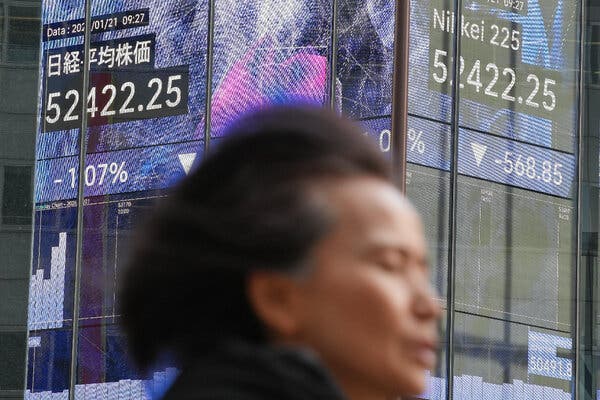
In Asia, benchmark indexes recorded losses on Wednesday. Taiwan’s Taiex index fell by more than 1.5 percent, while Japan’s Topix dropped by 1 percent. European markets displayed mixed results, with slight declines in both France and Germany. Conversely, stocks in the United Kingdom remained relatively stable, showing little change. Meanwhile, U.S. stock futures indicated a modestly higher open, suggesting some resilience within the domestic market.
The U.S. dollar experienced fluctuations, weakening against the Japanese yen but gaining against the euro. Notably, the price of gold continued its upward trajectory, reaching a new record above $4,800 per ounce. This surge reflects gold’s status as a safe-haven asset during times of market uncertainty. A recent survey by the London Bullion Market Association (LBMA) indicated that many analysts expect gold prices to exceed $5,000 per ounce later this year.
According to the LBMA survey, “Persistent geopolitical uncertainty — from conflicts to institutional tensions — keeps safe‐haven demand elevated.” This sentiment underscores the growing investor preference for gold in the face of instability, particularly as tensions escalate in international trade.
The recent turmoil echoes the trade policy-driven volatility that characterized much of President Trump’s second term. The downward trend in stocks began following Trump’s announcement of potential tariffs against eight European nations unless they supported a U.S. takeover of Greenland. This has reignited concerns over a possible resurgence of retaliatory trade measures, which could further hinder global economic growth.
As markets grapple with the implications of these developments, investors are closely monitoring the situation, wary of the potential economic fallout from escalating trade tensions. The ongoing volatility serves as a reminder of the interconnectedness of global markets and the impact of political decisions on financial stability.
In conclusion, the unfolding events surrounding Greenland and the associated tariff threats have not only rattled U.S. markets but have also reverberated across Asia and Europe, leaving investors on edge as they navigate an increasingly uncertain economic landscape.