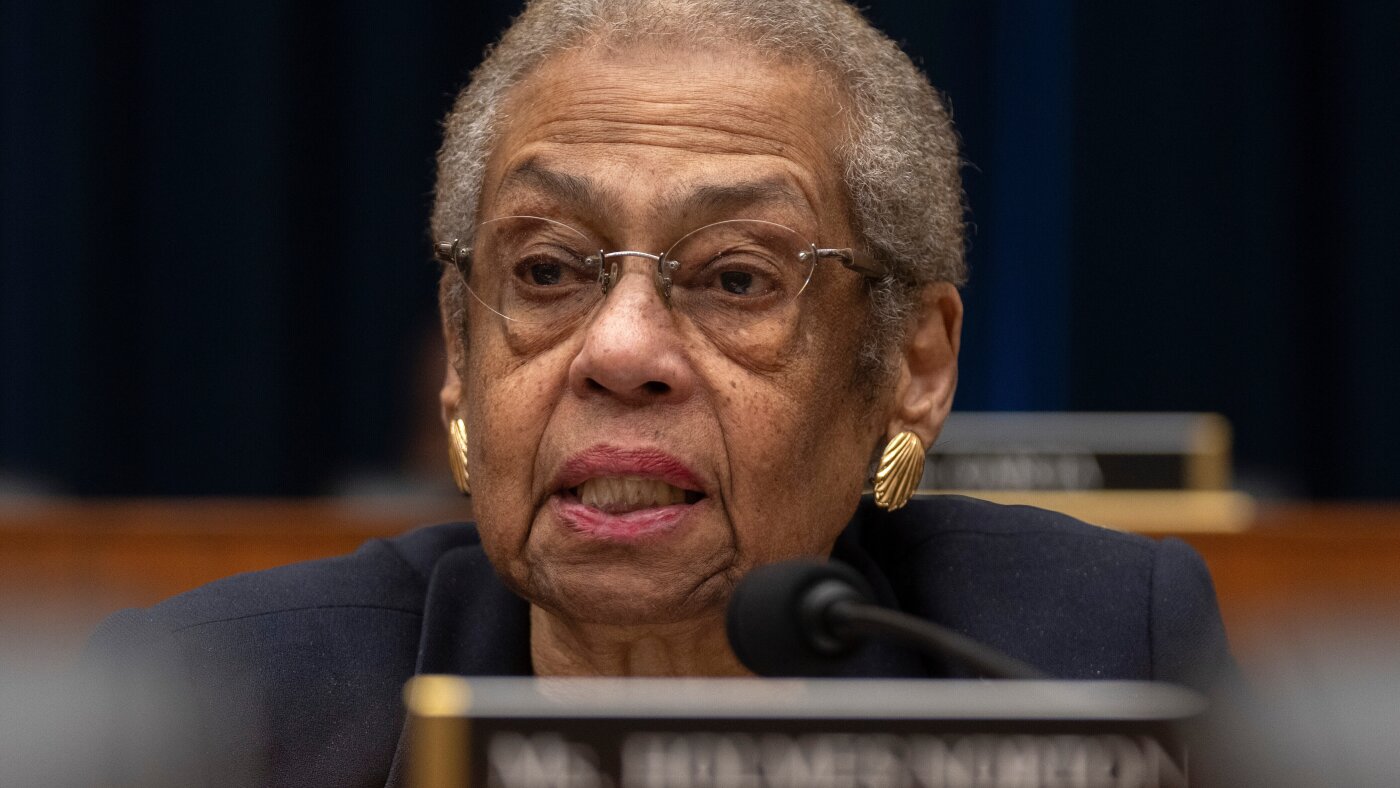
Eleanor Holmes Norton, the long-serving delegate for the District of Columbia, has officially concluded her campaign for reelection to Congress, a decision that marks the potential end of her impactful political career spanning nearly three decades. Norton, who has represented the district since 1991, filed the necessary paperwork to terminate her campaign on October 29, 2023, as reports of her retirement began circulating.
Norton, aged 88, has been a prominent figure in Washington politics, known for her staunch advocacy for the rights and interests of D.C. residents. Her retirement comes amid increasing scrutiny regarding her effectiveness in representing the city, particularly during the tumultuous period of the Trump administration, which implemented significant federal interventions in the capital.
Mayor Muriel Bowser praised Norton’s contributions, referring to her as a “Warrior on the Hill” and acknowledging her unwavering commitment to achieving equal representation for the residents of D.C. Bowser expressed gratitude for Norton’s 35 years of service via social media, stating, “Her work embodies the unwavering resolve of a city that refuses to yield in its fight for equal representation.”
Norton’s campaign termination was first reported by NOTUS, and while her office has yet to issue an official statement regarding her future plans, her departure opens the door for a competitive primary in a city that leans heavily Democratic. Several local politicians have already declared their intentions to run for the position, indicating a robust political landscape ahead.
Legacy of Advocacy and Public Service
As the oldest member of the House of Representatives, Norton has been a pillar in Washington, D.C., politics. Despite her role as a delegate not granting her a formal vote in Congress, she has effectively championed various causes, including the push for D.C. statehood and labor rights for federal employees. Her commitment to the district’s residents led to several bipartisan achievements, including legislation allowing D.C. residents to access in-state tuition rates at public colleges nationwide.
In the 1990s, Norton played a critical role in resolving the city’s financial crisis by negotiating a deal to transfer billions in unfunded pension liabilities to the federal government. She has also been instrumental in advancing D.C. statehood initiatives, having led the House passage of a statehood bill on two occasions.
Norton’s advocacy is rooted deeply in her personal history and experiences during the Civil Rights Movement. Born and raised in Washington, she attended Dunbar High School, notable for being part of its last segregated class. Her dedication to civil rights was evident early on; she worked as an organizer during the Freedom Summer in 1963, a pivotal moment in the movement. Tragically, she had a personal connection to the movement’s struggles, as she was picked up by civil rights leader Medgar Evers on the day of his assassination.
Reflecting on her life, Norton described the 1963 March on Washington as “the single most extraordinary experience of my lifetime.” Her commitment to equality led her to become the first woman to lead the Equal Employment Opportunity Commission, where she enforced anti-discrimination laws in the workplace.
Political Landscape Ahead
Norton’s retirement is part of a broader trend in Washington, with a historically high number of lawmakers opting not to seek reelection this year. More than one in ten members of the House have announced their decision to retire or pursue other public offices, indicating a significant shift in the political landscape.
As Washington prepares for a new chapter, Norton’s departure signals both the end of an era and the potential for new leadership in the district. Local lawmakers are poised to enter a competitive race to fill the void left by one of the city’s most influential figures.
Norton’s legacy as a civil rights advocate and a dedicated public servant will undoubtedly leave a lasting impact on the District of Columbia and its pursuit of representation and equality. Her career serves as an inspiring reminder of the importance of advocacy and the ongoing struggle for civil rights, particularly in the context of D.C.’s unique political status.