President Donald Trump envisions a straightforward strategy for U.S. operations in Venezuela: seize the oil and initiate exports. However, the experience of oil companies in post-invasion Iraq indicates that this approach may be overly simplistic and fraught with complications. Following the U.S. invasion of Iraq in 2003, which resulted in the capture of leader Saddam Hussein, the anticipated benefits from oil revenue did not materialize as expected.
Two decades later, the capture of former Venezuelan president Nicolas Maduro exemplifies a different scenario. Unlike Iraq, Venezuela is not embroiled in open conflict, lacks U.S. troops on the ground, and possesses distinct social and political dynamics. Nevertheless, the challenges faced by oil companies in Iraq provide critical insights for those considering investments in Venezuela’s oil sector.
Challenges Identified from Iraq’s Experience
Analysts suggest that substantial investments in Venezuela by major oil companies may take years to materialize. This caution stems from the unpredictable and potentially volatile security environment. According to Bill Farren-Price, a senior research fellow at the Oxford Institute for Energy Studies, oil companies will face “a very, very difficult mountain to climb” in attempting to rebuild the Venezuelan oil industry. He emphasized that similar efforts in Iraq demonstrated that rebuilding takes time and patience.
After the U.S. invasion of Iraq, then-Deputy Defense Secretary Paul Wolfowitz projected that the country’s vast oil reserves could finance its reconstruction. This optimism, however, proved unfounded. Mohamad Bazzi, director of the Center for Near Eastern Studies at New York University, noted that the Bush administration underestimated the time required for the U.S. and Iraq to reap economic benefits from the oil sector.
Iraq’s oil industry had been nationalized since the 1970s, and following the invasion, the U.S. disbanded the Iraqi armed forces and purged the civil service of members of Hussein’s ruling Baath Party. This led to a temporary U.S. control of government departments, including the oil ministry. It wasn’t until around 2009 that contracts were offered to foreign oil companies, and even then, the terms were unappealing. Raad Alkadiri, managing partner of 3TEN32 Associates, highlighted that early contracts treated foreign firms as contractors rather than granting them ownership rights to oil reserves.
Security Concerns and Future Prospects
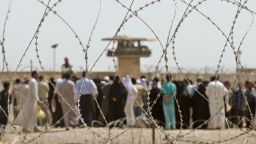
The security situation in Iraq rapidly deteriorated post-invasion, exacerbated by a power vacuum. Bazzi described a landscape marked by looting, attacks on oil infrastructure, and an insurgency that spiraled into civil war. The lessons from Iraq underscore the importance of stability for foreign investment in oil production.
In Venezuela, the security landscape remains uncertain. The Trump administration’s approach has retained remnants of the Maduro regime, which differs from the U.S. strategy in Iraq. Carlos Solar, senior research fellow at the Royal United Services Institute, warned that armed groups in Venezuela could create a “chaotic security scenario” that would be more challenging to navigate than direct negotiations with acting president Delcy Rodríguez.
Rather than deploying U.S. troops, the administration is reportedly considering the use of private military contractors to secure oil and energy assets in Venezuela. This approach mirrors the billions spent on private security and reconstruction contractors during the Iraq War, though it carries risks, such as potential controversies surrounding operations.
The uncertainty surrounding Venezuela’s political landscape further complicates matters for oil companies. Amy Myers Jaffe, director of the Energy, Climate Justice and Sustainability Lab at New York University, pointed out that questions about the stability of the current government, the potential for contested elections, and the consensus on which companies should operate in the country create apprehension among investors.
“The lesson of Iraq is that it’s not really about how much oil is there — it’s about what’s going to happen on the ground,” Jaffe concluded.
As the U.S. navigates its strategy for Venezuela, the complexities illustrated by Iraq’s post-invasion oil landscape serve as a crucial reference point for understanding the challenges that lie ahead.